
Last updated on October 5th, 2026 at 04:20 pm
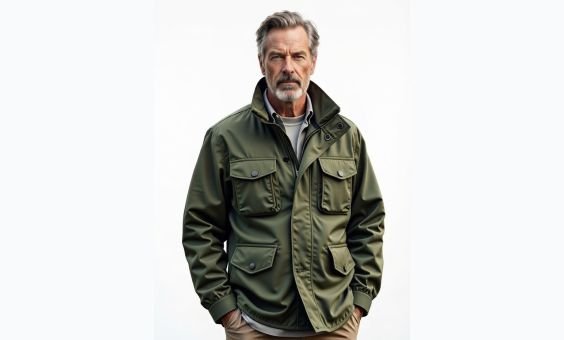
A field jacket carries real military history, but the wrong fit turns that heritage into costume. Get the cut and fabric right, and it becomes one of the most durable pieces in your closet. Here is everything Gentsways knows about wearing one well.
The field jacket moved from battlefield gear to menswear icon over eight decades of steady reinvention.
Multiple front pockets, a mid-length cut, and a stand collar carried its military purpose into daily wear.
Today, it sits comfortably in a men’s wardrobe, pairing with jeans, chinos, or flannel with little effort.
Men who want a jacket with real substance behind the design benefit most from this piece.
This guide covers where the field jacket came from, the types worth knowing, and how to style it well.
Table of Contents
What Is a Men’s Field Jacket?
A field jacket is a mid-length outer layer built from durable, weather-resistant fabric with a military background.
Four front pockets, a button-and-zipper front, a stand collar, and adjustable cuffs define its core structure.
FashionBeans notes that the modern silhouette traces to a design first issued in 1943, built for soldiers facing unpredictable weather.
That functional pedigree, not fashion trends, explains why the jacket has stayed relevant across so many decades.
Men’s Utility Jacket
A utility jacket brings practical design into everyday menswear. Its defining features include multiple pockets, durable fabric and a relaxed structure that makes it easy to layer.
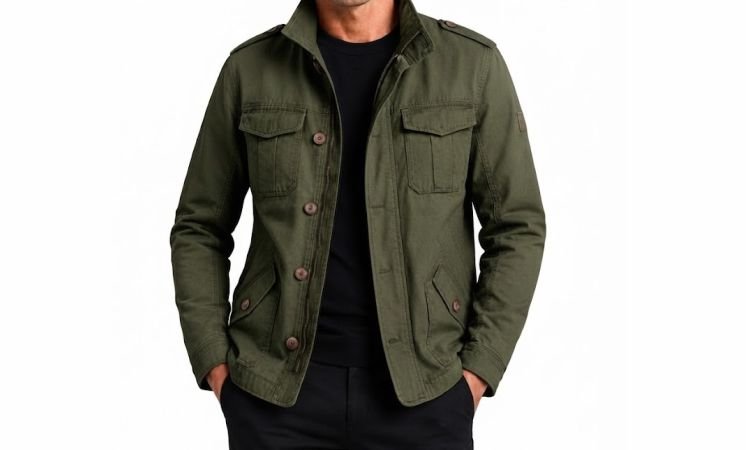
Cotton, canvas and lightweight technical fabrics are common choices, depending on the season and intended use.
For a clean casual outfit, wear a utility jacket over a T-shirt with jeans and sneakers.
Chinos and boots give it a slightly sharper workwear feel. Neutral shades such as olive, navy, khaki and charcoal are easy to pair with other wardrobe staples.
A well-fitted utility jacket should leave enough room for a layer underneath without appearing oversized.
A Short History of the Field Jacket
The field jacket’s story runs through several military generations, each solving a problem the last one didn’t.
FashionBeans traces its origin to the M-1943, the jacket that established the multi-pocketed, olive drab look still recognized today.
The M-1951 followed, adding zips and snaps for easier, faster closure in the field.
Wikipedia records that the M-1965, or M65, entered US military service in 1965 as a direct replacement for the M-51.
Heddels notes the M65 replaced the M-51’s revere collar with a stand collar and added a concealed hood.
Civilian fashion adopted the M65 through film and counterculture, and it remains the field jacket’s most recognized silhouette today.
Types of Field Jackets
- M65 Field Jacket: the modern standard, with a stand collar, concealed hood, and four-pocket layout.
- Waxed Field Jacket: a weatherproofed version built for wet, cold-weather conditions and rugged daily wear.
- Cotton Field Jacket: the classic lightweight build, suited to mild weather and everyday layering.
- Lightweight Field Jacket: a thinner, unlined take, built for spring and early fall temperatures.
- Insulated Field Jacket: a lined version with added warmth, built for consistent cold-weather wear.
- Water-Resistant Field Jacket: treated or technical fabric for rain protection without the bulk of a parka.
- Modern Slim-Fit Field Jacket: a tailored update to the original boxy military cut, suited to city wear.
Field Jacket vs Other Men’s Jackets
A field jacket favors military structure and function, unlike a utility jacket, which leans more purely toward workwear in origin.
Against a chore coat, the field jacket carries more hardware and a defined collar, rather than a simple boxy cut.
Compared with a parka, a field jacket runs shorter and lighter, since the Appalachian Mountain Club notes parkas extend well below the waist for added warmth.
That extra length makes a parka warmer, but a field jacket is easier to layer and style daily.
Best Fabrics for a Field Jacket
Cotton canvas and cotton twill remain the most common choices, offering durability without excess weight.
Waxed cotton adds real weather resistance, suited to fall and winter wear in wetter climates.
Ripstop cotton resists tearing through a reinforced crosshatch weave, holding up well to daily use.
Nylon and polyester blends add lightweight durability, useful for travel or unpredictable weather conditions.
Best Colors for a Field Jacket
Olive green remains the most iconic color, tracing directly back to the jacket’s military roots.
Khaki and sand offer a slightly softer alternative, while black and navy read more urban and versatile.
Brown and gray round out the palette, both pairing easily with denim or chinos.
How a Field Jacket Should Fit
Shoulder seams should sit at your natural shoulder line, avoiding the boxy, oversized cut of vintage military versions.
Sleeves should end near the wrist bone, leaving room to layer a sweater or flannel underneath.
Jacket length should hit at the hip, balancing enough coverage with enough room to move freely.
Finding the right balance between comfort and structure keeps the jacket from reading as either a costume or undersized.
How to Style a Men’s Field Jacket
Casual weekend: field jacket, crew neck T-shirt, jeans, and white sneakers for an easy daily look.
Rugged outdoor: flannel shirt underneath, dark denim, and sturdy leather boots for cooler, active days.
Smart casual: field jacket over an Oxford shirt, paired with chinos and Chelsea boots.
Cold weather layering: a knit sweater underneath, a wool scarf, and boots for real winter coverage.
Minimalist everyday: a neutral sweater, slim chinos, and leather sneakers, letting the jacket carry the outfit.
Add a simple watch to complete any of these looks without adding bulk. The same layering approach applies across most casual jackets, covered fully in our men’s fashion layering guide.
Field Jackets by Season
In spring and early fall, lightweight cotton versions layer easily over T-shirts or thin sweaters.
In fall and winter, insulated or waxed versions handle real cold, especially layered over flannel or knitwear.
Why Older Men Look Great in Field Jackets
The military silhouette reads as timeless rather than trend-driven, which suits older men’s fashion well.
Choosing neutral colors like olive, navy, or tan keeps the look practical rather than overly styled.
See our guide on stylish casual outfits for men over 50 for full outfit pairings built around jackets like this one.
How to Choose the Right Field Jacket
Match the fabric to your climate: waxed or insulated for cold, wet regions, and lightweight cotton for mild weather.
Consider fit next, since a slim-fit modern cut suits city wear better than a boxy vintage silhouette.
Prioritize neutral colors and a clean pocket layout over heavy military detailing for the most versatile option.
Common Field Jacket Mistakes
Wearing the wrong size removes the structure that makes this jacket work, whether too tight or too boxy.
Overstuffing the pockets adds visible bulk and distorts the jacket’s clean military lines.
Pairing it with too many other military-inspired pieces at once reads as costume rather than considered style.
Choosing the wrong weight for the season, like cotton in deep winter, undercuts the jacket’s practicality.
How to Care for a Field Jacket
Wash cotton field jackets on a gentle cycle, checking the label for specific fabric guidance first.
Waxed cotton versions need occasional re-waxing rather than regular washing to maintain their water resistance.
Clean metal hardware carefully to prevent rust, and store the jacket on a sturdy hanger.
Repair minor tears or loose buttons quickly, since small damage on canvas spreads fast if ignored.
Conclusion
A men’s field jacket carries real military history, and that heritage still shapes why it works today.
From the M43 to the M65, each generation refined the pockets, collar, and closures that define the style now.
Cotton, waxed cotton, or insulated versions all layer easily over T-shirts, flannels, or knitwear across seasons.
Getting the shoulder- and hip-length fit right keeps the look sharp instead of boxy or oversized.
Read our full men’s jackets guide for more on where this style fits into a complete wardrobe.
Frequently Asked Questions
What is a field jacket?
A field jacket is a mid-length military-inspired jacket with multiple front pockets and a durable, weather-resistant build. Its structure traces back to combat gear designed for soldiers facing unpredictable conditions.
What is the difference between a field jacket and a military jacket?
A field jacket is a specific type of military jacket, built for field combat rather than dress uniforms. Most military jacket styles worn casually today actually reference the field jacket’s design.
Are field jackets still in style?
Yes, the M65 in particular has remained a menswear staple for decades, appearing across film and street style. Its neutral colors and functional design keep it relevant well beyond any single trend cycle.
Can you wear a field jacket in winter?
Insulated or waxed cotton versions handle winter well, especially layered over a sweater or flannel shirt. Lightweight cotton versions suit spring and fall better than deep winter conditions.
Should a field jacket fit loose or fitted?
Modern slim-fit versions suit daily city wear better than the boxy, oversized vintage military cut. Either works, depending on whether you want a tailored or a more rugged look.
Can older men wear field jackets?
Yes, neutral colors and a classic silhouette make this jacket read as timeless rather than trend-driven. Avoiding heavy tactical detailing keeps the look sophisticated rather than costume-like.

Pyo Merez is a 45-yeard old husband, father, and a chemical engineer by profession and the founder of Gentsways, a men’s lifestyle site built in honour of his father, Dee Clement. He has been writing about men’s development, style, and character through his father’s lens since 2021, drawing on lived experience, his father’s example, and research from reputable publications. He is not a certified trainer or therapist; where fitness or health topics require it, articles are reviewed by qualified contributors.