Last updated on September 21st, 2026 at 03:59 pm
I own three leather jackets. I wear one of them.
That’s the honest starting point for this guide. A men’s leather jacket is one of the easiest pieces to buy wrong, because almost everything about it looks good in a mirror at the store and only reveals its flaws six months later, when the fit has gone slack in places it shouldn’t, or the leather has started to crack because nobody told you it needed conditioning twice a year.
My father never owned a leather jacket. He wore the same wool coat for fifteen winters and treated it, in his words, “like it owed him nothing and he owed it everything.”
I think about that a lot when I think about leather, because it’s one of the few modern garments that actually rewards that kind of long-term thinking.
This guide is built around the decisions that actually matter: which leather to buy, how it should fit, and how to keep it for twenty years instead of two.
Table of Contents
What is a Leather Jacket, and what makes it Worth Buying?
A leather jacket is a type of outerwear, a jacket built from genuine animal hide rather than a synthetic substitute, and that single fact changes everything about how you should shop for one.
Fabric jackets are forgiving.
They stretch a little, they wear evenly, and a size that’s slightly off usually still works. Leather doesn’t do you that favor.
It holds the shape it’s cut in in year one, and the fit you buy is roughly the fit you keep for the life of the jacket.
That’s why I’d rather see a man spend an extra afternoon trying jackets on than spend an extra hundred dollars on a “better” leather, if the fit is wrong.
The core appeal, though, is longevity. A well-made leather jacket is one of the only things in a modern wardrobe that gets better with age instead of worse.
It develops a patina, a kind of visible history, that no other fabric can fake.
A Short History, Because It Explains the Design
Leather jackets didn’t start as a fashion decision, and understanding why they were built the way they were actually helps you choose one now.
Buffalo Jackson traces the earliest versions to 1917, when the US Army Aviation Clothing Board built sheepskin-lined flight jackets for pilots in unheated, open-air cockpits.
Warmth wasn’t optional up there. It was survival.
The jacket most people picture when they hear “leather jacket,” the biker style with the zipper cutting diagonally across the chest, came later and for an equally practical reason.
Irving Schott designed the Perfecto in 1928 for motorcyclists, and Mayim Leathers notes the asymmetrical zipper wasn’t a style choice at all.
It kept wind from cutting through the jacket while a rider leaned forward over the handlebars, and it kept the zipper from digging into the sternum in that position.
Every detail on that jacket had a job to do.
Then Hollywood found it. Marlon Brando wore the Perfecto in The Wild One in 1953, and within a few years, the jacket had gone from motorcycle gear to a symbol of rebellion that had nothing to do with motorcycles at all.
That’s the strange arc of the leather jacket.
It was built for function, adopted for image, and somehow never lost either identity.
Full Grain or Top Grain: The Decision That Actually Matters
If you take one thing from this guide, take this section, because it’s the decision that determines whether your jacket lasts five years or fifty.
Full-Grain Leather
Full-grain leather uses the entire outer layer of the hide, imperfections and all.
Nothing is sanded away. Buffalo Jackson notes it’s also the most breathable option, though that same untouched surface makes it more prone to staining if you don’t stay on top of conditioning.
This is the leather that develops the patina people talk about, the kind that looks better in year eight than it did on day one.
It costs more upfront. I think it’s worth it if you’re buying one jacket to last you the next decade.
Top-Grain Leather
Top-grain leather has had its surface sanded and buffed for a smoother, more consistent finish. It’s more resistant to everyday scuffs, easier to keep looking clean, and usually costs less.
What you give up is the living, aging quality. A top-grain jacket looks almost the same in year five as it did in year one, for better or worse.
Neither is “wrong.” My honest take: if you’re buying your first leather jacket and you’re not sure you’ll wear it every week, top grain is the more forgiving choice.
If you already know leather is going to be a permanent part of your wardrobe, spend the extra money on full-grain and let it age.
Genuine leather sits below both, made from the lower layers of the hide after the good stuff has already been split off for something else.
It’s still real leather, but it won’t last the way full or top grain will.
Nubuck and suede are a different category entirely, softer and napped rather than smooth, and Timberland notes that nubuck comes from the tougher outer layer of the hide while suede comes from the softer inner layer, which is part of why nubuck holds up better over time.
Faux leather isn’t leather at all, and it’s fine for a night out, but it isn’t what this guide is really about.
The Styles Worth Knowing
You don’t need to know all of these. You need to know which one fits your life.
- The biker jacket is the original Schott silhouette: asymmetrical zip, fitted cut, built with attitude baked into the design.
- The café racer is its quieter cousin, a simpler collar and cleaner lines, easier to wear if “biker jacket” feels like too much of a statement for your daily life.
- The bomber leather jacket trades the fitted biker cut for something looser, with ribbed cuffs and hem, and it’s probably the easiest of the three to wear well without thinking too hard about it.
- The flight jacket, especially the shearling-collared G-1, carries its military DNA visibly and works best if you actually like that look rather than tolerate it.
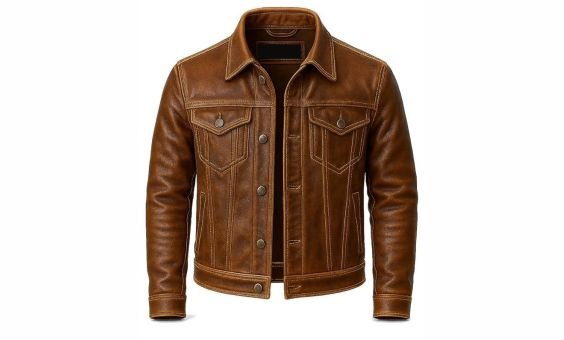
Beyond those four, you’ll find leather versions of the trucker jacket, the field jacket, and even the blazer, all borrowing structure from their fabric counterparts.
If you’re buying your first one, I’d start with a bomber or a café racer.
Both are easier to wear into a normal week than a full biker jacket, and both hide small fit imperfections better.
How It Should Actually Fit
This is where I see the most men get it wrong, and it’s almost always the same mistake: buying it slightly big because it feels more comfortable in the store.
Leather doesn’t stretch the way cotton or wool does. The fit you try on is close to the fit you’ll have in year five.
Shoulders should sit exactly at your natural shoulder line, no farther. Sleeves should end near your wrist bone.
The body should sit close enough that you could layer a T-shirt or a thin sweater underneath, but not much more than that.
If you can comfortably fit a bulky hoodie under your leather jacket, it’s too big.
How I’d Actually Wear One
- Classic and foolproof: white T-shirt, jeans, leather sneakers. This works in almost any season and takes zero effort to get right.
- Smart casual: the jacket over an Oxford shirt, with men’s chinos and Chelsea boots. This is the version I’d wear to dinner.
- Rugged weekend: a Henley underneath, dark denim, real work boots. Good for cold mornings and nothing dressed up about it.
- All black: black jeans, a black knit sweater, the jacket over it. Simple, and it makes the leather itself the whole point of the outfit.
- Add a watch if you want, but the jacket doesn’t need help carrying an outfit. That’s kind of the point of owning one.
Caring for It Like You Actually Mean to Keep It
I trained as a chemical engineer before I built anything else, and one thing that stuck with me is that materials fail in predictable, preventable ways if you understand what they need. Leather needs oil.
That’s most of what you need to remember.
Leather Honey recommends deep conditioning both full grain and top grain leather regularly to keep the hide supple rather than letting it dry out and crack.
NBC News reports that leather care experts consistently point to the same two habits: avoid harsh chemicals near the leather, and condition it on a regular schedule rather than only when it starts looking dry.
Twice a year is a reasonable rhythm for a jacket you wear often.
Store it on a real hanger, not folded in a drawer, and keep it out of direct sunlight, which dries leather out faster than almost anything else.
If it gets seriously wet, let it air dry away from direct heat. A radiator or hair dryer will crack leather faster than the rain ever would.
The Mistakes I See Most Often
Buying it a size too big is the one I’d fix first, for the reasons above.
After that, skipping conditioning entirely until the jacket already looks dry and tired, at which point you’re repairing damage instead of preventing it.
And buying the cheapest leather you can find because “it’s just a jacket,” when a cheap jacket bought twice actually costs more than one good jacket bought once.
Where I’d Land
If you’re buying your first leather jacket, get a bomber or café racer in top-grain leather, black or brown, and make sure the shoulders fit exactly.
If you already know leather is part of your wardrobe for good, spend more on full grain and let it earn its patina.
Either way, condition it twice a year and treat the fit rule as non-negotiable, because leather won’t forgive you the way fabric does.
Frequently Asked Questions
Is full-grain or top-grain leather better for a first jacket?
Top grain is more forgiving for a first purchase, since it resists everyday wear and needs less maintenance. Full grain is worth the extra cost once you know leather is a long-term part of your wardrobe.
How should a leather jacket fit?
Shoulders should sit exactly at your natural shoulder line, since leather won’t stretch to adjust later. The body should allow a light layer underneath, but nothing bulkier than a thin sweater.
How often should I condition a leather jacket?
Twice a year is a reasonable baseline for a jacket worn regularly through fall and winter. Dry, cracking leather usually means conditioning was skipped for too long, not a flaw in the jacket itself.
Are leather jackets still in style?
Yes, and they have been for close to a century, which says more than any single season’s trend report. The biker and bomber silhouettes in particular have never really left menswear.
Can older men wear leather jackets?
Yes, a classic bomber or café racer in black or brown reads as timeless rather than trendy. Skipping heavily distressed finishes or excessive hardware keeps the look sharp rather than costume-like.

Pyo Merez is a 45-yeard old husband, father, and a chemical engineer by profession and the founder of Gentsways, a men’s lifestyle site built in honour of his father, Dee Clement. He has been writing about men’s development, style, and character through his father’s lens since 2021, drawing on lived experience, his father’s example, and research from reputable publications. He is not a certified trainer or therapist; where fitness or health topics require it, articles are reviewed by qualified contributors.