Last updated on October 11th, 2026 at 12:56 am
Callum Reid, a six-foot-four architect in Chicago, spent years buying jackets that made him look like a teenager in his older brother’s clothes. Then he found men’s jackets cut for his frame, and getting dressed stopped feeling like a compromise.
A jacket does more work than almost any other piece a man owns. It keeps out wind and rain, adds warmth, and changes how an outfit reads from across the street.
Yet most men buy jackets on impulse, then wonder why a bomber looks wrong or a puffer swallows them whole.
You will find the main jacket types here, from field jackets and bombers to parkas and rain shells.
There is also clear advice on weather, insulation, fit, and choosing styles for your height and build, plus outfit ideas for each season.
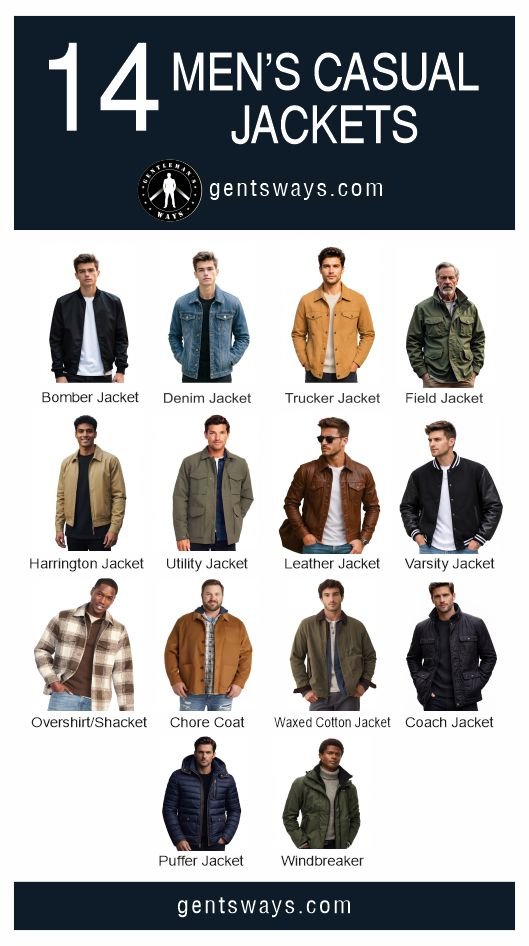
Table of Contents
What Is a Men’s Jacket?
A jacket is an outer garment that covers the torso and arms and usually ends at the waist or hip. It opens at the front with buttons, a zip, or snaps, and sits over a shirt, tee, or knit.
Jackets are one family within the full range of men’s outerwear, alongside longer coats, technical shells, and vests. Coats reach the thigh or knee, while jackets stay shorter and lighter for everyday wear.
Every jacket falls into one of two camps, namely casual jackets built around function and tailored jackets built around structure. The casual camp is far larger, so its types are grouped by family below.
Casual Jackets
Military-Inspired Jackets
Field jacket. The field jacket came from American army kit, and the M-65 version of 1965 set the template still sold today. It has four front pockets, a hidden hood in the collar, a drawstring waist, and a hip length that flatters most builds. Olive is the classic color, while navy and tan look a little sharper in town.
Callum’s first real success was an olive field jacket that reached past his belt. The extra length balanced his long legs, and for the first time a casual jacket made him look proportioned rather than stretched.
Utility jacket. A utility jacket borrows the field jacket’s pockets and sturdy cotton but drops the hood and drawstring for a cleaner, lighter feel. It suits spring days and works over a tee or thin knit with jeans or chinos.
Bomber jacket. Bombers have a ribbed collar, cuffs, and hem that gather at the waist, giving a short, sporty outline. They suit average and shorter frames well, and plenty of ideas appear in these bomber jacket styling tips.
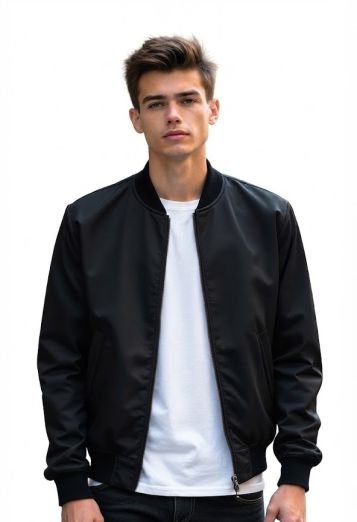
On Callum, the ribbed hem stopped high on his torso and made his legs look endless. A bomber is a fine jacket, but it was the wrong one for a man of his height.
Flight and shearling jackets. Pilots in the 1930s and 1940s wore leather flight jackets, and the sheepskin-lined versions became today’s shearling or aviator jackets. The wool lining makes them among the warmest casual jackets, so they suit dry, freezing winters more than rainy ones.
Sporty Jackets
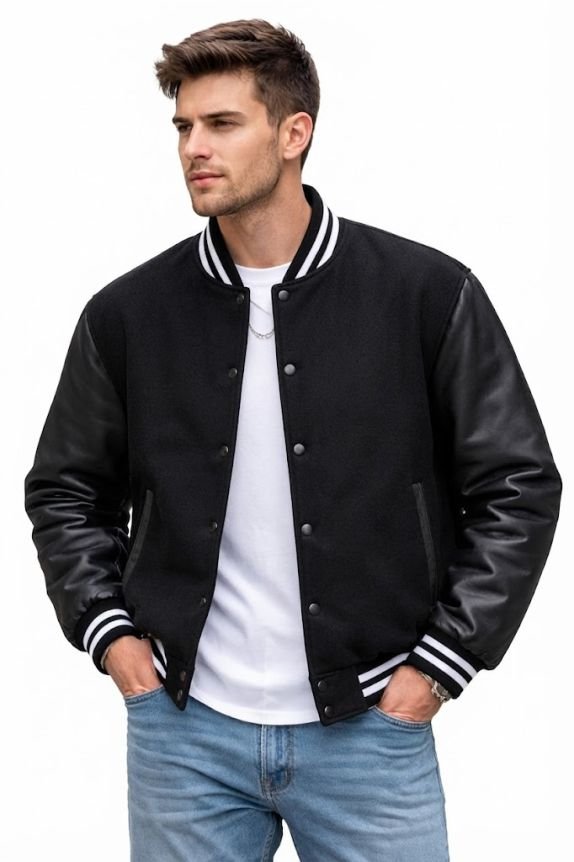
Varsity jacket. The varsity or letterman jacket grew out of American college sports, pairing a wool body with leather sleeves and ribbed trims. Keep the rest of the outfit plain, such as a white tee, dark jeans, and clean sneakers, so the jacket stays the focal point.
Coach jacket. Named after the lightweight jackets sports coaches wore on the sidelines, the coach jacket has a snap front, a simple collar, and a nylon shell. Skaters and hip hop artists adopted it, and it now works as an easy layer over hoodies and tees.
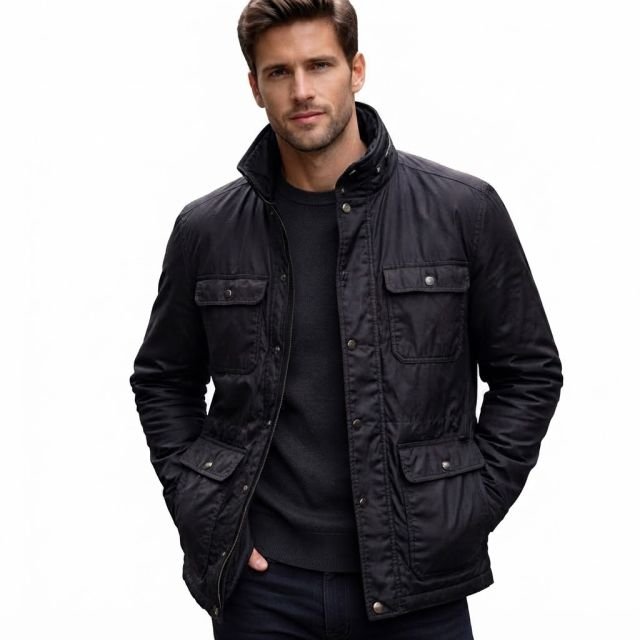
Windbreaker and anorak. A windbreaker is a thin nylon or polyester jacket that blocks wind and light showers, usually with a zip and a packable hood. An anorak is the pullover version, with a half zip and a large front pouch pocket.
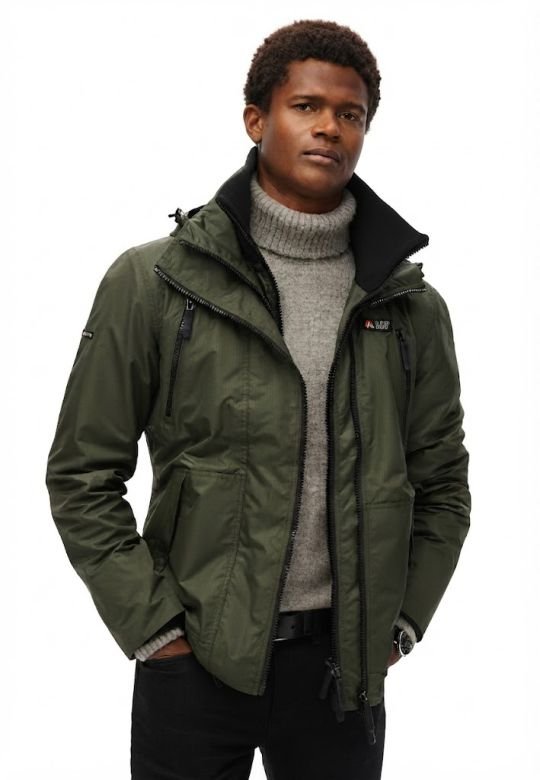
Wind matters more than most men expect, and the US National Weather Service explains why. At 0°F with a 15 mph wind, the wind chill reaches minus 19°F, and exposed skin can freeze in about 30 minutes.
Track jacket. Track jackets use smooth, stretchy tricot fabric with a full zip and stripes down the sleeves. They began as athletic warm-up wear and now pair well with plain tees and slim trousers for relaxed weekends.
Souvenir jacket. The souvenir jacket, or sukajan, began in post-war Japan, where tailors embroidered satin bombers for American servicemen. Bold dragons, tigers, and landscapes make it a statement piece, so wear it with simple black or white basics.
Workwear Jackets
Chore coat and work jackets. The chore coat began as a French work jacket, cut from tough blue cotton with three or four patch pockets. Modern versions come in canvas, twill, corduroy, and moleskin, and layer easily over knits or flannel shirts for cool days.
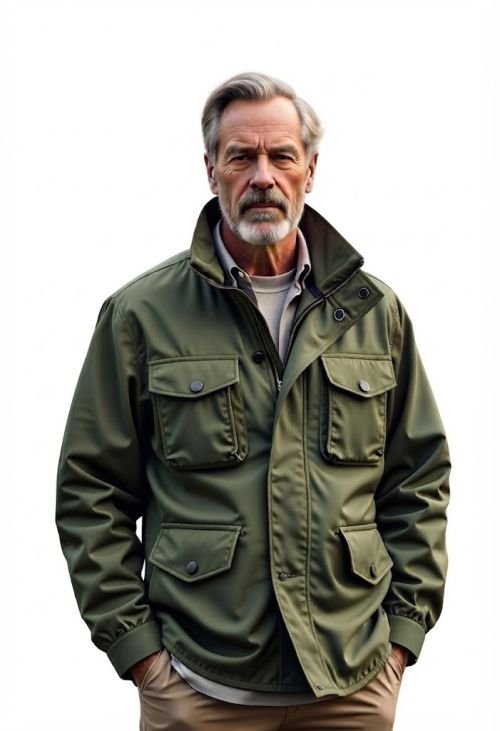
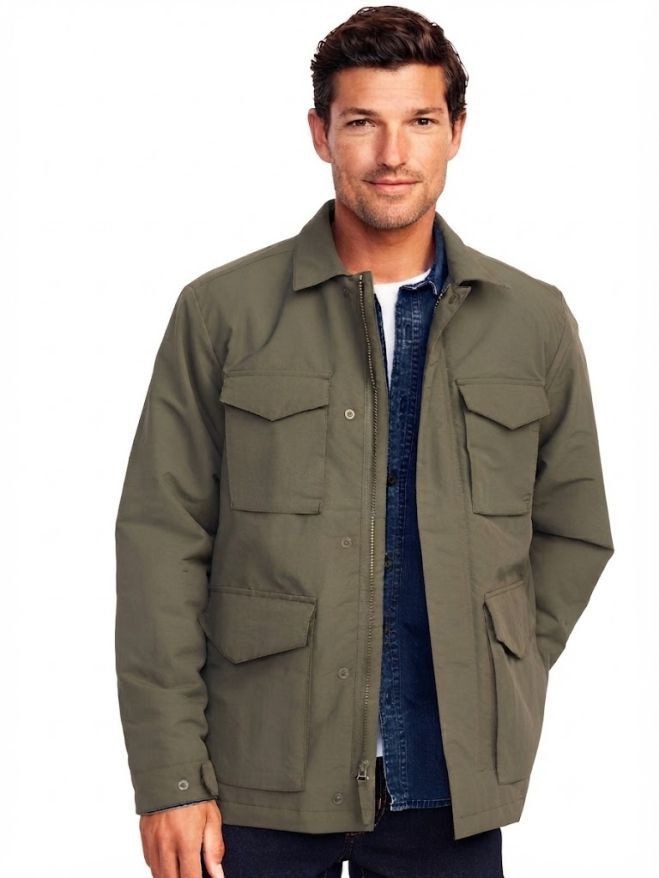
Barn jacket. A barn jacket is a hip-length canvas jacket with a corduroy collar and a soft lining, built for American farm work. It suits fall weekends, country walks, and casual outfits with jeans and leather boots.
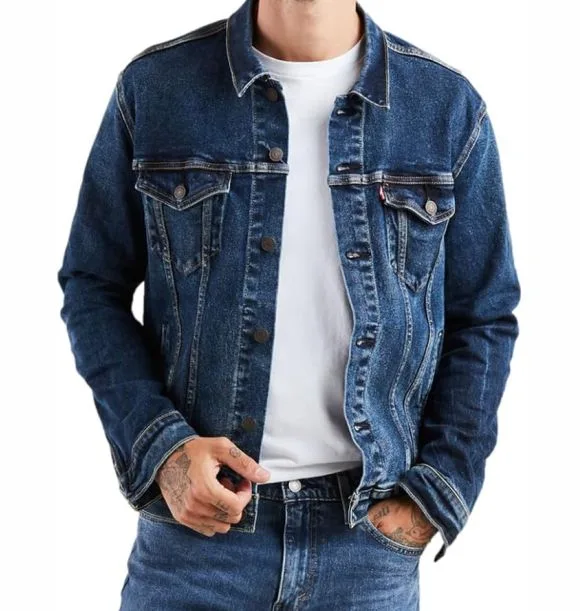
Denim and trucker jackets. The denim trucker is one of the most recognized casual jackets ever made, and lined sherpa versions add warmth for cooler months. Wear one a shade or two away from your jeans, and find fits and washes in denim jacket types and care.
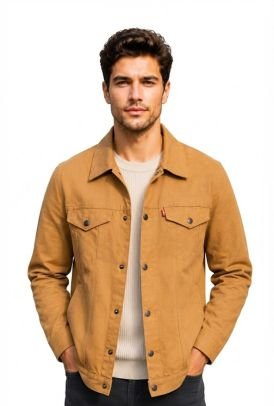
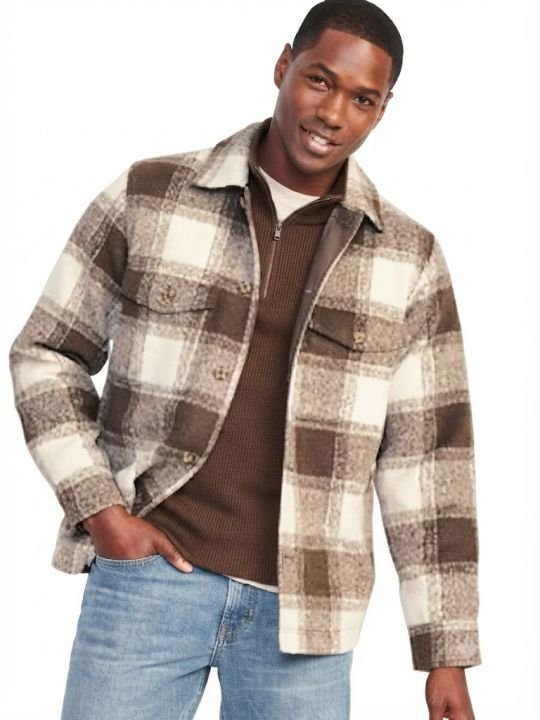
Shirt jacket and overshirt. A shirt jacket, also called a shacket, buttons like a heavy shirt but is sized to wear over a tee or thin knit. It suits in-between days when a full jacket feels too warm and a shirt alone feels too cool.
Leather and Suede Jackets
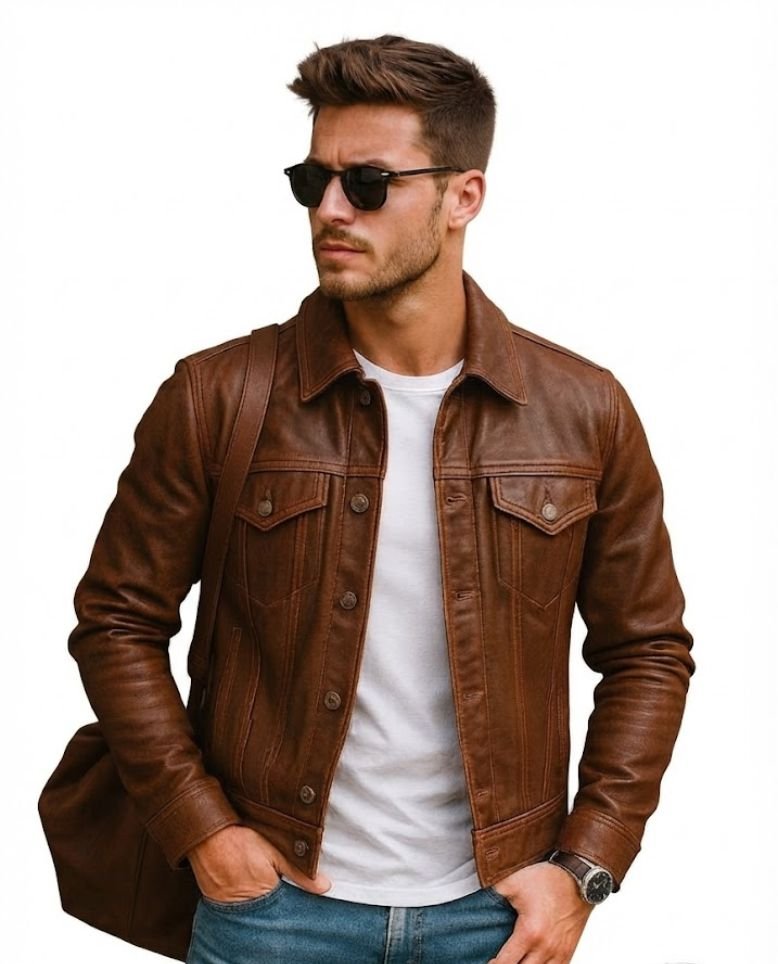
Leather jacket. Biker, café racer, and leather bomber cuts each suit different builds, and a good one lasts for decades. Compare the styles of leather jacket before spending serious money on one.
Suede jacket. Suede is leather with a brushed, velvety surface, which makes it softer and more relaxed than smooth leather. Trucker and blouson cuts in tan or brown look excellent in spring and fall, but keep suede away from heavy rain.
Country and Weather Jackets
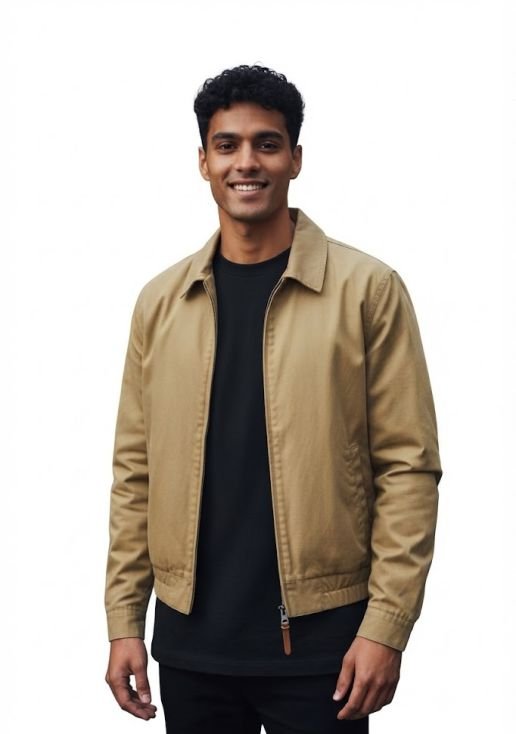
Harrington jacket. The Harrington is a light, waist-length jacket with a stand collar, a zip, and a tartan lining. It first appeared in Britain in the 1930s and later became a staple of mod and Ivy style.
The short cut suits average and shorter frames, while tall men should look for longer-bodied versions. Navy, stone, and black pair well with polos, oxfords, slim chinos, and loafers.
Waxed jacket. Waxed cotton jackets shed rain thanks to a coating of paraffin or natural wax, a method borrowed from British sailors and farmers. They suit damp climates such as the UK and Ireland, and they need rewaxing every year or two to stay waterproof.
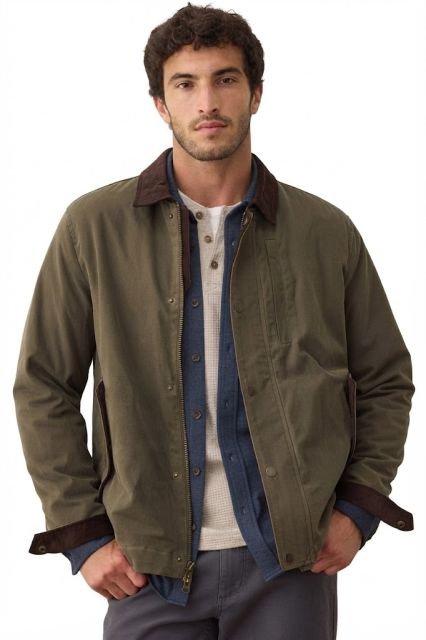
Quilted jacket. Quilted jackets use stitched channels of light padding to trap warmth without bulk, and the style came from British country clothing. They look smart over a sweater, layer under heavier coats, and handle light drizzle well.
Insulated and Technical Jackets
Puffer and lightweight down jacket. Puffers trap warm air in baffles filled with down or synthetic insulation, giving plenty of warmth for little weight. Lightweight down jackets are thinner versions that fold into a pocket and layer under shells.
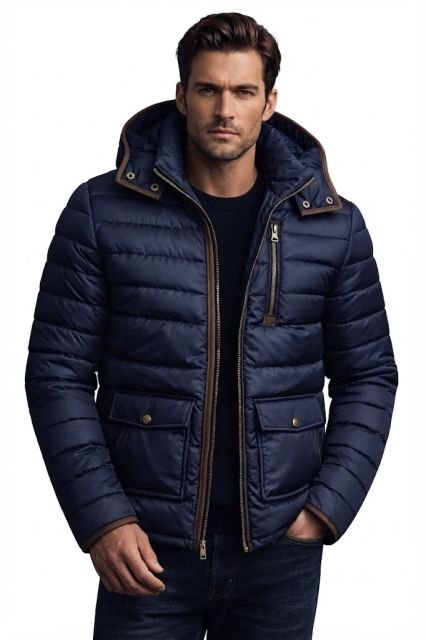
Down packs smaller and lasts longer, while synthetic fill keeps more warmth when wet. Callum’s first puffer was an oversized, cropped style that made him look like a tall stack of tires, and a longer, slimmer cut fixed it completely.
Parka. A parka is a long, hooded, insulated jacket for serious cold, usually reaching the upper thigh. Look for a sealed hood, a two-way zip, storm cuffs, and enough length to cover your seat when sitting.
Rain jacket. A rain jacket blocks water and wind without adding much warmth, so it layers over whatever the day needs. Waterproof versions have taped seams, while water-resistant ones handle only light showers.
Fleece jacket. Fleece is a soft synthetic fabric that stays warm when damp and dries quickly. It works alone on cool, dry days or as a warm middle layer under a rain jacket.
Softshell and technical jackets. Softshells use stretchy, breathable fabric that blocks wind and light rain while letting sweat escape. Hardshells and other technical pieces belong to the same family, covered fully under performance outerwear for men, and they also drive gorpcore outfit ideas.
Tailored Jackets
Tailored jackets have structured shoulders, a cut waist, and lapels that frame the chest. They dress an outfit up rather than protect it from weather, and the full range of cuts and cloths appears under tailored blazers and sport coats.
Blazer. A blazer is a solid-colored tailored jacket, usually navy, worn without matching trousers. These ideas for wearing a blazer cover jeans, chinos, and gray wool trousers.
Sport coat. A sport coat is a relaxed tailored jacket in textured cloth such as tweed or herringbone, first worn for country sports. The differences in cloth and formality are set out in sport coats versus blazers.
Suit jacket. A suit jacket is cut from the same cloth as its trousers and belongs with them as the full suit. Its smooth fabric rarely works with jeans, so buy a blazer for separates instead.
Dinner jacket. The dinner jacket, or tuxedo jacket, has silk-faced lapels and is worn for black-tie events. Velvet smoking jackets are its relaxed cousin, worn at home or at festive evening parties.
Choosing a Jacket for Your Weather
Start with the weather you face most months, not the weather in a catalog photo. For wind, choose a tightly woven or windproof shell, and for regular rain, pick waterproof fabric with taped seams and a proper hood.
For dry cold, insulation matters most, so a puffer, parka, or shearling jacket works best. For damp cold, synthetic insulation or a waxed jacket over a fleece beats down, which loses warmth when soaked.
Layering usually beats one huge jacket, because you can add or remove pieces as the day changes. The National Institute for Occupational Safety and Health recommends several loose layers for better insulation, and warns that restrictive clothing can be dangerous in the cold.
The principles of smart layering for men apply to jackets as much as shirts. Choose knitwear to layer underneath that sits flat enough to fit under your jacket sleeves.
Choosing a Jacket for Your Height and Build
Callum’s story comes down to one rule that holds for every man, namely that proportion matters more than trends. The right jacket balances your frame, while the wrong one exaggerates whatever you would rather hide.
- Tall Men: Tall men look best in hip-length or longer jackets, such as field jackets, barn jackets, and parkas. Cropped bombers and short puffers make long legs look longer, so look for tall sizes with longer bodies and sleeves. Tall sizes were the real turning point for Callum, and the same idea runs through all of dressing well as a tall man.
- Shorter Men: Shorter men suit waist-length bombers, Harringtons, coach jackets, and truckers, which show more leg.
- Broad and Muscular: Broad and muscular men need room through the back and arms, so stretch fabrics and raglan sleeves work well. Larger men look sharpest in structured, straight-cut jackets such as field and quilted styles, rather than shiny, boxy puffers.
For more on cuts that flatter your frame, read about matching clothes to your build. The same proportion rules apply just as well to shirts, trousers, and knitwear.
How a Jacket Should Fit
The shoulder seam should sit at the edge of your shoulder, and sleeves should reach the wrist bone with your arms relaxed. You should be able to close the jacket over a sweater without pulling across the chest.
Lift your arms above your head in the fitting room, and make sure the hem does not ride up past your waist. Every casual jacket should at least cover your belt, whatever its style.
Fit also changes how other people see you within seconds of meeting. In a 2013 study by Howlett and colleagues, 274 people judged images of the same man. He seemed more confident and higher earning in a well-fitted jacket than in an off-the-rack one.
Read more on how clothing should fit before you buy anything you plan to wear for years.
How to Style Men’s Jackets
Match the jacket’s formality to the rest of the outfit, so rugged jackets go with rugged clothes and sleek ones with cleaner pieces. A few reliable outfit formulas cover most of the situations you will face.
- Weekends. A denim, field, or coach jacket over a plain tee, dark jeans, and clean sneakers.
- Smart casual. A Harrington, suede trucker, or quilted jacket over an oxford with chinos and loafers.
- Office. A blazer or smart quilted jacket with tailored trousers and leather shoes for business casual outfits.
- Streetwear. Varsity, souvenir, and coach jackets sit at the center of streetwear outfits for men.
- Outdoor weekends. A softshell or fleece with cargo trousers and trail shoes.
Contrast textures to make simple outfits interesting, such as suede with denim or waxed cotton with wool. Keep colors calm when textures vary, so the outfit looks deliberate rather than busy.
Jackets Through the Seasons
Spring suits Harringtons, utility jackets, coach jackets, windbreakers, and suede truckers in lighter colors. Summer evenings need only a shirt jacket, a packable windbreaker, or an unlined linen blazer.
Fall brings out leather, suede, chore coats, barn jackets, and waxed cotton in earthy colors. Plenty of autumn outfits for men start with one of these jackets.
Winter calls for puffers, parkas, and shearling jackets worn over warm knits and layers. Browse more cold weather outfit ideas for combinations that stay warm without looking bulky.
Building a Jacket Rotation
Most men need only three or four jackets to cover the whole year. A sensible set includes one light casual jacket, one rain jacket, one insulated winter jacket, and one smarter option.
Buying fewer, better jackets also cuts waste, and the Ellen MacArthur Foundation reports that clothing production roughly doubled over the past 15 years. A well-chosen jacket fits easily into a man’s core wardrobe for many seasons.
Men over 50 can follow the same plan, allowing a little more room for comfort and warmth. Ideas for smart style for men over 50 include classic jackets that suit every age.
Caring for Your Jackets
Read the care label first, since leather, suede, down, wax, and technical fabrics each need different treatment. Condition leather once or twice a year, and brush suede with a soft suede brush after wear.
Wash down jackets gently with down-specific soap, then tumble dry low to restore loft. Rewax waxed cotton every year or two, and refresh technical jackets with a wash-in waterproofing treatment.
Hang heavy jackets on wide, sturdy hangers to protect the shoulders from stretching. Store off-season pieces in breathable bags rather than plastic, which can trap moisture and encourage mildew.
Common Jacket Mistakes
- Buying for looks alone, then finding the jacket far too thin for your local winter.
- Choosing a cropped style when you are tall, which makes the legs look much too long.
- Wearing sleeves that cover the thumbs or stop well short of the wrist bone.
- Matching a denim jacket exactly to your jeans, which looks like an accidental suit.
- Wearing a suit jacket as a casual jacket, which looks like half of a suit.
Men’s Jackets at a Glance
| Jacket | Best Season | Best For | Suits |
|---|---|---|---|
| Field or utility | Spring, fall | Casual and smart casual | Most builds, tall men |
| Bomber, coach, Harrington | Spring, fall | Casual and streetwear | Average and shorter frames |
| Varsity, souvenir | Spring, fall | Streetwear | Most builds |
| Denim or trucker | Spring, fall | Casual | Most builds |
| Chore, barn, shirt jacket | Spring, fall | Workwear and weekends | Most builds |
| Leather or suede | Fall, mild winter | Casual and evenings | Most builds, cut matters |
| Waxed or quilted | Fall, winter | Country and smart casual | Most builds |
| Puffer, parka, shearling | Winter | Cold weather | Choose longer cuts if tall |
| Rain, fleece, softshell | All year | Weather and activity | All builds |
| Blazer, sport coat | All year | Smart and office | Most builds |
Final Words from Gentsways
Callum spent years buying jackets that fought his height, from cropped bombers to oversized puffers that hung like tents. The answer turned out to be simple, a longer field jacket and a slim parka in tall sizes that balanced his frame. Your answer will look different, but the method stays exactly the same. Start with your weather, choose a type that suits your build, and get the fit right before thinking about color or brand. Pick the one jacket you need most this season, try three cuts, and buy the one that makes you stand straighter.
Frequently Asked Questions
What jacket should every man own?
Most men benefit from a light casual jacket, a rain jacket, and an insulated winter jacket. Add a smarter option, such as a blazer or quilted jacket, for dinners and work.
What is the best jacket for a tall man?
Tall men look best in hip-length or longer jackets, such as field jackets, barn jackets, and parkas. Look for tall sizes with longer bodies and sleeves that reach the wrist.
What is the difference between a coach jacket and a windbreaker?
A coach jacket has a snap front, a simple collar, and a slightly heavier nylon shell. A windbreaker is thinner and lighter, usually with a zip and packable hood.
How should a men’s jacket fit?
The shoulder seam should sit at your shoulder edge, and sleeves should reach the wrist bone. The jacket should close easily over a sweater and fully cover your belt.
Pyo Merez is a 45-yeard old husband, father, and a chemical engineer by profession and the founder of Gentsways, a men’s lifestyle site built in honour of his father, Dee Clement. He has been writing about men’s development, style, and character through his father’s lens since 2021, drawing on lived experience, his father’s example, and research from reputable publications. He is not a certified trainer or therapist; where fitness or health topics require it, articles are reviewed by qualified contributors.