Last updated on October 10th, 2026 at 05:18 am
Wardrobe essentials for men are the handful of well-made pieces that cover work, weekends, dates, and funerals without a last-minute panic. Get these right, and getting dressed stops being a daily puzzle you solve badly.
Most men own plenty of clothes but very few that actually work together or fit properly. A closet full of impulse buys still leaves you staring at it on a Monday morning with nothing to wear.
You will find the core pieces sorted by category, from shirts and trousers to outerwear, shoes, and accessories.
Each item comes with what to look for when buying, so you spend money once on pieces that last for years.
A suggested buying order at the end helps you build the collection steadily without blowing a whole paycheck in one weekend.
Table of Contents
What Are Wardrobe Essentials?
Wardrobe essentials are the foundation pieces a man wears again and again across most of the situations in his life. They are classic in cut, neutral in color, and good enough in quality to survive years of regular wear.
These core pieces are not the same as trends, statement pieces, or clothes for one hobby. A loud printed shirt can be fun, but it sits on top of the foundation rather than forming part of it.
The goal is to own pieces that pair easily with each other, so nearly any top works with nearly any bottom. If you want to take that idea further and own fewer clothes overall, read about building a capsule wardrobe next.
Shirts and Tops
Shirts do most of the work in a man’s wardrobe, since they sit closest to the face and show up in every photo. Start with these six, then add colors and patterns once the basics are covered.
White Oxford Shirt
If a man could own only one shirt, it would be this one. A good white oxford works with jeans on Saturday, chinos on Monday, and a blazer at a wedding.
Look for a soft button-down collar, thick cotton that is not see-through, and shoulders that end at your shoulder bone. Buy a light blue one next, since it suits nearly every skin tone.
Dress Shirts
At least two plain dress shirts for work, one white and one pale blue, cover interviews, offices, and formal events. Choose a spread or point collar that sits neatly under a tie and a blazer.
Plain T-Shirts
Three to five plain tees that last in white, gray, navy, and black handle weekends, layering, and hot days. Pay a little more for heavier cotton that keeps its neck and length after many washes.
Kwame, a nurse in Toronto, replaced a drawer of thin, stretched tees with four heavyweight ones. He says they still look new after two years, while the cheap ones had sagged within a season.
Polo Shirt
A classic polo shirt in navy or white sits between a tee and a button-down, which makes it ideal for golf, barbecues, and relaxed offices. A knitted polo looks smarter than piqué and pairs well with a blazer.
Knitwear
A merino crew neck in navy or gray layers over shirts and under jackets from autumn through spring. Add a cardigan or a roll neck later, and browse merino and cashmere sweaters for fabrics that do not itch or pill quickly.
Trousers
Three types of trousers cover nearly every situation a man faces in a normal year. Buy them in neutral colors, and make fit the first priority over brand or price.
Dark Jeans
One pair of dark jeans that fit through the seat and thigh goes further than five faded pairs. Choose a slim or straight cut in dark indigo without rips or heavy fading.
Chinos
Khaki and navy chinos for daily wear sit between jeans and wool trousers, so they work in more places than either. Add olive or stone later, once those first two pairs are in steady weekly use.
Wool Trousers
A pair of mid-gray tailored wool trousers pairs with a navy blazer for formal lunches, client meetings, and evening events. Flat fronts suit most men, and a light break at the shoe keeps the line clean.
Tailoring
Even men who work in casual jobs need at least one tailored jacket and one suit. Weddings, funerals, interviews, and court dates rarely give you much notice to prepare.
Navy Blazer
A well-cut navy blazer pairs with jeans, chinos, gray trousers, and white trousers, giving you dozens of outfits from one jacket. Choose a two-button, single-breasted cut in a wool that you can wear all year.
Dark Suit
Own one dark suit in navy or charcoal for weddings, funerals, and interviews. Skip black, which looks severe in daylight and suits fewer occasions than most men expect.
Michael, an electrician in Leeds, bought his first suit at 34 for a friend’s funeral, in a rush and at full price. He later admitted that buying a good charcoal suit earlier would have saved money and a stressful afternoon.
Outerwear
Outerwear is the first thing people see in colder months, so it deserves real investment. Three jackets cover most climates, from mild spring days to freezing winter mornings.
Casual Jacket
A field jacket, Harrington, or chore coat handles spring and fall over tees and knits. Compare styles in these casual jackets for every season before choosing one that suits your daily life.
Denim or Leather Jacket
A denim jacket or a leather jacket adds personality to casual outfits and lasts for decades with care. Choose one rather than both at first, depending on your style and climate.
Wool Overcoat
A warm wool overcoat in navy, charcoal, or camel works over suits, blazers, and knits through winter. It should fall to about mid-thigh or just above the knee and fit over a jacket comfortably.
A rain jacket or trench completes the set in wet climates such as the UK, Ireland, and the Pacific Northwest. Choose a plain, neutral one that is long enough to cover your blazer completely.
Shoes
Shoes signal more about a man than he usually realizes, and cheap ones wear out quickly. Four pairs cover nearly everything, provided you buy quality leather and look after it.
Leather Dress Shoes
Dark brown or black oxfords or derbies cover suits, interviews, and formal events. Look for leather dress shoes with stitched soles that a cobbler can replace.
Loafers
Brown suede or leather loafers bridge casual and smart outfits, pairing with jeans, chinos, and wool trousers alike. They are the shoe most men reach for once they own a good pair.
White Leather Sneakers
Plain white leather sneakers without loud branding work with jeans, chinos, and casual blazers. Keep them clean, since dirty white sneakers undo an otherwise sharp outfit.
Leather Boots
A pair of leather boots, such as brown chelseas or chukkas, handles rain, cold, and casual weekends. Suede looks softer than smooth leather, but it needs more care in wet weather.
Good shoes last far longer with a little attention, from shoe trees to regular polishing. Learn the basics of caring for leather shoes to double the life of every pair.
Accessories
A few quality accessories finish an outfit and last for years when chosen well. Keep them simple, neutral in color, and in proportion with your height and build.
- Belts in brown and black, each matched to your shoes in color and finish.
- A simple everyday watch on a leather strap or steel bracelet that suits both work and weekends.
- One or two plain ties in navy and burgundy, plus a white pocket square for formal events.
- A plain leather wallet, sunglasses that suit your face, and a scarf for colder months.
How Many Pieces You Actually Need
The list above comes to roughly 25 core pieces, not counting socks, underwear, and sportswear. That is enough to dress well for almost every setting most men face.
Owning the core pieces does not mean you can never buy anything else. It means every new purchase has a solid foundation to pair with, so impulse buys stop gathering dust.
Men over 50 may want to adjust the list for comfort, warmth, and slightly roomier fits. A dedicated list of wardrobe basics for men over 50 covers those changes in detail.
What to Look For When Buying
Fit comes first, because an expensive shirt that pulls across the chest looks worse than a cheap one that fits. Spend time on getting the fit right before you spend money on labels.
Check the fabric by feel and weight, choosing natural fibers such as cotton, wool, linen, and leather where possible. Look inside the garment too, since neat seams and secure buttons signal better construction.
Budget for a tailor, since small alterations make affordable clothes look far more expensive. Hemming trousers and shortening sleeves cost little and make the biggest difference.
Sara runs a small menswear shop in Melbourne and says most men walk in asking about brands. She steers them toward fit and fabric first, because those two choices decide how long a piece will be worn.
A Sensible Buying Order
Building the full list at once is expensive and unnecessary for most men. Buy in this order, adding a few pieces each season as your budget allows.
- Start with a white oxford shirt, a pair of dark jeans, and white leather sneakers.
- Add khaki chinos, a few plain tees, and a navy merino sweater for cooler days.
- Next, buy a navy blazer and a pair of brown suede loafers to dress things up.
- Then add a dark suit, two dress shirts, and a pair of leather dress shoes.
- Follow with a casual jacket, a wool overcoat, and a sturdy pair of leather boots.
- Finish with accessories, then add extra colors and patterns once the core is complete.
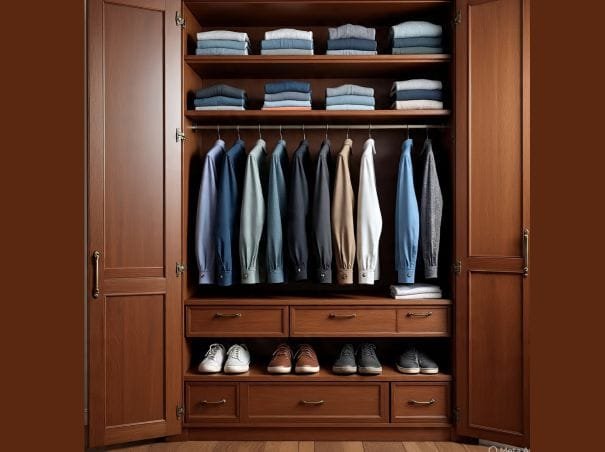
Keep your closet organized as it grows, so you can see everything you own at a glance. Tips on organizing your closet help you avoid buying duplicates you forgot you had.
Wardrobe Essentials at a Glance
| Category | Core Pieces |
|---|---|
| Shirts and tops | White oxford, two dress shirts, plain tees, polo, merino sweater |
| Trousers | Dark jeans, khaki and navy chinos, gray wool trousers |
| Tailoring | Navy blazer, dark navy or charcoal suit |
| Outerwear | Casual jacket, denim or leather jacket, wool overcoat |
| Shoes | Dress shoes, loafers, white sneakers, leather boots |
| Accessories | Brown and black belts, watch, ties, pocket square |
What Research Shows
Research on clothing points to two clear benefits of owning fewer, better pieces, namely how others see you and how long clothes last. The studies below come from university researchers, government agencies, and national surveys.
A 2013 study by Howlett and colleagues showed 274 people images of the same man for up to five seconds. He was rated more confident and higher earning in a well-fitted, made-to-measure jacket than in an off-the-rack one.
UK sustainability charity WRAP found that keeping clothes in use for nine extra months cuts their carbon, water, and waste footprints by about 20 to 30 percent. Well-made basics that last longer make that goal easy to reach without extra effort.
The US Environmental Protection Agency estimated that Americans generated about 17 million tons of textile waste in 2018. Only about 14.7 percent was recycled, and around 11.3 million tons went to landfill.
A 2023 Gallup survey of US workers found 41 percent wear business casual at work. That shift explains why chinos, oxfords, and blazers now matter more to most men than a closet full of suits.
These findings have limits that are worth noting before you rebuild your closet. The Howlett study used a small lab sample, the WRAP figures are UK estimates, and waste data counts only what is measured.
Frequently Asked Questions
What clothes should every man own?
Every man should own a white oxford, dark jeans, chinos, a navy blazer, and leather shoes. Add plain tees, a warm sweater, and a wool overcoat when you can.
How many shirts does a man need?
Most men do well with about eight to ten shirts, including oxfords, dress shirts, tees, and a polo. Quality and fit matter far more than the number of shirts hanging there.
What colors should wardrobe essentials be?
Stick to navy, gray, white, light blue, khaki, olive, and brown for core pieces. These neutral colors pair easily with each other, so almost every top works with every bottom.
Is it worth paying more for wardrobe basics?
Yes, for pieces you wear constantly, such as shoes, jeans, and outerwear, better quality usually lasts longer. Paying more once can cost less than replacing cheap versions every year.
Pyo Merez is a 45-yeard old husband, father, and a chemical engineer by profession and the founder of Gentsways, a men’s lifestyle site built in honour of his father, Dee Clement. He has been writing about men’s development, style, and character through his father’s lens since 2021, drawing on lived experience, his father’s example, and research from reputable publications. He is not a certified trainer or therapist; where fitness or health topics require it, articles are reviewed by qualified contributors.