Last updated on June 1st, 2026 at 10:23 am
Most men wear clothes that are either too tight or too loose, missing the balance that defines real style. Proper fit changes how you look, how you move, and how others perceive you, turning simple outfits into confident, intentional expressions.
Understanding how clothes should fit men is one of the simplest ways to upgrade personal style without buying expensive wardrobes or chasing trends.
A good fit improves appearance, boosts confidence, and makes even basic outfits look intentional rather than careless.
It is about understanding proportions across shoulders, chest, waist, sleeves, and trousers so that every piece sits naturally on the body.
This allows ease of movement while maintaining a clean silhouette that works for both casual and formal dressing in everyday life situations that enhance overall personal presentation and style clarity.
These and more are what we are going to discuss in this post.
Table of Contents
What is Clothing Fitness?
Clothing fitness is how loose or tight your garments match your body shape, size, and proportions.
It is how clothes sit on shoulders, chest, waist, sleeves, and legs while allowing easy movement.
Good clothing and fitness create balance, comfort, and a clean look that improves overall appearance without needing expensive fashion pieces.
Common Fit Terms Every Man Should Know
Clothing fit terms help you understand how garments are built, how they sit on your body, and what to look for when buying or tailoring clothes.
Knowing these terms makes it easier to spot a good fit and avoid outfit mistakes.
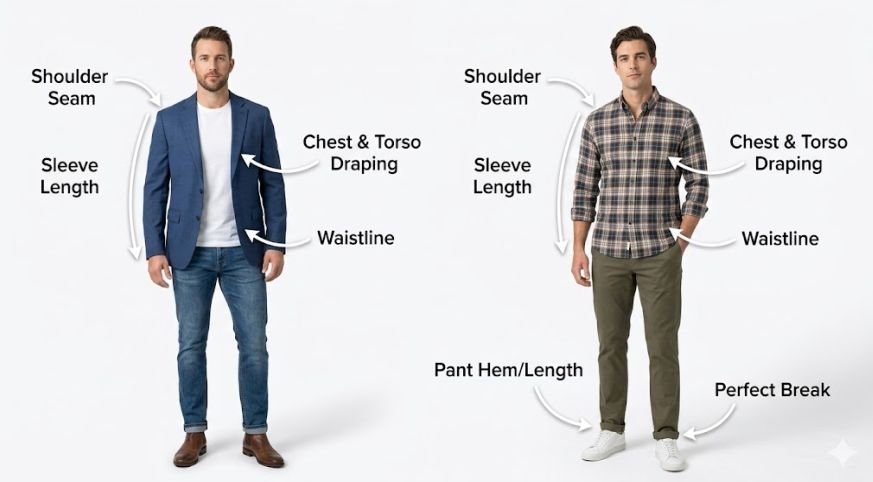
- Seam: A seam is the line where two pieces of fabric are stitched together. In menswear, seam placement affects structure, especially at the shoulders, sides, and sleeves, helping clothes follow your body shape cleanly.
- Hem: The hem is the finished edge of a garment, usually found at the bottom of shirts, trousers, jackets, and sleeves. Hem length controls proportion, affecting how balanced your outfit looks from top to bottom.
- Inseam: Inseam refers to the inner leg measurement of trousers, running from the crotch to the ankle. It determines trouser length and how the fabric breaks or stacks over your shoes.
- Rise: Rise is the distance between the crotch and the waistband of trousers. It affects where pants sit on your body, shaping torso length and overall proportion between upper and lower body.
- Break: Break describes how trousers rest on shoes. A full break creates a strong fold, a slight break forms a small crease, and no break sits clean above the shoe for a sharp, modern look.
- Shoulder line: Where a garment sits on your shoulders. A clean shoulder line creates structure and keeps jackets, shirts, and knits from looking sloppy or too tight.
- Chest fit: How clothing sits across your chest area. A good chest fit avoids pulling buttons or excess baggy space in shirts and jackets.
- Waist suppression: How much a jacket or shirt narrows at the waist. More suppression creates a sharper shape; less suppression gives a straighter, more relaxed look.
- Drape: How fabric falls on your body. Good drape means smooth lines without stiffness or awkward folds.
- Armhole: The opening for your arm in shirts, jackets, and tees. Higher armholes usually mean a cleaner, more tailored fit with better movement control.
- Collar roll: How a shirt collar sits around your neck. A clean collar roll sits flat without gaping or choking.
- Leg opening: The width at the bottom of trousers or jeans. It affects stacking, shoe pairing, and overall leg shape.
- Drop (suit sizing): The difference between jacket size and trouser size in a suit. It helps match body shape more accurately.
- Seat: The fit around your butt area in trousers or jeans. A good seat fit avoids sagging or tight pulling.
- Yoke: Upper back section of a shirt that connects the shoulders. It affects the fit across the upper back and shoulder movement.
Why Proper Clothing Fit Matters
Proper clothing fit changes how your body looks and how clothes sit on your shoulders, chest, waist, and legs, shaping confidence in daily wear and social settings.
It improves body proportions by balancing shoulders, defining the waist, and aligning trousers and jackets for a cleaner frame.
In menswear, a good fit creates visual balance between the upper and lower body, reducing bulk and improving outfit coordination.
Well-fitted clothes give a polished, neat appearance suitable for work, casual outings, and formal events, while also making simple outfits look more refined and structured.
Comfort improves because you can move freely without constant adjustments.
Tight clothes restrict movement, while oversized ones hide shape and distort proportions.
Strong fit supports personal style, acting as the base that makes every outfit look intentional and well put together.
Silhouette in Men’s Fashion
Silhouette in men’s fashion refers to the overall outline your clothing creates on your body.
It shows how shoulders, chest, waist, and legs come together visually through fit and structure.
A strong silhouette balances proportions, shapes body appearance, and influences how sharp, relaxed, or structured your outfit looks overall.
Slim silhouettes
Slim silhouettes follow the body closely for a sharp, clean look, while relaxed and oversized silhouettes give more room and a laid-back feel.
Streamlined outfits create long, clean lines, while loose structures add volume and casual energy.
Fit Silhouettes
Fit plays a key role in shaping shoulders, waist, and leg flow, helping you balance height and body shape.
Structured outfits bring order and polish, while oversized styles lean toward ease and comfort.
Matching jacket length, trouser width, and shoe weight keeps proportions aligned.
Avoid mixing extreme volumes, since it can break visual balance and reduce outfit harmony.
The Different Types of Fit in Men’s Clothing
Let’s talk about the types of fit, as how outfits fit change the outline of your frame, from close and sharp to loose and relaxed, affecting your style direction and how your clothes work together in real-life outfits.
Slim fit
Slim fit clothing follows your body shape with a closer cut around the chest, waist, and legs without feeling restrictive.
It gives clean lines and a sharp outline, making it suitable for modern structured outfits, smart casual dressing, and situations where a neat, fitted appearance improves your overall look.
Regular fit
Regular fit offers balanced room around the body, giving comfort without looking oversized or baggy.
It sits naturally on the frame and works well for everyday menswear, including shirts, trousers, and jackets.
This fit keeps your outfit simple, steady, and easy to wear across different settings.
Relaxed fit
Relaxed fit gives more space through the chest, waist, and legs, creating a looser outline with a casual feel.
It supports comfort-focused dressing and streetwear styling, where ease of movement matters more than a close body shape.
This fit works well for weekends, travel, and laid-back outfits.
Tailored fit
Tailored fit blends structure with natural body shape, adjusting key areas like shoulders, waist, and hem for a cleaner outline.
It is common in blazers, suits, and trousers, giving a refined look that still feels comfortable, making it ideal for both formal and smart casual dressing.
How Shirts Should Fit Men
How your shirt fits reflects how your upper body looks in daily wear, affecting posture, proportion, and overall outfit balance.
A well-fitted shirt sits clean on the shoulders, chest, and sleeves, giving your frame a neat outline without pulling or excess fabric.
Each part of the shirt works together to create a sharp, comfortable appearance for both tucked and untucked styles.
Shoulder seam placement
Shoulder seams should sit right at the edge of your natural shoulder line, not falling down the arm or sitting too far in.
This alignment keeps your upper body structured, improves jacket layering, and prevents a sloppy or tight look around the top frame.
Collar fit
The collar should sit close to your neck with enough room for one or two fingers to fit comfortably.
Too tight creates discomfort and tension, while too loose looks relaxed in the wrong way and breaks the clean neckline needed for a neat shirt appearance.
Sleeve length
Sleeves should end at the wrist bone, allowing the cuff to sit neatly without covering the hand or riding too high.
This balance keeps your arms looking proportionate and ensures your shirt works well with watches, jackets, and formal or casual styling.
Chest and torso fit
The shirt should sit close to your chest and stomach without pulling at the buttons or creating excess folds.
Tight areas cause button strain, while too much space creates a boxy look that hides shape and weakens your overall silhouette.
Shirt length
Shirt length depends on styling choice, with longer hems suited for tucking into trousers and shorter cuts designed for untucked wear.
Proper length keeps your outfit balanced, prevents constant adjustment, and supports clean proportions, whether you dress formal or casual.
How T-Shirts Should Fit Men
T-shirt fit sets the tone for your casual style, shaping how your upper body looks in everyday outfits.
A well-fitted tee sits clean on the shoulders, follows the chest without pulling, and keeps a balanced shape through the torso.
The right fit gives your look structure even in simple dressing.
Proper shoulder alignment
Shoulder seams should sit right at the edge of your natural shoulder line.
When seams drop too far down the arm, the shirt looks oversized and sloppy.
When they sit too high, the fit feels tight and restricted, throwing off your upper body balance.
Sleeve length and arm fit
Sleeves should end around mid-bicep, sitting close enough to show shape without clinging tightly.
Loose sleeves add bulk, while overly tight sleeves restrict movement.
A clean arm fit helps your upper body look defined and proportional in casual wear.
Body length and hem placement
T-shirt length should fall around the mid-hip area, covering the waistband without going too low.
A proper hem keeps your outfit balanced, prevents bunching, and works well for both tucked and untucked styling in everyday outfits.
Slim vs oversized t-shirt styling
Slim t-shirts follow your body shape closely for a sharp, fitted look, while oversized tees add volume for relaxed street style.
Slim fits suit clean, structured outfits, while oversized fits work better for casual, laid-back looks with loose proportions.
Common t-shirt fit mistakes
Common issues include shoulder seams falling too low, sleeves that are too long or tight, and hems that sit either too high or below the hips.
These mistakes disrupt proportions and make even simple outfits look unbalanced or careless.
How Men’s Blazers and Jackets Should Fit
A well-fitted blazer or jacket enhances your upper body, setting the tone for your entire outfit.
It controls how your shoulders, chest, and waist align, affecting how sharp or relaxed you look in formal and smart casual dressing.
Small fit details decide whether your jacket looks refined or off-balance.
Shoulder structure
Shoulder seam sits at the edge of your natural shoulder bone, not dropping down the arm or pulling inward.
This area sets the jacket’s foundation and affects how the entire piece falls on your body.
Jacket length
Jacket hem should fall around the mid-seat area, keeping your proportions balanced from top to bottom.
Length that is too short makes the torso look compressed, while overly long cuts reduce structure.
Sleeve length
Sleeves end just above the wrist bone, allowing a small shirt cuff to show.
This keeps the jacket looking properly tailored and prevents the arms from appearing too long or too short.
Chest, waist, and movement
The chest area should sit close without button strain, and the waist should taper slightly for shape.
Jacket must allow easy movement when sitting or standing, without pulling across the front or creating excess fabric folds.
How Suits Should Fit Men
Suit fit determines how your entire outfit is perceived, setting the structure from the shoulders down to the shoes.
A well-fitted suit creates clean lines, balanced proportions, and a controlled silhouette that works for formal events, office wear, and smart occasions where appearance and detail matter.
Suit jacket fit
A suit jacket should sit clean on your shoulders, follow your chest without pulling, and taper slightly at the waist.
Sleeves end just above the wrist bone with a small shirt cuff showing.
The jacket length should cover the seat while keeping your frame balanced and structured.
Trouser break and length
Trouser length should rest lightly on your shoes, creating a clean break or slight crease at the front.
Too much fabric causes pooling, while overly short trousers expose too much ankle, breaking proportion and reducing polish in formal styling.
Waist suppression and structure
Suit waist should taper gently to follow your natural body shape without feeling tight.
Proper suppression creates a sharper silhouette, keeping excess fabric away from the midsection while maintaining comfort during movement and sitting.
Proper rise in suit trousers
Trouser rise should sit at or just above your natural waistline, keeping the shirt tucked neatly and maintaining body proportion.
Low rise can shorten the torso visually, while high rise improves structure and supports a cleaner overall suit line.
Tailoring adjustments that improve suits
Small tailoring changes refine suit fit, including sleeve shortening, trouser hemming, waist adjustment, and jacket tapering.
These adjustments improve alignment across shoulders, chest, and legs, turning off-the-rack suits into cleaner, more structured outfits that fit your body better.
How Pants and Trousers Should Fit Men
Pants and trousers give form to the lower half of your outfit, affecting how your legs look, how your posture reads, and how balanced your overall style appears.
A good fit keeps your waist secure, your legs clean, and your outfit aligned from top to bottom without distraction.
Waist fit
Waist should sit comfortably without needing constant belt tightening.
The fit should hold your trousers in place while allowing easy movement when sitting, walking, or bending, without digging into your skin or sliding down during wear.
Rise options
Low-rise sits below the waist for a modern, casual look, but can shorten the torso visually.
Mid-rise sits at the natural waist and works for most body types.
High rise sits above the waist, improving leg length appearance and giving a more structured silhouette.
Leg shape
Straight-leg trousers fall evenly from thigh to ankle for a clean line. Slim fit narrows slightly for a sharper look without tightness.
Relaxed fit gives more room through the leg, creating a looser and more casual appearance in everyday outfits.
Trouser length and break
Full break creates a strong fold over the shoe, slight break gives a clean crease at the front, and no break sits just above the shoe for a sharp modern finish.
Each option changes how formal or relaxed your outfit appears.
Common trouser fit mistakes
Common issues include excess bunching around the ankles, trousers that are too tight on the thighs, or waist fits that rely too heavily on belts.
These mistakes break proportion, reduce comfort, and make even good outfits look poorly styled.
How Jeans Should Fit Men
Jeans give energy to your everyday style, affecting how your legs look, how your outfit balances, and how relaxed or sharp your appearance feels.
A good fit keeps your waist steady, your seat clean, and your legs well-proportioned without sagging or squeezing.
Waist and seat fit
Waist should sit comfortably without needing constant belt adjustment.
Seat area should follow your natural shape without excess sagging or tight pulling, keeping the back view clean and supported during movement.
Jeans length and stacking
Jeans length should fall at the shoe with a slight break or clean stacking, depending on style.
Too much fabric causes bunching at the ankle, while short hems make the outfit look unfinished and disrupt leg proportion.
Skinny vs straight vs relaxed denim
Skinny jeans follow the leg closely for a sharp, fitted look. Straight-leg jeans maintain even width from thigh to ankle for balance.
Relaxed jeans give extra room through the leg, creating a loose, casual shape with more comfort.
Avoiding sagging or excessive tightness
Sagging jeans break structure and reduce polish, while overly tight denim restricts movement and highlights discomfort.
Balanced fit keeps jeans secure at the waist and clean through the legs, supporting better proportions in daily outfits.
How Knitwear and Sweaters Should Fit
Knitwear and sweaters make up your cold-weather and smart-casual outfits, affecting how your upper body looks under layers.
A good fit keeps your shoulders clean, your sleeves neat, and your torso balanced without adding unnecessary bulk or hiding your natural frame.
Shoulder and sleeve fit
Shoulder seams should sit at the edge of your natural shoulder, not drooping down the arm or pulling inward.
Sleeves should follow the arm shape and end at the wrist bone, keeping the fit neat when worn alone or under jackets.
Proper body length
Sweater length should sit around the belt line, covering the waistband without extending too far down the hips.
Shorter lengths can disrupt proportion, while overly long knits create a heavy, boxy look that hides your frame.
Layering without bulk
Knitwear should sit close enough to layer under jackets without creating extra volume.
Light, well-fitted sweaters allow smooth layering under blazers or coats, keeping your silhouette clean instead of bulky or uneven.
Slim vs relaxed knitwear styling
Slim knitwear follows your body shape for a sharper, structured look that works well under tailoring.
Relaxed knits give more space and softness, creating a casual feel suited for weekend outfits and comfort-driven dressing.
How Outerwear Should Fit
Outerwear sets the final layer of your outfit, shaping how your entire silhouette looks in colder or formal settings.
Fit here affects structure, warmth, and proportion, since coats and jackets must work over other clothing without looking tight or overly bulky.
Coats and overcoats
Coats and overcoats should sit clean on the shoulders and fall straight through the body without pulling at the chest or waist.
Length usually sits around the knee or mid-thigh, keeping proportions balanced while allowing space for suits or knitwear underneath.
Leather jackets
Leather jackets should feel fitted but not restrictive, with shoulders sitting flat and sleeves ending at the wrist bone.
A slight taper through the waist creates structure, while too much tightness limits movement and too much looseness removes shape.
Bomber jackets
Bomber jackets work best when they sit at the waist or just below it, with a slightly relaxed body and fitted cuffs.
This balance keeps the jacket shaped without looking oversized, maintaining a clean, casual silhouette for everyday wear.
Trench coats
Trench coats should fall long and straight, usually below the knee, with enough room to move comfortably when buttoned.
The belt should define the waist lightly without squeezing, keeping the coat structured while still allowing layering underneath.
Allowing room for layering properly
Outerwear should give enough space for shirts, knits, or light jackets underneath without creating bulk or strain.
Proper layering in the room keeps movement easy, maintains clean lines, and prevents the outer layer from looking stretched or stiff.
How Shorts Should Fit Men
Men’s shorts are for warm weather, and they determine how your legs look, how balanced your outfit feels, and how relaxed your overall appearance comes across.
A good fit keeps your waist secure, your length proportional, and your silhouette clean without looking sloppy or restrictive.
Proper inseam length
Inseam length controls how your legs are visually proportioned.
Mid-thigh to just above the knee works best for most body types, keeping your frame balanced.
Too short can feel awkward, while overly long shorts can cut leg shape and reduce structure.
Waist comfort
Waist should sit naturally without digging in or sliding down during movement.
A well-fitted waistband removes the need for constant belt tightening and keeps your shorts stable, whether you are walking, sitting, or moving throughout the day.
Relaxed but structured silhouette
Shorts should give enough space for comfort while still keeping a defined shape.
A slight taper or straight cut helps maintain clean lines, so your outfit looks intentional rather than loose or shapeless.
Avoiding overly baggy shorts
Excessively baggy shorts hide leg structure and make proportions unclear. This can throw off the balance in your outfit and reduce overall sharpness.
A controlled fit keeps movement easy while maintaining a neat and modern look.
Clothing Fit Based on Body Type
Clothing fit changes how your body is visually read, and different body types need different balance points to keep proportions clean.
The goal is not to change your shape, but to use fit, structure, and length to create harmony in your overall appearance.
Slim body type
Slim frames benefit from clothing that adds a bit of structure through the chest, shoulders, and legs.
Slightly tapered shirts, jackets with shape, and well-fitted trousers help build presence and avoid a flat or overly narrow silhouette that can make proportions look uneven.
Athletic body type
Broader shoulders and developed thighs need clothing that follows shape without clinging.
Shirts and jackets should allow space across the chest and arms, while trousers should avoid tightness in the thighs.
This keeps your natural build visible without restricting movement or creating strain points.
Broad or bigger body type
Cleaner lines help create balance by reducing visual bulk. Straight cuts, darker tones, and well-aligned seams guide the eye vertically.
Avoid excess fabric around the midsection, since too much volume can hide structure and disrupt proportion.
Shorter men
Shorter frames benefit from cleaner vertical lines and higher-rise trousers to lengthen the legs visually.
Shorter jackets and properly hemmed trousers help avoid breaking the body into sections, keeping the silhouette continuous and more proportional.
Taller men
Taller builds work better with controlled proportions that break up height slightly.
Balanced jacket lengths, structured shoulders, and properly tapered trousers help avoid an overly elongated look, keeping the outfit grounded and visually steady.
Signs Your Clothes Do Not Fit Properly
Fit issues show quickly through fabric behavior, seam placement, and proportion problems, affecting how clean and balanced your outfit appears overall.
- Pulling fabric around buttons: Shirts or jackets pulling across buttons show tightness in the chest or waist, creating strain lines that break the clean outfit appearance.
- Excess fabric bunching: Extra fabric around the waist, sleeves, or legs forms folds that hide shape, making outfits look oversized and poorly structured overall.
- Shoulder seams are dropping incorrectly: Seams falling past the natural shoulder line create an oversized appearance, while seams sitting too high restrict movement and distort upper body structure.
- Sleeves too long or short: Sleeves covering hands or sitting too high above wrists disrupt proportion, affecting balance and making arms look uneven in outfits.
- Pants stacking excessively: Too much fabric gathering at the ankles creates heavy stacking, shortens visual height, and makes trousers appear poorly tailored or fitted.
Common Clothing Fit Mistakes Men Make
Fit mistakes affect how your outfits look and feel, even when the clothing quality is good.
Small choices in sizing, proportion, and styling can distort your silhouette, reduce comfort, and weaken the overall balance of your appearance in daily wear.
Buying based only on size labels
Relying on size tags alone ignores body differences between brands, leading to poor fit in the shoulders, chest, waist, and length overall.
- Wearing everything too slim or oversized: Extreme fits create imbalance, with overly tight clothing restricting movement or oversized pieces hiding shape and breaking natural body proportions completely.
- Ignoring tailoring adjustments: Skipping tailoring leaves off-the-rack clothes unchanged, causing sleeves, hems, and waist areas to sit poorly instead of matching your frame properly.
- Choosing trends over proportion: Following trends without considering body shape leads to outfits that look stylish on display but unbalanced or awkward on your body.
- Wearing incorrect trouser lengths: Wrong trouser length disrupts leg proportion, with excess fabric stacking at ankles or short hems exposing too much leg area visibly.
Tailoring Basics Every Man Should Know
Tailoring personalizes your outfits. It determines how your clothes grip your body, turning average pieces into well-fitted outfits.
Small adjustments improve proportion, comfort, and overall appearance, helping your wardrobe look more intentional without needing expensive clothing or constant replacements.
Simple alterations worth paying for
Hemming trousers, adjusting sleeve length, and taking in the waist are simple fixes that improve fit instantly.
These changes help clothes sit closer to your body without changing their original design or style.
What can and cannot be tailored
Trousers, jackets, and shirts can be adjusted at key points like length, waist, and sleeves.
However, shoulder width, armhole size, and major structural changes are difficult to fix without affecting the garment’s shape.
How tailoring improves affordable clothing
Affordable clothes look sharper when adjusted to your body.
Even budget pieces gain structure when hems, sleeves, and waistlines are corrected, improving silhouette and making outfits appear more refined and balanced in everyday wear.
Building a better wardrobe through fit
A well-fitted wardrobe starts with pieces that match your shape, not just size labels.
Tailoring helps each item work together, creating consistency in proportions and making every outfit look more intentional and put together.
Clothing Fit Rules for Different Dress Codes
Dress codes change how your clothes should sit on your body, from relaxed casual wear to structured formal outfits.
Fit controls how appropriate and balanced your appearance looks in each setting, shaping your silhouette, comfort level, and overall presentation.
Casual outfits
Casual clothing allows relaxed structure but should still follow your body shape without excess sagging or tightness.
T-shirts, jeans, and casual shirts should sit clean on the shoulders and waist, keeping proportions neat while allowing ease of movement.
Smart casual dressing
Smart casual blends relaxed pieces with sharper structure, so fit should lean clean and controlled.
Shirts, chinos, and lightweight jackets should sit close to the body without restriction, creating a neat silhouette that still feels comfortable and easy-going.
Business casual menswear
Business casual requires more structure, with shirts, trousers, and blazers fitting closer to the body.
Clean lines, proper sleeve length, and well-balanced trousers help maintain a professional look without the stiffness of full formal tailoring.
Formal and black tie outfits
Formal wear demands a precise fit, especially in jackets and trousers.
Shoulders must align perfectly, trousers should break cleanly on shoes, and waist shaping should be controlled.
Every detail works together to create a sharp, structured silhouette.
Conclusion
Fit shapes everything in menswear, from how your shoulders sit to how your trousers fall over shoes.
Clothes that match your body create balance, cleaner lines, and better movement in daily life.
Poor fit hides shape or adds unwanted bulk, while correct proportions bring structure to simple outfits.
Each piece, shirt, jeans, jackets, and suits, works better when it follows your frame naturally.
Paying attention to fit builds a sharper silhouette and improves how others read your style. Small adjustments in sizing and tailoring can change your entire wardrobe without replacing it.
Frequently Asked Questions
What is the most important part of clothing fit for men?
Shoulder fit matters most since it sets the structure for shirts, jackets, and sweaters, shaping overall proportions and how clothing sits on your upper body frame.
How tight should clothes fit men?
Clothes should sit close to your body without pulling or restricting movement, allowing natural motion while keeping clean lines across the chest, waist, sleeves, and legs.
Can tailoring really improve cheap clothes?
Yes, tailoring adjusts length, waist, and sleeves, making affordable clothing fit your body better, improving silhouette, structure, and overall appearance without changing original style.
How do I know if my clothes fit properly?
Proper fit shows clean shoulders, smooth fabric without pulling, correct sleeve and trouser length, and balanced proportions that follow your body without excess tightness or bagginess.
Pyo Merez is a 45-yeard old husband, father, and a chemical engineer by profession and the founder of Gentsways, a men’s lifestyle site built in honour of his father, Dee Clement. He has been writing about men’s development, style, and character through his father’s lens since 2021, drawing on lived experience, his father’s example, and research from reputable publications. He is not a certified trainer or therapist; where fitness or health topics require it, articles are reviewed by qualified contributors.