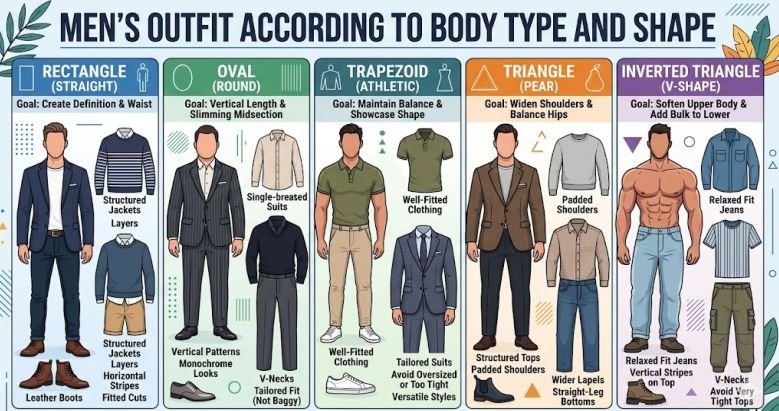
Great style starts with understanding your proportions. The right outfit can sharpen your silhouette, improve balance, and highlight your strongest features. Dressing for your body type is not about changing your shape but making every piece work with it.
Looking well-dressed is not about following every trend or filling your closet with expensive clothes.
It starts with understanding how your body is built and choosing outfits that complement your natural proportions.
Different body types respond differently to cuts, fits, fabrics, and layering techniques.
What creates balance on one man may look awkward on another.
When you know how to dress for your shape, shopping becomes easier, outfits feel more comfortable, and your overall appearance looks more refined.
This guide breaks down men’s body type outfits and shows how to dress with confidence and purpose.
Table of Contents
Understanding Body Shape Before Choosing Outfits
Before choosing outfits, it helps to understand the difference between body type and body shape.
Body type refers to factors such as muscle mass, body fat, and metabolism, while body shape focuses on how your shoulders, chest, waist, and hips are proportioned.
Clothing works best when it complements these proportions rather than fighting against them.
The right fit, cut, and layering techniques can create visual balance by emphasizing strengths and reducing disproportionate areas.
This is why clothing proportions matter more than simply following trends or wearing popular styles.
The purpose of dressing for your body shape is not to achieve perfection or imitate someone else’s physique.
Instead, the goal is to create balance, improve comfort, and build a wardrobe that helps you look confident, polished, and well-proportioned.
Here are the men’s body shapes:
- Rectangle: Shoulders, chest, and waist remain similar in width, creating a straight silhouette. The body appears balanced and uniform, with little taper or definition through the midsection.
- Trapezoid: Shoulders are slightly wider than the waist, creating balanced proportions. This shape presents a natural athletic appearance with a mild taper and strong overall symmetry.
- Inverted Triangle: Broad shoulders and a narrow waist create a distinct V-shape. The upper body dominates the frame, producing a strong, athletic, and visually striking silhouette.
- Oval: Weight is concentrated around the midsection, creating a rounded torso. The waist appears fuller, making the stomach area the most prominent feature.
- Triangle: Shoulders are narrower than the hips and lower body. Greater visual weight in the hips and thighs creates a wider base and downward-expanding silhouette.
Read the full article on men’s body types and shapes.
Universal Style Rules for Every Male Body Shape
No matter your body shape, a few style principles can help clothes fit better, look balanced, and create a sharper appearance.
These rules work across different male physiques and support smarter wardrobe choices.
Prioritize Proper Fit
Fit matters more than brands or trends. Clothes that are too tight or too loose can throw off your proportions.
Pay attention to shoulders, waist, sleeves, and trouser length to create a cleaner, more flattering silhouette.
Use Clothing to Create Visual Balance
Every outfit should create balance between your upper and lower body.
Strategic use of color, layering, patterns, and clothing cuts can draw attention where needed and help your proportions appear more even.
Choose the Right Fabrics for Your Frame
Fabric affects how clothing sits on your body. Structured materials add shape, while softer fabrics follow natural contours. Choosing fabrics that complement your frame helps clothes drape better and maintain a polished appearance.
Understand Scale and Proportion
Patterns, accessories, and clothing details should match your frame size.
Large details can overwhelm smaller builds, while tiny details may look out of place on larger physiques. Proper scale creates a more cohesive outfit.
Build Outfits Around Structure
Structured garments such as blazers, overshirts, and tailored jackets help define shape and create cleaner lines.
Adding structure to your outfits can improve body proportions and make casual or formal looks appear sharper.
Outfits Suggested for Rectangle Body Shape Men
Men with a rectangle body shape benefit from outfits that build structure, shape, and definition.
Your shoulders, chest, and waist stay close in width, forming a straight vertical line, so clothing should create visual balance and more form.
The frame looks even, but without natural taper, so styling should add smart shaping through fit, layering, and structure.
The main goal is a stronger shoulder line and mild waist definition.
Clothing should create contrast between upper and lower body while avoiding flat silhouettes.
For comprehensive outfit ideas for this shape, see the rectangular men’s body shape outfit guide.
Fashion Ideas for Triangle Body Shape Men
Men with a triangle body shape need outfits that shift attention upward and balance wider hips and thighs.
Your lower body carries more width, so clothing should build shoulder presence and keep the bottom half simple and clean.
Style goals focus on widening the upper body and creating stronger shoulder definition while reducing attention on the lower frame.
Tops like patterned shirts, stripes, textured tees, and fitted polos add upper-body width.
Structured blazers and bomber jackets improve shoulder shape.
Straight or slim pants in dark tones keep balance.
Avoid tight tops, light trousers, and heavy detailing on the lower body.
Outfit Ideas for Inverted Triangle Body Shape Men
Men with an inverted triangle body shape have broad shoulders, a strong chest, and a narrower waist, creating a naturally athletic frame.
The main styling challenge is keeping proportions balanced without making the upper body look heavier than it already is.
Clothing choices should bring attention downward, soften shoulder emphasis, and maintain clean lines through the torso and legs.
The right outfits help create harmony between the top and bottom half, using fit, fabric, and simple structure.
This approach keeps your frame sharp, controlled, and well-balanced while still highlighting your natural V-shaped build in a subtle, refined way.
Outfits for Oval Body Shape Men
Men with an oval body shape carry more weight around the midsection, with a softer waist and less defined taper.
The aim is to create cleaner lines, add structure, and guide the eye vertically for a more balanced look.
Clothing should reduce focus on the stomach area while improving overall proportion.
Shirts that lengthen the torso, jackets that add light structure, and pants with clean cuts help refine the silhouette.
The goal is a smoother, more streamlined appearance without adding bulk.
Smart styling choices help your frame look more balanced, controlled, and visually longer from top to bottom.
Trapezoid Body Shape Men Outfits Guide
Trapezoid body shape men have a naturally balanced frame with broad shoulders that taper slightly toward the waist and hips.
This proportion works well with most mainstream clothing, making styling more straightforward.
The main goal is to keep that natural balance without adding bulk or breaking symmetry.
Clean, well-fitted tops and structured jackets help maintain shape, while pants should stay simple and proportionate.
Outerwear looks best when tailored and neat. Avoiding oversized or overly tight clothing helps preserve a sharp, athletic appearance and keeps the silhouette looking clean and well-aligned in everyday outfits.
Colors, Patterns, and Visual Tricks That Change Proportions
Colors, patterns, and styling details shape how your body looks in clothing. They help you balance proportions.
They adjust visual width or height. They guide attention to specific areas in casual outfits and everyday menswear.
Using Dark Colors Strategically
Dark colors like black, navy, charcoal, and deep green reduce visual bulk. They help slim wider areas.
This works especially around the midsection or lower body. Lighter shades bring attention to upper body areas.
How Vertical Lines Affect Appearance
Vertical lines in shirts, jackets, or patterns pull the eye up and down. They add height to your frame. They make your body look longer.
They also create a cleaner and more balanced look in casual and smart casual outfits.
How Horizontal Details Affect Appearance
Horizontal stripes, chest details, or wide patterns add width where placed.
They work well when you want to build volume in the shoulders, chest, or upper body. Lower areas stay visually lighter.
Where to Place Visual Focus in an Outfit
Bold colors, prints, or textured fabrics should sit on the area you want attention on.
Upper torso works for narrow shoulders. Lower half works for slimmer legs.
The Role of Layering in Body Shape Styling
Layering with shirts, overshirts, jackets, or lightweight knits adds structure and depth.
It helps adjust proportions. It breaks up body lines. It also creates cleaner balance in casual outfits for different body shapes.
Outfit Mistakes Men Make for Their Body Shape
Outfit mistakes can throw off your proportions, making your frame look wider, shorter, or uneven.
Small clothing choices affect body shape styling, casual outfits, and overall menswear balance more than most people notice daily.
Wearing Clothes That Are Too Tight
Clothes that cling to your body highlight every line, so instead of a clean fit, your chest, waist, or thighs look squeezed.
Proper room in shirts, tees, and jeans gives better shape control.
Hiding Behind Oversized Clothing
Baggy outfits remove structure, making your frame look wider or shapeless.
Oversized hoodies, loose tees, and wide pants blur proportions, so your natural body shape loses definition in everyday casual style.
Ignoring Shoulder Fit
Shoulders set the base of your outfit, and poor fit here throws everything off.
Dropped seams or tight shoulder seams affect posture, jacket shape, and shirt alignment across all casual menswear looks.
Choosing the Wrong Pant Silhouette
Pant cuts change how your lower body looks. Skinny jeans can exaggerate leg size, while overly wide pants shorten your frame.
Straight or tapered fits usually keep proportions cleaner and more balanced.
Following Trends Instead of Proportions
Trendy pieces can look good on others but may not match your body shape.
Copying outfits without checking proportions leads to uneven styling, while balanced fits keep your casual wardrobe working for your frame.
How to Build a Wardrobe That Works for Your Body Shape
A wardrobe that works for your body shape gives you easier outfit choices, better fit, and cleaner proportions in daily menswear.
Smart clothing picks help your casual outfits look sharp without extra effort or guesswork.
Start With Well-Fitting Basics
Well-fitting basics set the base of your style, so plain tees, polo shirts, and simple button-downs should sit clean on your shoulders and chest, without pulling, sagging, or extra bulk around the waist.
Invest in Versatile Jackets
Structured jackets, denim jackets, bomber jackets, and light blazers help shape your upper body, so your frame looks balanced.
Pick cuts that match your shoulder width and avoid overly loose outerwear that hides your structure.
Choose Pants Based on Balance
Pant selection changes your overall proportion, so straight-leg or tapered trousers work for most body types.
Dark denim, chinos, and clean fits help balance wider or narrower upper and lower body shapes in casual outfits.
Use Tailoring When Necessary
Small tailoring changes improve how clothes sit on your body, so sleeve length, waist adjustment, and pant tapering help your outfits match your frame better, giving cleaner lines without changing your entire wardrobe.
Create Outfit Formulas That Repeat Easily
Simple outfit formulas reduce daily stress, so pairing fitted tee + jacket + straight jeans or shirt + chinos + sneakers gives reliable casual looks, keeping your body shape styling consistent and easy to repeat.
Conclusion
Dressing for your body shape brings clarity to everyday style choices.
Clothes sit better when your proportions guide the fit, cut, and shape of each piece.
A sharp silhouette comes from balance between shoulders, chest, waist, and legs, not from chasing trends.
Simple changes in color, layering, and fabric create a cleaner look that matches your frame.
Shopping becomes easier, outfits feel more natural, and your wardrobe starts working with your body instead of against it.
Style gains direction when each piece supports your natural build.
Frequently Asked Questions
What is the first step to dressing for your body shape?
Start by checking shoulder width, waist, and hip alignment. This helps you pick shirts, pants, and jackets that match your natural frame and improve outfit balance.
Which clothes help improve body proportions quickly?
Structured jackets, straight-leg pants, and well-fitted shirts improve proportions fast. These pieces shape your frame, add clean lines, and support better casual outfit styling.
Can colors really change how my body looks?
Dark colors reduce width visually, while lighter tones add focus. Vertical patterns also create height, helping your frame look longer and more balanced overall.
Do I need expensive clothes to dress better for my shape?
Better style comes from fit, not price. Well-fitted basics, clean cuts, and simple outfit formulas improve appearance more than expensive or branded clothing choices.
Pyo Merez is a 45-yeard old husband, father, and a chemical engineer by profession and the founder of Gentsways, a men’s lifestyle site built in honour of his father, Dee Clement. He has been writing about men’s development, style, and character through his father’s lens since 2021, drawing on lived experience, his father’s example, and research from reputable publications. He is not a certified trainer or therapist; where fitness or health topics require it, articles are reviewed by qualified contributors.