Last updated on November 21st, 2026 at 05:27 pm
Picture a man walking into a job interview, a wedding or a boardroom with one clean line running through his hair. You probably pictured a side part, because few cuts say “put together” as quickly or as quietly.
The side part has survived every trend of the last hundred years, from Hollywood’s golden age to today’s skin fades.
It works on straight, wavy, curly and coily hair, and it suits men from their teens to their seventies.
The cut is simple, but the details matter: where the line sits, how the sides are finished and which product holds it.
Below are steps for finding your natural part, every popular version, including the taper fade, and exact styling steps.
You will also learn the words to use with your barber, so the line lands exactly where it should.
Table of Contents
What Is a Side Part Haircut?
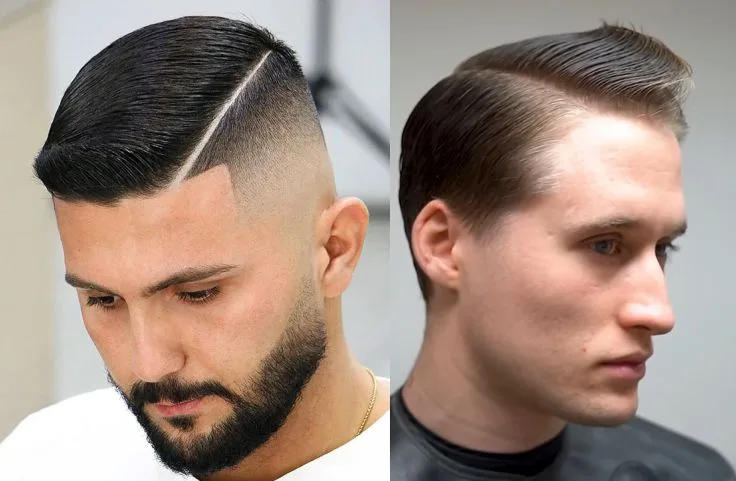
A side part haircut splits the hair with one line off-center, sending the bigger section across the head and the smaller one downward.
The sides are usually shorter than the top, which leaves enough length above the part to comb neatly in one direction.
The part can be natural, following where your hair already divides, or a hard part, clipped in as a thin visible line.
Where the Side Part Came From
The side part has been a men’s staple for more than a century, worn with oil and a sharp comb by early film stars.
Vintage Dancer describes the typical 1930s cut as a side part with a clean taper from ear to nape, much like today’s version.
By the 1950s, a short side part with a slight wave had become the default look for office workers and servicemen.
The cut returned to the spotlight in the late 2000s, when DMARGE notes that Mad Men’s Don Draper pushed it back into barbershops everywhere.
Finding Where Your Hair Naturally Divides
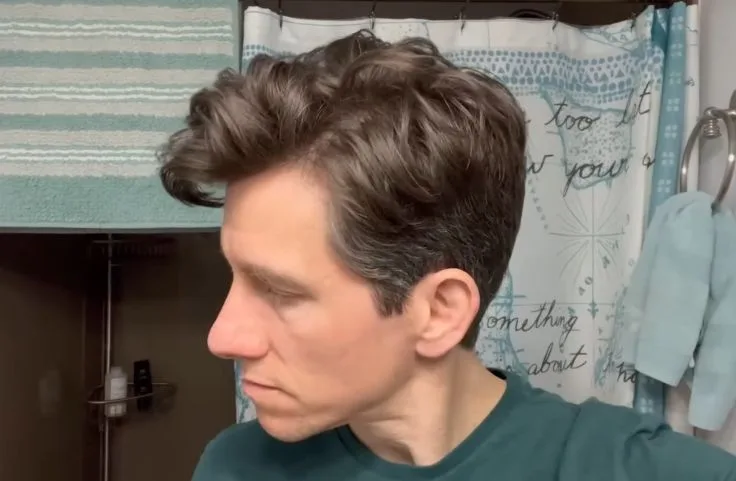
Your natural part sits where your hair already divides, usually following the direction of your crown swirl.
- Start damp: freshly washed, towel-dried hair shows its natural direction more clearly than styled hair.
- Comb everything straight back: use a fine comb from the forehead toward the crown.
- Push the hair forward gently: place your palm on the crown and nudge the hair toward your face.
- Watch where it splits: the line where the hair separates on its own is your natural part.
- Check your crown: the direction of your crown swirl usually hints at which side the hair wants to fall.
Most men part where the hair divides most easily, usually above the arch or outer corner of one eyebrow.
Left or Right: Does It Matter?
A popular belief says a left part looks more competent and masculine, while a right part looks warmer and softer.
Psychologist Jeremy Frimer tested this idea, reporting on the SPSP Character and Context blog that ratings of left- and right-parted portraits were virtually identical.
In other words, choose the side your hair naturally favors, because it will sit flatter and stay neater all day.
Side Part Haircut Styles
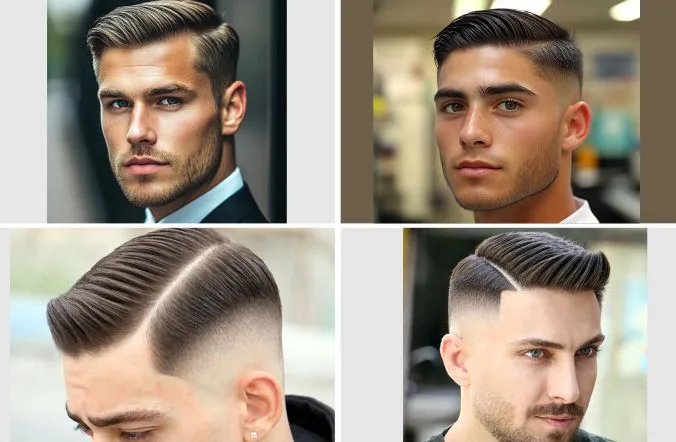
Classic Side Part
This traditional version keeps the sides short with scissors or a longer clipper guard and leaves two to four inches on top.
It is the most conservative choice, perfect for interviews, black-tie events and polished office outfits.
Side Part With Taper Fade
The side part with taper fade pairs a defined part on top with sides that get shorter only around the ears and neckline.
It keeps the classic outline but adds a cleaner, sharper finish at the edges.
Request a low taper fade, either down to skin or to a short guard, with the blend kept below the temples.
The taper grows out gracefully, so this version looks neat for four weeks or more between appointments.
It suits nearly every face, works in conservative offices and pairs well with neatly trimmed beard styles.
The full difference between a taper and a fade is explained in taper and fade types compared.
Side Part With Skin Fade
A side part with a mid or high skin fade creates strong contrast between bare sides and the combed top.
It looks bold and modern, but the fade blurs quickly, so plan on a barber visit roughly every fortnight.
Hard Part
With a hard part, the barber clips a thin, visible groove along the parting, so the line shows even from across a room.
It works well on coily, curly and thick hair, where a natural part can be difficult to see or keep.
Side Part Undercut
A side part undercut takes the sides down sharply with no blend, leaving a longer top combed across.
The disconnection makes it the most dramatic side part, best suited to thick, straight or wavy hair.
Comb Over
A comb over is a side part with extra length on top swept across the head, frequently paired with a fade.
The modern version looks deliberate and full, unlike the old comb over used to cover thinning hair.
Deep Side Part
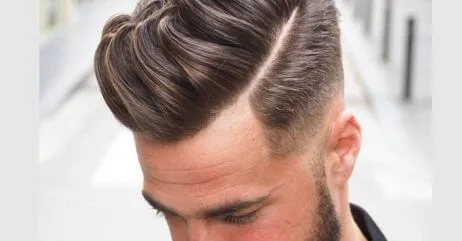
A deep side part sits lower on the head, near the temple, so more hair sweeps across the top.
It adds visual width and volume, which flatters long faces and men with fine hair.
Side-Swept Fringe
This version leaves a longer fringe that falls diagonally across the forehead from the part.
It suits younger men, oval faces and anyone with a higher forehead.
Side Part Pompadour or Quiff
This version lifts the front into height before combing the rest across from the part.
It needs more length on top and more styling time, but it looks sharp at weddings and evening events.
Curly Side Part
Curly hair can hold a side part when the top is left long enough to form loose curls on the heavier side.
A clipped hard part helps the line stay visible through all that natural texture.
Side Part for Coily Hair
On coily hair, the side part usually means a short cut with a crisp clipped part, clean edges and a blended finish at the sides.
Plenty of related looks for tight curls appear in cuts suited to Black men.
Side Part for Thinning Hair and Older Men
A short side part with a low taper flatters thinning hair, because a natural part draws less attention to the scalp than a deep comb over.
Keep the top short and the sides neat, and avoid sweeping long sections across thinning areas.
Other flattering options for mature hair appear in cuts for men past fifty.
Which Side Part Suits Your Face?
- Oval faces: suit every version, from the classic cut to the bold undercut.
- Round faces: appear longer when the part comes with height on top and a mid fade.
- Square faces: suit a classic or tapered side part that lets the strong jaw stand out.
- Long faces: suit a deep, low part that keeps a little width above the ears.
- Heart faces: look balanced with a side-swept fringe that tones down a wider forehead.
Briefing the Barber on a Side Part
Bring a photo, then describe the top length, the side finish, the part type and the neckline.
A simple request might be: “Side part on the left, three inches on top, low taper fade on the sides, hard part, tapered neckline.”
- Part side: say left or right, or ask the barber to find your natural part.
- Part type: choose a natural part or a hard part shaved with a trimmer.
- Sides: choose scissors, a guard number, a gentle taper or a full fade.
- Top: say how many inches to leave so it combs across neatly.
- Neckline: pick a square, curved or naturally thinning finish at the nape.
More barber vocabulary and chair etiquette are explained in briefing your barber clearly.
How to Style a Side Part Step by Step
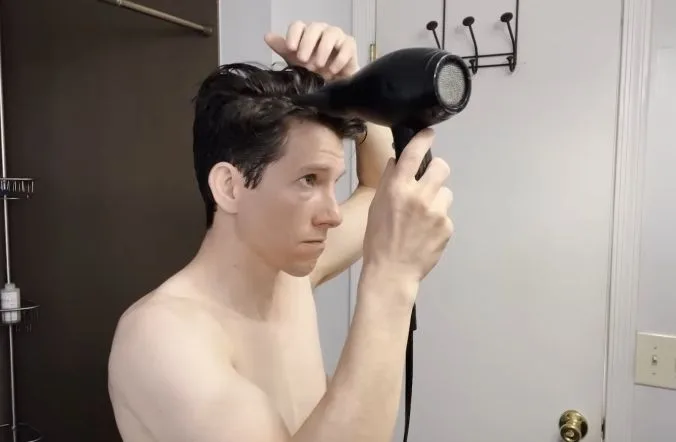
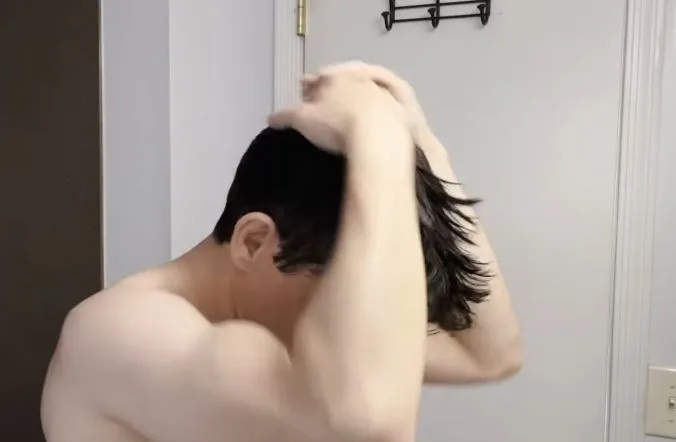
- Begin damp: towel-dry until the hair is damp but no longer dripping.
- Add a pre-styler: use a little cream or sea salt spray if your hair is fine or flat.
- Blow dry with direction: send the heavier side across and slightly upward, and the lighter side down toward the ear.
- Set the line: run the tail of a fine comb along your part to define it.
- Apply product: rub a pea-sized dab across both hands, then spread it from the nape toward the hairline.
- Comb into place: comb the top across from the part and the sides down and back.
- Finish lightly: use fingers for a relaxed look, or a comb for a sharp, polished one.
Best Products for a Side Part
- Pomade: adds gloss and firm control for a classic, polished part.
- Clay or paste: leaves a flat, natural finish for a modern, textured part.
- Cream: gives light hold and smooths curly or wavy hair without stiffness.
- Light hairspray: keeps the line in place through wind and humidity.
Hold, finish and how much to use are compared in detail in the styling product breakdown.
Keeping Your Side Part Sharp
- Classic and tapered side parts: book a trim about once a month or slightly later.
- Skin fades and hard parts: book roughly every fortnight, since the line and fade blur quickly.
- Between visits: a quality trimmer can tidy the neckline, as covered in home clippers and edgers.
Common Side Part Mistakes
- Forcing the part on the wrong side, so the hair constantly springs back.
- Placing the part too high, which looks dated, or too low, which can resemble a comb over.
- Using heavy, glossy product on fine hair, so the scalp shows along the line.
- Asking for a hard part without considering how long it takes to grow out.
- Letting the sides grow too long, so the clean contrast with the top disappears.
Your Side Part, Done Right
The side part haircut remains one of the most dependable cuts a man can wear, in any decade and any setting.
Find your natural part first, then pick a finish, from scissor sides to a taper or skin fade.
The side part with a taper fade offers the best balance of polish and easy upkeep for most men.
Style it with a comb and suitable product, and trim the sides regularly.
Show this to your barber before your next visit, and let Gentsways walk you through every cut you try next.
Frequently Asked Questions
Why choose a side part with taper fade?
It combines a side-parted top with sides that shorten gradually around the ears and neckline. The result looks clean, polished and grows out without an awkward stage.
Which side should a man part his hair on?
Part on whichever side your hair naturally splits, since it will sit flatter. Research shows observers rate left and right parts almost identically, so comfort and growth direction matter most.
Is a hard part still in style?
Yes, hard parts remain popular, especially on coily, curly and thick hair. Keep the line thin and natural-looking, since very wide hard parts take months to grow out.
How long should hair be for a side part?
Leave at least two inches on top so it combs across neatly. Three to four inches suits a fuller classic or comb-over style.

Pyo Merez is a 45-yeard old husband, father, and a chemical engineer by profession and the founder of Gentsways, a men’s lifestyle site built in honour of his father, Dee Clement. He has been writing about men’s development, style, and character through his father’s lens since 2021, drawing on lived experience, his father’s example, and research from reputable publications. He is not a certified trainer or therapist; where fitness or health topics require it, articles are reviewed by qualified contributors.