Last updated on May 22nd, 2026 at 02:12 pm
Confused between fade and taper haircuts? This guide breaks down the real differences so you can choose the perfect style that matches your face, lifestyle, and confidence in 2026.
Not sure whether to ask your barber for a fade or a taper? You’re not alone; many men mix up these two popular haircuts.
This ultimate guide to fade vs taper haircuts for men explains the clear differences in style, maintenance, and suitability.
Whether you want a sharp, modern look or a clean, timeless finish, you’ll learn which option works best for your face shape, hair type, and daily routine.
Stop guessing and discover the right haircut that will keep you looking sharp. at the barber.
Table of Contents
What is a Fade Haircut
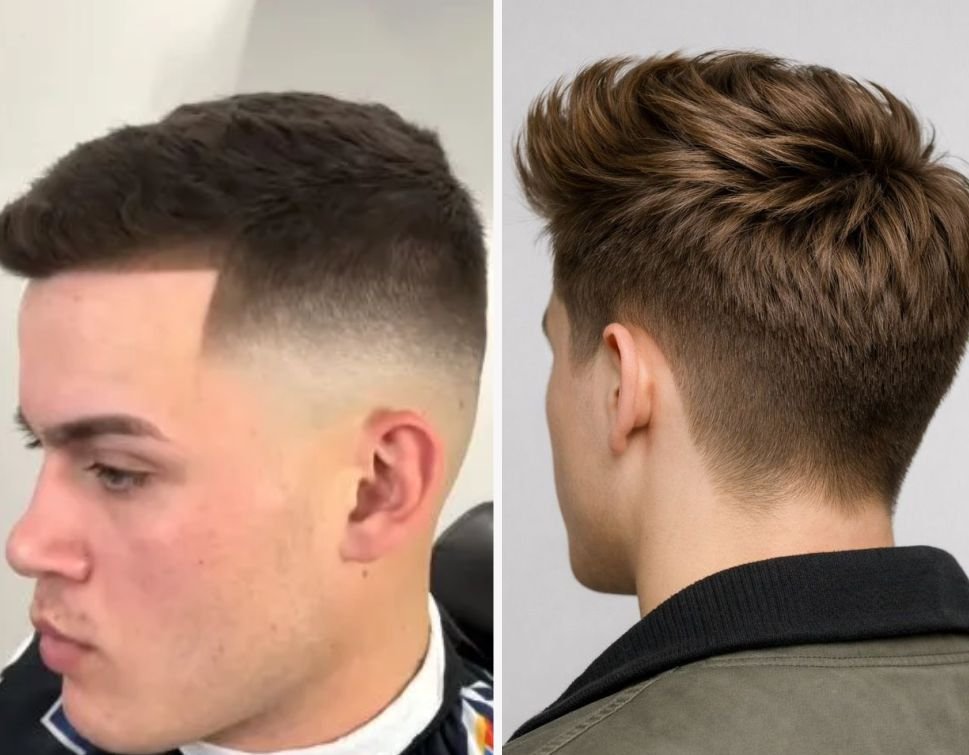
A fade haircut is a men’s hairstyle where hair gradually transitions from longer lengths on top to very short or shaved sides and back.
Barbers blend the hair smoothly using clippers, creating a clean, sharp appearance.
Fade haircuts work with curls, waves, straight hair, textured styles, and modern grooming trends.
How fade haircuts are created
Barbers create fade haircuts by gradually reducing hair length with clippers and blending different guard sizes.
The process usually starts with defining the fade line, then trimming downward into shorter lengths near the neckline and around the ears.
Skilled blending removes visible lines to create a smooth transition between sections.
Clippers, trimmers, scissors, and detailing tools help shape the haircut precisely.
Barbers also clean the hairline with sharp edge-ups for a polished appearance.
The placement of the fade determines whether it becomes a low fade, mid fade, high fade, skin fade, taper fade, or burst fade for different styling preferences.
Characteristics of fades
Fade haircuts are known for smooth blending, sharp edges, and gradual transitions between hair lengths.
- Smooth transition from longer hair on top to very short or shaved sides and back
- Clean, sharp edges with gradual blending and no harsh lines between sections
- Multiple variations like low, mid, high, skin, and burst fades for different styles
- Works well with many hair types including curly, straight, wavy, and textured hair
- Customizable with modern styles like waves, crops, pompadours, and slick backs
- Requires precise clipper work and regular maintenance to keep the look fresh and defined
Who has the best fade haircuts?
Fade haircuts suit men who want a clean, stylish hairstyle that works in different environments.
They complement many face shapes because the blending can be adjusted to add balance and structure.
Men with curly, straight, thick, thin, or textured hair can all wear fades successfully.
Athletes, students, professionals, and trend-focused men commonly choose fade styles because they are easy to personalize.
Low fades offer a softer appearance, while high fades create stronger contrast and sharper definition.
Fade haircuts also suit men who enjoy modern grooming trends, sharp hairlines, beard blends, and hairstyles that stay neat with regular barber maintenance.
What is a Taper Haircut
A taper haircut is a men’s hairstyle where the hair gradually shortens around the sideburns, neckline, and edges while keeping more length on top and sides.
Unlike a fade, the change is softer and more subtle.
It gives a clean, natural finish that looks neat without sharp contrast or skin exposure.
How taper haircuts are shaped
Taper haircuts are shaped by slowly reducing hair length at the edges using clippers and scissors.
The barber focuses on the neckline, sideburns, and around the ears, trimming these areas shorter while leaving the rest of the hair intact.
The blending is minimal compared to fades, so the transition looks soft rather than dramatic.
Clippers with different guard sizes are used to create a smooth reduction in length.
A clean outline is then added to the edges for definition.
The process is usually quicker and less technical than a fade because it does not require deep blending into the scalp.
Characteristics of tapers
Taper haircuts are defined by gradual shortening at the edges, a natural finish, and minimal contrast between sections.
- Gradual shortening of hair around sideburns, neckline, and edges only
- Soft, natural transition with minimal contrast compared to fades
- Keeps most of the hair length intact on top and sides
- Clean but subtle finish without exposing much skin
- Works well with all hair types, including curly, straight, and wavy textures
- Low-maintenance style that grows out neatly and stays presentable longer
Who suits a taper haircut best
Taper haircuts suit men who prefer a clean but natural look without sharp contrast or heavy blending.
They work well for professionals, students, and anyone who wants a low-maintenance style that still looks neat.
Men with all hair types, straight, curly, thick, or fine, can wear tapers comfortably.
It is especially good for those who want to keep most of their hair length while still having a groomed edge.
Tapers also suit conservative dress codes or environments where subtle grooming is preferred.
They are ideal for people who want a balanced hairstyle that stays tidy without frequent barber visits or complex styling.
Main Differences Between Fade and Taper Haircuts
Fade and taper haircuts differ in how the hair blends, how sharp the finish looks, and how much maintenance each style needs for everyday grooming and styling choices.
Hair length transition
Fade haircuts shift from longer top hair to very short sides, creating a strong contrast.
Taper haircuts reduce length around edges only, keeping natural balance and softer transitions overall.
Overall appearance and sharpness
Fade haircuts give sharp contrast and bold definition, highlighting face shape clearly.
Taper haircuts create softer outlines with less contrast, giving a more natural, controlled appearance.
Maintenance requirements
Fade haircuts need frequent barber visits because sharp blends grow out quickly, losing shape.
Taper haircuts grow out neatly, staying presentable longer with fewer maintenance appointments needed.
Professional vs casual styling
Fade haircuts suit bold, trendy, casual, and sporty looks where sharp detail matters.
Taper haircuts fit professional, school, and conservative settings needing a clean, subtle grooming appearance.
Barbering techniques used
Fade haircuts use clipper blending with multiple guard sizes, detailed fading, and precise line removal for smooth gradients.
Taper haircuts rely on light trimming, edge cleaning, and minimal blending around the neckline and sideburns for a softer, natural finish.
Types of Fade Haircuts
Fade haircuts come in different styles based on where the blending starts on your head, giving you control over how sharp, clean, or bold your haircut looks.
Low fade
Low fade starts just above your ears and around the neckline, keeping more hair on the sides for a softer finish.
It suits you if you want a clean haircut that still looks natural and not too exposed.
Barbers blend the lower section gently into longer hair on top, making it easy to wear in school, office, or daily settings.
Mid fade
Mid fade begins around the middle of your head, creating a balanced look between subtle and bold.
It gives you visible contrast without going too extreme on the sides.
This fade works well if you want structure around your haircut but still want enough hair on the sides to style waves, curls, or textured tops comfortably.
High fade
High fade starts near the upper part of your head, creating strong contrast between top hair and very short sides.
It gives you a sharper, more defined appearance that highlights your hairstyle on top.
This style suits you if you like bold grooming, clean edges, and a modern barber haircut that stands out quickly.
Skin fade
Skin fade blends hair down to the skin, creating a very clean and sharp finish.
It gives you a high-contrast look where the sides fade completely into bare skin.
Barbers use careful clipper work and shavers to achieve smooth transitions.
This style works well if you want a fresh, tight haircut with strong definition and clear structure.
Drop fade
Drop fade curves downward behind your ears, following the natural shape of your head.
It gives you a rounded fade line that looks stylish and structured from every angle.
This cut works well with curls, waves, and textured hair.
The drop effect adds shape control while keeping the sides clean and neatly blended.
Burst fade
Burst fade spreads out in a semi-circle around the ear, leaving length at the back and top.
It gives you a creative, bold shape that pairs well with mohawks, frohawks, and curly tops.
Barbers focus on curved blending techniques around the ear area, making the fade look sharp but artistic at the same time.
Temple fade
Temple fade, also called a Brooklyn fade, focuses on tapering around the temples and front hairline.
It gives you a clean edge-up effect while keeping most of your hair length intact.
This style works well if you want subtle grooming around the face without changing your full haircut structure or removing too much hair length.
Types of Taper Haircuts
Taper haircuts come in different forms based on how much hair is reduced around your neckline, sideburns, and edges, giving you a clean, controlled, and natural finish.
Classic taper
Classic taper reduces hair gradually around the neckline and sideburns while keeping the rest of your hair full and even.
It gives you a neat, natural look without strong contrast or skin exposure.
This style works well if you want a simple haircut that stays clean, grows out evenly, and fits daily grooming without looking sharp or overly styled.
Low taper
Low taper starts just above your neckline and around the ears, giving you a soft and subtle finish.
It keeps most of your hair untouched while cleaning up the edges.
This style suits you if you prefer a natural haircut that blends quietly into your overall look while still keeping your neckline and side areas neat and controlled.
Taper fade
Taper fade combines elements of both taper and fade, giving you gradual blending with slightly more contrast around the edges.
It creates a cleaner transition than a classic taper but still softer than a full fade.
This style works well if you want a balanced haircut that feels modern, structured, and still easy to maintain.
Scissor taper
Scissor taper is shaped mainly with scissors instead of clippers, giving you a softer and more natural finish.
The barber carefully reduces the length around your edges without harsh lines or sharp gradients.
This style suits you if you prefer a textured, lightweight haircut that keeps your hair looking natural while still maintaining a clean neckline and side areas.
Neck taper
Neck taper focuses only on the back of your head, cleaning and shaping the neckline for a neat finish.
It gives you a tidy appearance without changing much on the sides or top.
This style works well if you want minimal grooming changes but still need your haircut to look clean and well-maintained from behind.
Sideburn taper
Sideburn taper gradually shortens the hair around your sideburns, blending it into your natural haircut.
It gives you a controlled, polished look around the face without affecting the rest of your hairstyle.
This style suits you if you want small detailing that sharpens your appearance while keeping your main haircut unchanged and easy to manage.
Fade vs Taper for Different Hair Types
Fade and taper haircuts work differently depending on your hair texture, density, and natural pattern, affecting how each style blends, holds shape, and grows out.
- Straight hair: Fade gives your straight hair a sharp, clean structure, while taper keeps things softer, natural, and easier to maintain daily grooming routines.
- Wavy hair: Fade highlights your waves with strong contrast, taper keeps waves relaxed and controlled, giving a more subtle, natural flow around edges.
- Curly hair: Fade defines curls with clear shape and volume on top, taper maintains curl pattern while gently cleaning neckline and side areas.
- Coily and Afro hair: Fade creates bold structure and shape contrast, taper preserves fullness while refining edges for a neater, more natural afro appearance.
- Thick hair: Fade removes bulk on sides for balance and sharpness, taper reduces weight slightly while keeping fullness and natural volume intact overall.
- Thin hair: Fade can create an illusion of density on top, taper avoids exposing scalp too much, keeping hair looking fuller and softer overall.
Fade vs Taper for Different Face Shapes
Fade and taper haircuts change how your face looks by adjusting contrast, balance, and proportions, helping you match your haircut to your natural facial structure.
- Oval face shape: Fade adds structure and definition to your balanced face, while taper keeps your natural symmetry soft, neat, and evenly shaped daily.
- Round face shape: Fade creates sharper angles that slim your face visually, taper gives gentle edges that keep your look softer and less wide.
- Square face shape: Fade highlights your strong jawline with clean contrast, taper reduces harshness, giving a smoother, more relaxed outline around your features overall.
- Diamond face shape: Fade balances cheekbone width with tighter sides, taper softens angles and keeps attention on your eyes and upper facial structure naturally.
- Oblong face shape: Fade adds width and structure to sides for balance, taper keeps proportions longer but controlled, avoiding extra height or sharp vertical emphasis.
Best Hairstyles That Pair With Fades
Fade haircuts work well with many modern hairstyles, helping you control contrast, shape, and structure while keeping your overall look clean, sharp, and stylish.
- Pompadour with fade: Fade keeps sides tight while pompadour adds volume on top, giving your haircut height, structure, and a clean, balanced appearance overall.
- Quiff with fade: Fade sharpens the sides while quiff adds lifted front volume, creating a stylish, textured look that frames your face neatly and clearly.
- Buzz cut with fade: Fade adds detail to a short buzz cut, giving your haircut a cleaner outline, sharper edges, and more defined structure around head.
- Textured crop with fade: Fade removes bulk on sides while textured crop keeps top messy and controlled, giving your style a modern, low-maintenance finish daily.
- Curly top fade: Fade shapes the sides while curls stay full on top, giving you contrast, definition, and balanced volume that highlights natural curl pattern.
Best Hairstyles That Pair With Tapers
Taper haircuts work well with classic and modern hairstyles, keeping edges clean while allowing your natural hair shape, length, and flow to stay controlled and neat.
- Side part taper: Taper keeps edges clean while side part adds structure, giving your hair a professional, balanced look that frames your face neatly daily.
- Slick back taper: Taper softens neckline while slick back keeps hair smooth and controlled, creating a clean, polished style with natural flow and neat finish.
- Crew cut taper: Taper adds subtle edge detail to crew cut, keeping hair short, tidy, and simple while maintaining a clean neckline and sideburns.
- Ivy League taper: Taper enhances Ivy League cut with neat sides, giving a refined, smart appearance that blends classic styling with controlled grooming around edges.
- Medium-length taper styles: Taper keeps medium hair balanced by cleaning edges, letting length stay natural while maintaining a tidy, low-maintenance shape around the neckline and sides.
Fade vs Taper Maintenance
Fade and taper haircuts need different levels of upkeep, depending on how sharp you want your look, how fast your hair grows, and your daily grooming routine.
- How often to get trims: Fade haircuts need trims every 1 to 2 weeks to keep clean contrast, taper haircuts last longer, usually 3 to 4 weeks before reshaping.
- Daily styling needs: Fade styles need light daily brushing or waves maintenance for top hair, taper styles need minimal effort, just basic combing and simple shape control.
- Products that work best: Fade haircuts work well with pomade, curl cream, or styling gel for definition, taper haircuts suit light oils, leave-in conditioner, and soft creams.
- At-home maintenance tips: Fade upkeep includes line-up touch control and keeping edges neat, taper maintenance focuses on brushing, moisturizing hair, and preserving natural neckline shape daily.
How to Ask Your Barber for a Fade or Taper
Getting your fade or taper right depends on how clearly you explain your preferred style, length, and finish, so your barber can match your haircut expectations with precision.
Haircut terms to know
Using barber terms helps your haircut come out right.
Say fade type, taper type, clipper guard numbers, blend level, neckline shape, sideburns, and lineup style clearly before the cut begins.
Showing reference photos
Reference photos help your barber understand the exact fade or taper style, including blend height, hair texture, and finish, making it easier to match your desired haircut accurately and quickly.
Explaining preferred length and finish
Explain how short you want sides, top length, fade height, and whether you prefer sharp line-up or natural edges, so your barber shapes a haircut matching your grooming style.
Further Reading
The High and Tight Fade Haircut
Best Men’s Hair Grooming Tools
Conclusion
Fade and taper haircuts give you two different grooming paths, one bold and sharp, the other soft and natural.
Your choice depends on how much contrast you want, how often you visit the barber, and your daily styling routine.
Fades bring strong definition and modern detail, while tapers keep things neat with a lighter touch.
Matching your haircut to your face shape, hair type, and lifestyle helps you stay confident and well-groomed without confusion at the barber chair in 2026.
Fade vs Taper Haircuts FAQs
Is a taper better than a fade?
A taper works better if you want a softer, natural haircut with less contrast, lower maintenance, and a clean look that grows out neatly without frequent barber visits.
Which haircut lasts longer?
Taper haircuts last longer because edges grow out gradually, while fades lose their sharp blend quickly, requiring more frequent trims to maintain clean contrast and defined structure.
Are fades more expensive?
Fades can cost slightly more because they require detailed clipper work, blending skills, and precision shaping, while tapers are quicker and simpler for barbers to complete.
Can tapers work with long hair?
Tapers work well with long hair, keeping edges clean around the neckline and sideburns while allowing you to maintain full length and natural flow on top and sides.
Which style suits curly hair best?
Both work for curly hair, but fades define curls with sharper contrast, while tapers keep curls natural, controlled, and less structured around the edges and neckline.

Pyo Merez is a 45-yeard old husband, father, and a chemical engineer by profession and the founder of Gentsways, a men’s lifestyle site built in honour of his father, Dee Clement. He has been writing about men’s development, style, and character through his father’s lens since 2021, drawing on lived experience, his father’s example, and research from reputable publications. He is not a certified trainer or therapist; where fitness or health topics require it, articles are reviewed by qualified contributors.