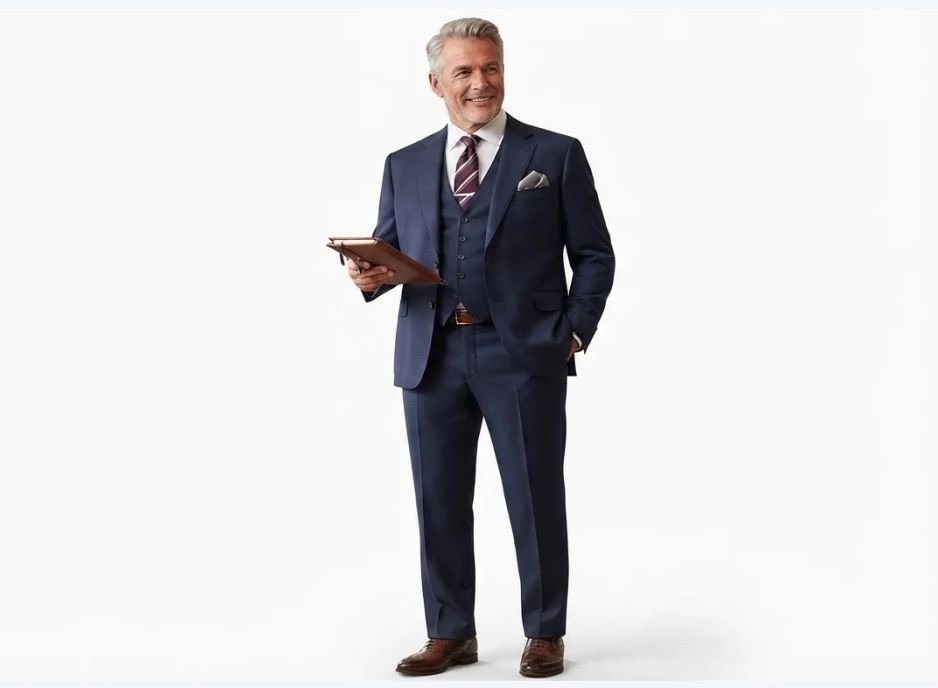
Many men reach fifty and find favorite shirts straining at the buttons and trousers slipping below the waist. That change is common, and the right clothes can make it look neat, balanced and comfortable without hiding behind oversized pieces.
Knowing how to dress a fuller midsection after 50 comes down to rise, fit, line and color, rather than any diet or exercise plan.
This post covers clothing only, so you will find no weight-loss advice here, just tailoring and style choices that flatter your current frame. Every tip works with clothes you can buy or alter today, without any change to your routine.
You will find trousers, shirts, jackets, knitwear, colors, belts and braces, casual wear and the errors that make a middle look bigger.
Table of Contents
Why the Middle Changes After 50
Plenty of men notice a fuller middle in their forties and fifties, and it counts as a very familiar change of midlife.
CDC data shows that obesity prevalence among American adults aged 40 to 59 was 46.4% in 2021 to 2023, higher than in younger or older groups.
Clothing cut for a slimmer frame will pull, gape and slide on a changing body, which makes any midsection look larger than it is.
The goal of good dressing is not disguise, but balance, so the eye travels smoothly from shoulders to shoes.
The Core Principles
Four ideas steer every good clothing choice for a fuller middle, from trousers to knitwear.
- Fit, not size: clothes should skim the body, neither clinging nor billowing around it.
- The true waist: trousers sit at or near the navel, not below the stomach.
- Long vertical lines: open jackets, V-necks and single colors move attention up and down the body.
- Structure and drape: firm fabrics hold their line, while clingy ones show every curve.
The Art of Manliness observes that many larger men buy clothes far too big, thinking it disguises their build.
Oversized clothes add bulk rather than hiding it, so the right size, properly tailored, always looks slimmer.
Trousers: Rise, Pleats and Support
Trousers do the most work for a fuller midsection, because the waistband sets the line of the whole outfit.
Raise Trousers to Your True Waist
Low-rise trousers slide beneath the stomach, push the belly forward and need constant hitching.
A higher waistband reaches your true waist, covers the middle cleanly and keeps shirts tucked for longer.
Consider Pleats
The Parisian Gentleman advises that men with a large middle need pleated trousers, since flat fronts can show an exaggerated curve below the belly.
A single forward pleat adds ease across the seat and lets the trousers fall straight from the waist.
Try Braces or Side Adjusters
Braces, known in America as suspenders, lift trousers from the shoulders, so the waistband rests at the right height all day.
Side adjusters remove the belt entirely, which avoids the line that a belt draws across the middle.
For rises and pleat styles, see rises for a fuller frame on Gentsways.
Choose a Straight Leg
A straight leg, or one that tapers only gently, balances a fuller middle, while skinny legs make the upper body look heavier.
Shirts That Lie Flat
The right shirt lies smooth across the chest and stomach without straining the buttons.
- Check for pulling between buttons when you sit, and size up if the placket gapes.
- Choose shirts with darts or a tailored body, then have a tailor adjust them to skim rather than squeeze.
- Pick firm cottons such as oxford cloth and twill, which drape better than thin, clingy fabrics.
- Buy shirts long enough to stay tucked when you bend, sit and reach.
My own habit is the military tuck, folding the shirt sides back before tucking, then re-tucking and firming the belt when needed.
For step-by-step tucking, see the military tuck explained along with other methods.
Tucked or Untucked?
Tucking looks neat once trousers reach your true waist, because the line stays clean and the shirt stays put.
Untucked shirts suit casual days when the hem runs straight across and stops halfway down your seat.
Avoid long untucked shirts with curved tails, which add volume around the hips.
Jackets and Blazers
A well-cut jacket does more for a fuller midsection than almost any other garment.
Gentleman’s Gazette recommends that the buttoning point and trousers sit close to the natural waist, which is usually around the navel or above.
- Choose single-breasted jackets with one or two buttons, which form a long V down the front.
- Look for soft structure that holds its line without stiff padding or tight waist suppression.
- Check that the hem reaches over your seat, since short jackets cut across the widest point.
- Wear the jacket open on relaxed days, letting the two front edges create strong vertical lines.
Gentleman’s Gazette also notes that a waistcoat can flatter a man carrying a few extra pounds, since it smooths the shirt beneath.
For jacket styles that skim rather than cling, see soft-structured blazers worth trying on.
Knitwear and Layers
Knitwear can flatter or exaggerate a fuller middle, depending on the weight and cut.
- V-neck sweaters lengthen the torso and draw the eye toward the face.
- Open cardigans add two vertical lines and look relaxed over a shirt or polo.
- Fine merino and cotton knits lie flatter than chunky cable knits.
- Overshirts and light jackets worn open add structure without any tightness at the waist.
Avoid tight knit polos and clingy jersey tees on their own, since they show every curve.
For knit weights and styles, see knitwear that lies flat across the torso.
Colors and Patterns
Color and pattern lead the eye, so use them to draw attention up toward your face.
- Wear darker tops in charcoal, navy or deep green, which recede visually.
- Try tonal outfits, such as a navy shirt with navy trousers, for an unbroken vertical line.
- Put lighter or brighter colors near the face, through a shirt collar, a tie or a pocket square.
- Choose fine vertical stripes and small patterns over bold horizontal stripes and large checks.
- Prefer matte fabrics to shiny ones, which reflect light and add visual width.
For shade pairings that flatter mature skin and hair, see darker shades that slim and how to combine them.
Belts, Braces and Accessories
Accessories can either break the body in half or keep the line clean.
- Pick a belt that nearly matches your trousers in color, which quietens the line across the middle.
- Keep belts medium width with a modest buckle, since large buckles sit right on the stomach.
- Consider braces with smart trousers, which free the waist and hold the rise in place.
- Use ties long enough to touch the belt buckle, since short ties make the stomach look larger.
For widths and colors, read about belt sizing for comfort and buckle choices.
Casual and Native Wear
Weekend outfits need equal thought, because casual outfits are where proportions slip most.
- Choose polos with a level hem and a firm collar, and avoid thin, stretchy versions.
- Wear chinos or dark jeans with a mid rise and straight leg, not low-rise slim cuts.
- Pick shorts with a hem above the kneecap and flat pockets rather than bulky cargo pockets.
- Try native outfits such as senators and kaftans, whose long, clean lines flatter many frames.
For collar and hem advice, see polo collars and hems for casual days.
Common Errors to Avoid
- Wearing oversized clothes to cover the middle, which only adds bulk.
- Buttoning trousers below the stomach, which pushes the belly forward and lets them slide.
- Choosing clingy fabrics, such as thin jersey and stretchy synthetics, for tops.
- Wearing short jackets that stop at the widest point of the body.
- Fastening a jacket too tightly, which causes pulling across the front.
- Using thick belts or large buckles that sit right on the stomach.
Let a Tailor Help
Most men’s clothes are cut for a slimmer average frame, so a tailor makes the biggest difference.
- Ask for shirts to be taken in at the back, not the front, so they lie flat across the stomach.
- Have trousers adjusted at the seat and waistband so they rest at your true waist.
- Request jacket alterations that ease the front without losing the shoulder line.
For general fit standards, see fit checks for every garment, and for builds, see outfits for a rounder build.
Final Thoughts
Learning how to dress a fuller midsection after 50 is about balance, not disguise.
Wear trousers at your true waist, choose shirts that skim the stomach and favor jackets that create long vertical lines.
Use darker tops, matte fabrics, tonal outfits and a matching belt or braces to keep the middle smooth.
Most of all, wear the right size and let a tailor do the rest, since a clean fit always looks slimmer than baggy clothing.
Check the rise of your favorite trousers this week, and read style advice after fifty as you refresh your closet.
Frequently Asked Questions
What trousers flatter a fuller middle?
Trousers with a higher rise that reach the true waist suit a fuller middle best. Single pleats, side adjusters or braces add comfort and keep the line clean.
Should men with a belly tuck in their shirts?
Yes, with trousers raised to the true waist, tucked shirts look neat and balanced. Untucked shirts work casually when the hem runs straight and stops halfway down the seat.
What colors help disguise a fuller midsection?
Darker tops in charcoal, navy or deep green recede visually and look calm. Tonal outfits and lighter colors near the face draw attention upward to you.
Are suspenders good for men with a belly?
Yes, suspenders keep trousers at the right height without a belt cutting across the stomach. They suit smart trousers and look classic with a shirt and waistcoat.
Pyo Merez is a 45-yeard old husband, father, and a chemical engineer by profession and the founder of Gentsways, a men’s lifestyle site built in honour of his father, Dee Clement. He has been writing about men’s development, style, and character through his father’s lens since 2021, drawing on lived experience, his father’s example, and research from reputable publications. He is not a certified trainer or therapist; where fitness or health topics require it, articles are reviewed by qualified contributors.