
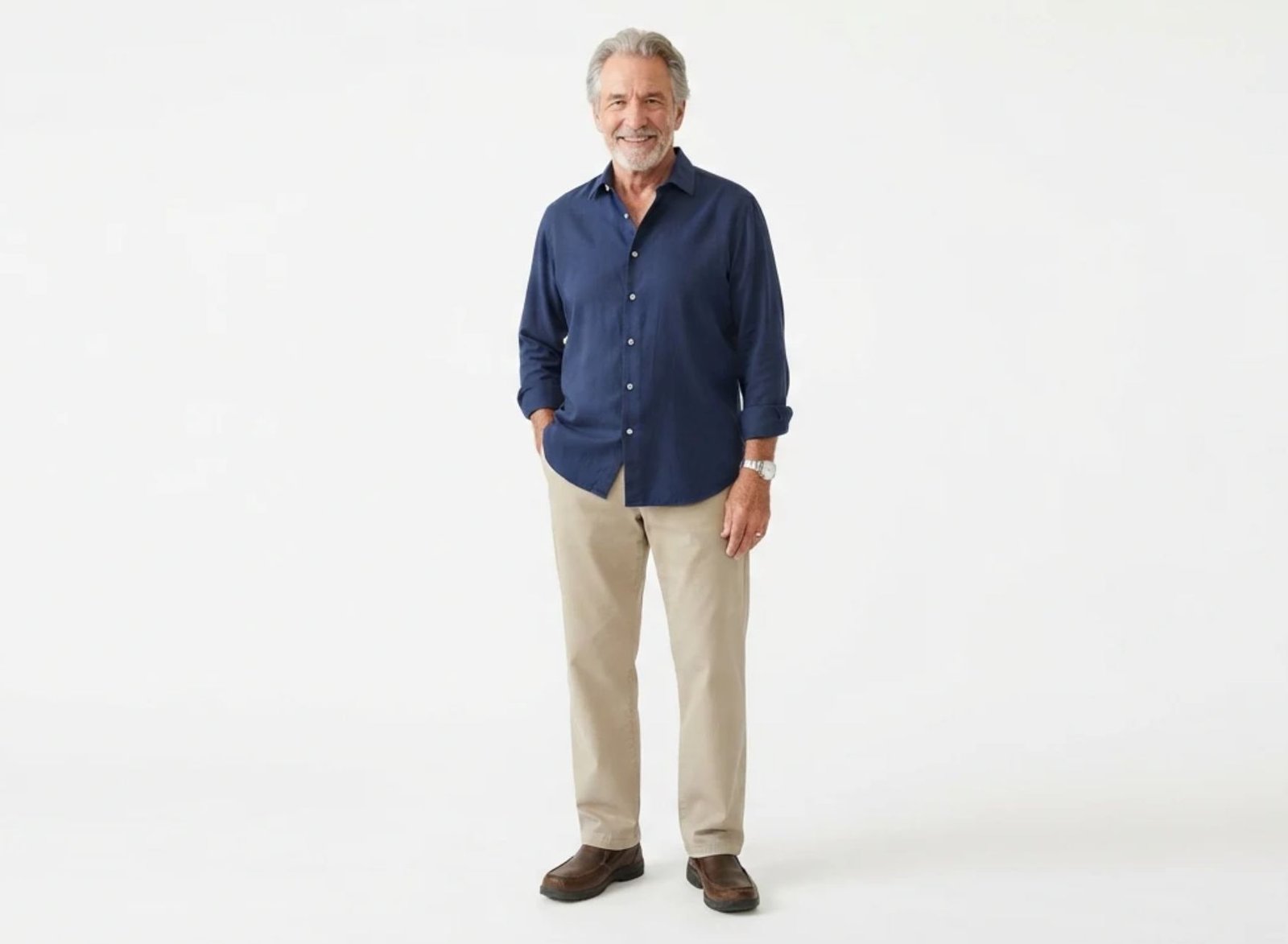
Past seventy, getting dressed should feel easy and calm, not like a daily battle with stiff buttons and slippery shoes. Good clothes at this stage protect comfort, safety and independence, while still letting a man look like himself every morning.
Style for men over 70 rests on clothes that go on easily, keep you steady and feel kind on the skin, without losing neatness.
My father, Dee Clement, lived to 81 and dressed normally to the end, mostly in casual clothes.
At home he wore crewneck tees, polos or singlets, and for outings he put on his usual native outfits, senators among them.
What follows covers easy fastenings, safe footwear, comfortable fabrics, a simple daily uniform, help from family or carers and a few errors to skip.
Table of Contents
What Changes After 70
The body and daily routine both shift in the seventies and eighties, and clothing has to keep pace.
CDC figures show that diagnosed arthritis rises with age, reaching 53.9% of adults aged 75 and older in 2022.
Stiff fingers make small buttons, cufflinks and fiddly zips harder, while stiff shoulders make tight sleeves and back fastenings awkward.
Balance and eyesight can change too, so clothes and shoes need to support steady walking and easy recognition.
The aim is not to dress like a patient, but to choose clothes that quietly remove daily obstacles.
Clothes That Are Easy to Put On
Simple design changes let a man keep dressing himself for longer, which protects both dignity and routine.
The Alzheimer’s Society lists easy-dress features such as larger neck and arm openings, front fastenings, Velcro, poppers, magnetic buttons and loose fittings.
These features help any older man with stiff joints, not only men living with dementia.
- Front fastenings: choose shirts, cardigans and jackets that open fully down the front.
- Larger buttons: pick shirts with bigger buttons, or have a tailor replace small ones.
- Magnetic or hidden closures: some shirts look buttoned but close with magnets behind the placket.
- Elastic or side-adjuster waists: trousers with a flexible waistband slide on without belts or tight buttons.
- Pull-on tops: polos, crewneck tees and knit tops go on without any fastening at all.
Tees, polos and singlets like my father’s home clothes need few or no buttons, which keeps dressing simple.
For good collared knit tops, see polos that need no fuss and the fits that last.
Shoes That Keep You Upright
Footwear counts more after 70 than at any earlier age, since a slip can cost months of independence.
Mayo Clinic advises wearing properly fitting, sturdy, flat shoes with nonskid soles, and warns that floppy slippers and slick soles can cause falls.
- Choose shoes with rubber soles, low heels and a firm back that holds the heel in place.
- Pick slip-on shoes with elastic sides, or shoes that close with Velcro, if laces feel difficult.
- Have worn soles replaced promptly, because bald soles slide on tiles and wet steps.
- Wear house shoes with backs and grippy soles rather than loose slippers or bare socks.
- Use a long-handled shoehorn so you can put shoes on without bending too far.
For smart slip-ons and loafers with grip, see slip-ons with steady soles for daily wear.
Fabrics and Comfort
Skin can become thinner and drier with age, and comfort counts for more when you spend long hours sitting.
- Choose soft cotton, jersey, merino and brushed fabrics that feel gentle and breathe well.
- Avoid scratchy wool, stiff denim and harsh seams close to the skin.
- Look for machine-washable clothes that survive frequent laundering without shrinking or fading.
- Pick trousers with a little stretch, which make sitting, standing and climbing steps easier.
- Wear light layers you can add or remove, since rooms and seasons change throughout the day.
For soft knit options, see gentle knits for daily comfort, and for tees, see crewnecks that hold up.
A Simple Daily Uniform
A small set of familiar outfits saves effort, avoids decision fatigue and keeps a man looking consistent.
The Alzheimer’s Association notes that offering just two choices and keeping closets free of excess clothing can stop choices becoming overwhelming.
- Home uniform: a crewneck tee or polo, soft trousers with an easy waist and grippy house shoes.
- Outing uniform: a collared shirt or native outfit, neat trousers and sturdy slip-on shoes.
- Occasion uniform: one dark suit or one dignified native set kept clean and ready.
My father followed a similar pattern, with simple casual clothes at home and his native outfits whenever he went out.
For storing outfits within easy reach, see organizing a simpler closet at any age.
Dressing for Weaker Eyesight
Eyesight can change in later decades, so small adjustments help a man dress neatly without strain.
- Store whole outfits together on one hanger, so matching becomes automatic.
- Choose solid colors and simple patterns, which are easier to pair than complex ones.
- Keep good lighting near the closet and mirror, especially in the early morning.
- Pick clothes in shades that contrast well, like navy and stone, instead of near-matching darks.
- Check for stains in daylight, or ask a family member for a quick look before going out.
Native Wear and Cultural Dress
Traditional outfits tend to flatter older men, since many are loose, dignified and easy to wear.
For outings my father wore senators and other native outfits, and that kind of outfit looks smart without any tight tailoring.
- Choose senator sets, kaftans or similar styles in soft, breathable fabrics.
- Pick tops with wider neck openings or front fastenings for easier dressing.
- Pair them with steady slip-on shoes rather than smooth-soled formal shoes.
When Family or Carers Help
Some men need help with dressing in their late seventies or eighties, and good clothing choices make that help gentler.
The Alzheimer’s Association reminds carers that physical appearance contributes to a person’s self-esteem, so dressing well still matters.
- Let the man choose between two outfits, so he keeps control over how he looks.
- Lay clothes out in the order they go on, starting with underwear and ending with shoes.
- Choose front-opening tops and easy waists, which reduce strain for both the wearer and the helper.
- Keep familiar favorites in rotation, since familiar clothes can bring comfort and confidence.
- Label clothes clearly if they go to a shared laundry in a care home.
For grooming that complements good clothes, see a gentle grooming routine for later years.
Keeping Your Own Style
Comfort and safety do not mean giving up identity, so keep the colors, fabrics and pieces that feel like you.
- Keep a signature item, such as a favorite cap, watch or native outfit, in regular use.
- Replace worn favorites with near copies instead of switching to anonymous clothing.
- Dress fully each day, even at home, since a neat outfit lifts mood and routine.
My father dressed normally to the age of 81, which shows that simple, familiar clothes can carry a man well into his eighties.
For hobbies that keep you active and give reasons to dress well, see pastimes worth keeping after seventy.
Common Errors After 70
- Wearing loose slippers or socks on hard floors, which makes slipping far more likely.
- Letting trousers grow too long after height loss, so hems catch under the heels.
- Keeping shirts with tiny buttons that cause daily frustration for stiff fingers.
- Switching to tracksuits for every occasion, which can dull mood and self-respect.
- Choosing tight collars and waistbands that press on the body during long hours of sitting.
- Holding on to stretched, stained or worn-out favorites for too long.
For pieces worth retiring at any age, see items worth removing now.
Final Words
Style for men over 70 means easy fastenings, steady shoes, soft fabrics and a simple daily uniform.
Choose front openings and flexible waists, wear sturdy slip-ons with grip, and keep a few familiar outfits ready.
Ask family or carers for help when needed, and still keep the pieces that make you feel like yourself.
My father’s casual clothes at home and native outfits for outings show how dignity can stay simple to the very end.
Check your shoes and closet this week, swap one difficult item for an easier one, and read later-life dressing ideas when you are ready.
Frequently Asked Questions
What works as everyday wear after 70?
Pull-on polos and crewneck tees, soft trousers with easy waists and sturdy, grippy shoes suit most days. Keep a light cardigan close by for cool rooms and chilly early mornings.
Which shoes keep men over 70 steady?
Sturdy, flat shoes with nonskid rubber soles and firm backs are safest. Slip-ons with elastic sides or Velcro closures help men who find laces difficult to manage.
What clothes are easiest for older men with arthritis?
Front-opening tops, larger or magnetic buttons, elastic waists and pull-on polos reduce strain on stiff fingers and shoulders. Soft, stretchy fabrics also make getting dressed quicker and much easier each morning.
How can older men keep their style as they age?
Keep favorite colors, signature pieces and familiar outfits, and replace worn items with similar ones. Getting fully dressed each day, even at home, helps protect confidence and routine.
Disclaimer: This article is for informational purposes only and does not constitute medical advice. The author is not a medical doctor, occupational therapist or carer, and the health and safety points come from the cited sources. Speak with a doctor or occupational therapist about falls, arthritis or dressing difficulties.
Pyo Merez is a 45-yeard old husband, father, and a chemical engineer by profession and the founder of Gentsways, a men’s lifestyle site built in honour of his father, Dee Clement. He has been writing about men’s development, style, and character through his father’s lens since 2021, drawing on lived experience, his father’s example, and research from reputable publications. He is not a certified trainer or therapist; where fitness or health topics require it, articles are reviewed by qualified contributors.