Your coat greets people before you do, and after sixty it should feel as good as it looks. The best pieces keep you warm without weighing you down, fasten easily and suit the life you lead now.
A wool overcoat my sister sent from Italy kept my father, Dee Clement, warm, especially through the chilly harmattan months.
The coat is still kept at home, and I may wear it myself this harmattan, though I have never owned an overcoat of my own.
Coats and jackets for men over 60 should balance warmth, weight and ease, with cuts that flatter rather than swamp.
This roundup covers the styles worth owning, what to check before buying and how to match each piece to your days.
Table of Contents
What Men Over 60 Need From Outerwear
Priorities shift a little with age, so a good coat now earns its place through comfort as much as style.
- Warmth without weight: heavy coats tire the shoulders on long days, so lighter fabrics and modern fills help.
- Easy fastenings: large buttons, smooth zips with good pulls and snaps make dressing quicker with cold fingers.
- Sensible length: hip to mid-thigh lengths are easier for driving, sitting and climbing steps than full-length coats.
- Useful pockets: deep hand-warmer pockets and an inside pocket for a wallet or phone keep hands free.
- Room for layers: a coat should close comfortably over a sweater or blazer without pulling across the back.
Insulation choice matters here, and REI explains that down offers a higher warmth-to-weight ratio, while synthetic fill still insulates when wet.
Coat and Jacket Styles Worth Owning
Three or four of these pieces cover most men over sixty, chosen around climate and routine.
The Wool Overcoat
A wool overcoat remains the smartest outer layer for church, funerals, formal dinners and cold city days.
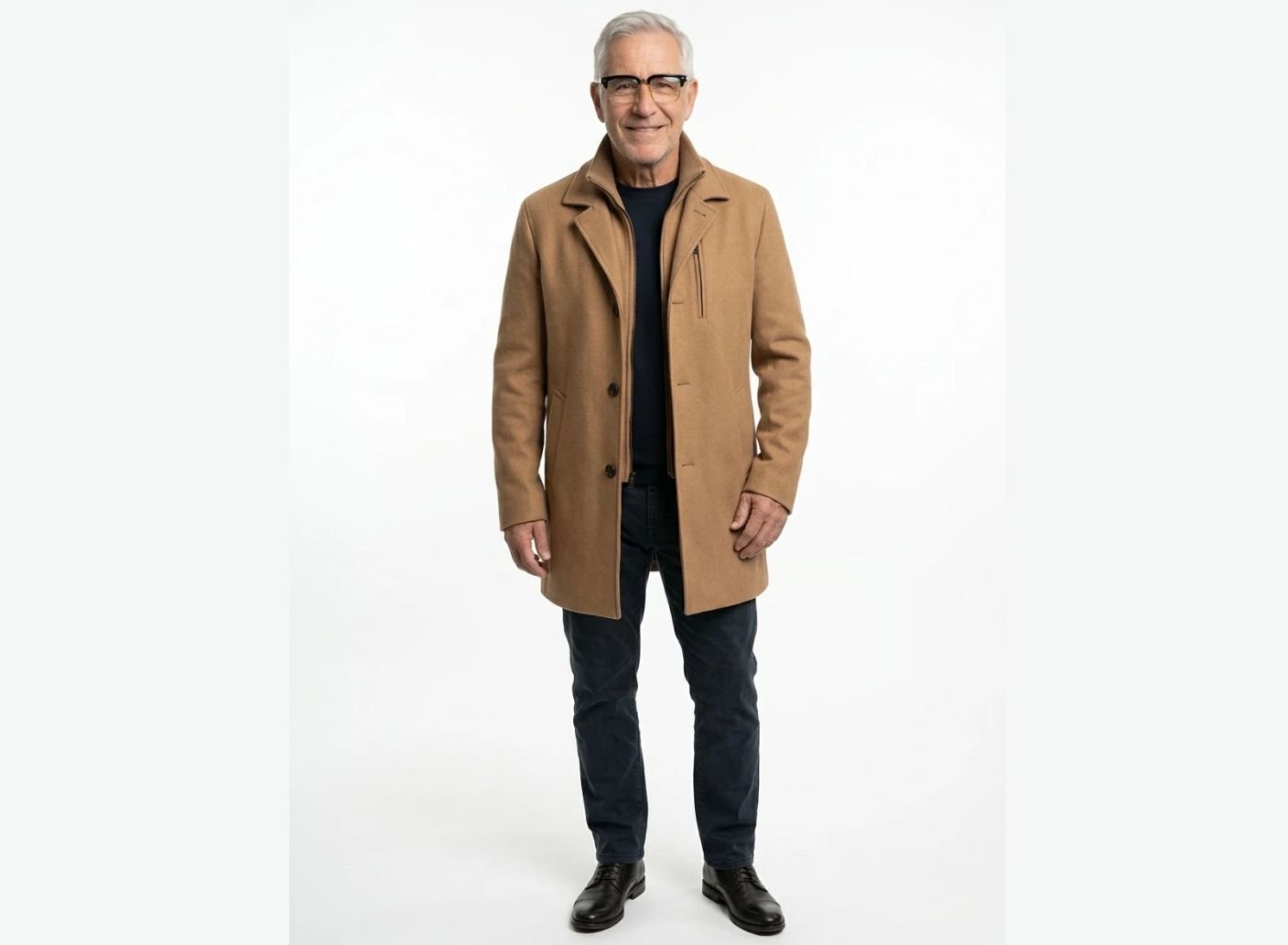
Choose a single-breasted coat ending around the knee in navy, charcoal or camel, with room for a jacket underneath.
My father’s Italian overcoat shows how one good coat can serve for years, even in a climate with only a short cold season.
For fabrics, fits and styles in depth, read a wool overcoat in detail before buying.
The Car Coat
A car coat was first made for automobile drivers and passengers, and today it usually ends around mid-thigh.
That shorter length makes it easier to sit, drive and climb stairs, which suits men over sixty who spend time in cars.
Look for wool, tweed or cotton gabardine in navy, camel or olive, with a simple collar and deep pockets.
The Trench Coat and Mac
A trench coat began as a waterproof coat for British Army officers ahead of the 1914 war and later became a civilian classic.
A plain single-breasted mac in stone, navy or olive is lighter and simpler, and it suits rainy days in town.
Choose a removable liner if you want one coat for spring, autumn and mild winters.
The Quilted Jacket
A quilted jacket offers light warmth in a slim profile, and it layers easily under a heavier coat on cold days.
Pick a corduroy collar, snap fastenings and a navy or olive finish for a smart country look that suits most outfits.
The Waxed Jacket
Waxed cotton grew from sailors’ habits, and an Arbroath sail maker perfected linseed oil on flax long before wax replaced it.
Today’s waxed jackets shed rain, age with character and suit walks, gardening, fishing and weekend errands.
Rewax them every year or two, and expect a slight smell and stiffness when new.
The Field Jacket
A field jacket has four front pockets, a sturdy cotton shell and a relaxed fit that works over knitwear.
Olive, khaki and navy versions suit jeans, chinos and boots, and they handle cool, dry weather with ease.
For history and outfits, see the four-pocket field jacket in more depth.
The Harrington Jacket
The Harrington is a short, zip-front cotton jacket with a tartan lining, a button-up collar and a ribbed waist and cuffs.
I bought my first one at an okrika market, the secondhand clothing market, because Steve McQueen wore one in a picture that caught my eye.
Read the Harrington’s full story for fits and colors that suit older men.
The Down or Synthetic Puffer
A puffer jacket packs serious warmth into a light piece, which matters when heavy wool would tire your shoulders.
Choose matte fabrics in navy, black or olive, avoid shiny finishes and huge baffles, and keep the length to the hip or below.
The Parka
A parka adds a hood and extra length for truly cold, wet or windy places, usually with an insulated lining.
Keep it simple in color and detailing, and wear it for practical days rather than formal events.
The Gilet or Vest
A quilted or fleece gilet keeps the core warm while leaving arms free, which suits gardening, golf and travel.
Wear it over a knit or flannel shirt, or under a waxed jacket or overcoat for extra warmth on bitter days.
Tailored Jackets as Light Outerwear
A tailored jacket counts as light outerwear in warm climates, especially on cool evenings and harmattan mornings.
My own checked blazer, bought ready-made, does that job over chinos or pale denim when the harmattan cools the air.
Choose sport coats and blazers in wool or a wool blend for more warmth than cotton offers.
The Leather Jacket
A well-cut leather jacket can still look right after sixty, provided it fits closely and avoids biker excess.
Choose brown suede or smooth leather in a simple zip or button style, and see leather jackets after sixty for cuts.
Colors That Work After 60
Outerwear colors should flatter gray hair and suit nearly everything you own, since a coat covers everything beneath it.
- Navy: the most useful coat color, smart over gray, khaki, olive and blue jeans.
- Charcoal: formal and calm, ideal over suits, dark trousers and black shoes.
- Camel: warm and elegant, especially with brown shoes, navy knits and gray trousers.
- Olive and khaki: relaxed and practical for field, waxed and quilted jackets.
- Stone: a light, clean shade for spring macs and trench coats.
Getting the Fit Right
A coat that fits well looks expensive, while a poorly fitting one makes even fine cloth look tired.
- Shoulder seams should match your own shoulders, with no overhang or pulling across the back.
- Sleeves should cover your shirt cuff and stop near the thumb joint with arms relaxed.
- The front should button over a sweater or jacket without straining.
- Length should suit your height, and hip or mid-thigh cuts tend to flatter shorter men.
Try coats on wearing the thickest layer you plan to put underneath, so you buy the right size the first time.
Matching Outerwear to Your Days
A small rotation of two or three pieces covers most weeks once you match each one to its setting.
| Setting | Best choice | Works over |
|---|---|---|
| Church and formal events | Wool overcoat | Suit or blazer and tie |
| Driving and errands | Car coat or quilted jacket | Sweater and chinos |
| Rainy town days | Trench coat or mac | Shirt, knit and trousers |
| Country walks and gardening | Waxed or field jacket | Flannel shirt and jeans |
| Cold, windy weather | Parka or down puffer | Thick knit and cords |
| Cool mornings in warm climates | Blazer or Harrington | Polo or shirt and chinos |
Warm outfits start with thin layers that add up and head-to-toe winter dressing.
Lighter jackets for transitional weather appear in jackets for cooler autumn days, while rain shells and technical jackets cover wet, active outings.
Caring for Coats and Jackets
Good outerwear lasts for decades with simple care, which makes buying quality worth the higher price.
- Hang coats on broad wooden hangers that support the shoulders, never thin wire ones.
- Brush wool coats after wear to lift dust and keep the nap smooth.
- Air coats before storing them, and use breathable garment bags rather than plastic covers.
- Rewax waxed jackets as needed, and follow care labels on down jackets to keep the fill lofty.
- Repair loose buttons, torn linings and sticky zips before small problems become big ones.
For storage space, see making closet room for coats without crushing them.
Outerwear Errors to Avoid After 60
- Wearing a heavy, tired coat that drags on the shoulders and makes every outing feel harder.
- Buying oversized jackets that swamp the frame and hide every good piece beneath them.
- Choosing shiny, sporty puffers for weddings and funerals that call for wool.
- Keeping coats with broken zips, missing buttons or frayed cuffs long after repair was due.
- Relying on a single coat for every season instead of rotating two or three suitable pieces.
For outerwear advice covering every age, read the main outerwear overview on Gentsways.
Final Thoughts
Coats and jackets for men over 60 should feel light, fasten easily and suit the places you actually go.
Start with one smart wool overcoat or car coat, then add a quilted or waxed jacket for everyday wear.
Choose navy, charcoal, camel or olive, buy with room for layers and keep each piece brushed and repaired.
A good coat, like my father’s Italian overcoat, can outlast the man who first wore it and still look right.
Check your coat closet before the next cold season, then use the older men’s wardrobe hub for matching outfits.
Frequently Asked Questions
What coat should a man over 60 own first?
A navy or charcoal wool overcoat or car coat is the best first choice. It covers formal events, church and cold days, and works over suits or knitwear.
Are puffer jackets suitable for older men?
Yes, a matte puffer in navy, black or olive offers light warmth for casual days. Keep it hip length or longer and save wool coats for formal occasions.
What length coat suits men over 60?
Mid-thigh car coats and hip-length jackets suit most daily routines, errands and driving. Knee-length overcoats look best for formal wear and on taller men with longer legs.
How should a coat fit an older man?
Shoulders should match your own, and sleeves should hide your shirt cuff. The front needs to button over a sweater or jacket without pulling.

Pyo Merez is a 45-yeard old husband, father, and a chemical engineer by profession and the founder of Gentsways, a men’s lifestyle site built in honour of his father, Dee Clement. He has been writing about men’s development, style, and character through his father’s lens since 2021, drawing on lived experience, his father’s example, and research from reputable publications. He is not a certified trainer or therapist; where fitness or health topics require it, articles are reviewed by qualified contributors.