

Last updated on November 21st, 2026 at 01:09 pm
Few facial hair styles carry four centuries of history on a modern face, and the Van Dyke is one of them. A sharp chin point and a separate mustache give it a look that reads artistic, confident and carefully kept.
I do not wear facial hair, so this post draws on art history sources, barbers’ methods and men who wear it well.
My first lessons in neat edges came from watching my father use a manual razor on his beard.
Here you will find where the Van Dyke came from, how it differs from close relatives and which versions suit modern life.
You will also get trimming steps for the chin point, mustache styling advice and the mistakes that spoil the look.
Growing from scratch has its own Gentsways post, so this page begins once you have length.
Table of Contents
What Is a Van Dyke Beard?
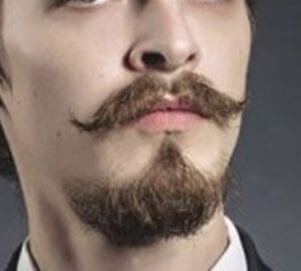
A Van Dyke beard combines a mustache and a pointed chin section, with the cheeks shaved clean and the two parts kept apart.
Wikipedia’s entry on the Van Dyke describes it as any growth of both mustache and goatee, with all hair on the cheeks removed.
The gap between mustache and chin is what separates it from a connected goatee or a circle beard.
Other names include Vandyke, Van Dyck and, in Spanish-speaking countries, the barba Van Dyke.
Some men call it a Van Dyke goatee, which is fair, since it sits inside the wider family of chin-centered beard styles.
Where the Van Dyke Came From
The name honors Anthony van Dyck, the Flemish painter who worked as a court artist for King Charles I of England.
The Tate notes that van Dyck was the dominant influence on English portrait painting for over 150 years.
He painted himself, the king and many courtiers with the short, pointed beards then fashionable among the English elite.
Art UK explains that the painter’s signature pointed beard took his name only long after his death.
The style is still nicknamed a “Charlie” after Charles I, whose portraits fixed the look in the public imagination.
It returned strongly in nineteenth-century America and has come back into favor several times since.
Why Men Still Choose the Van Dyke
- It sharpens a soft jaw. The pointed chin draws the eye downward and adds definition where the jawline lacks it.
- It works with uneven cheek growth. Since the cheeks are shaved, thin or patchy cheek hair stops being a problem.
- It suits mustache growth that never meets the chin. The deliberate gap turns a common weakness into part of the design.
- It reads as considered. A clean Van Dyke signals patience and attention, because it cannot survive neglect.
How the Van Dyke Differs From Close Relatives
A circle beard links lip hair and chin hair in one unbroken ring, while the Van Dyke keeps a clear gap.
For the full comparison of rings, gaps and points, see the connected circle alternative.
A true goatee leaves the upper lip bare, so putting a floating mustache above a pointed one produces the Van Dyke.
The Balbo is the closest cousin, but it adds a chin strip along the jaw and uses a floating mustache with no pointed tip.
Five Versions of the Van Dyke
Classic Pointed Van Dyke
The classic keeps a chin beard of one to two inches, trimmed to a neat point, with a mustache that ends near the mouth corners.
It suits oval, round and square faces, and it looks at home with both suits and casual shirts.
Short Modern Van Dyke
The modern version keeps the chin hair under an inch, with a softer point that looks tidy in conservative offices.
It is the easiest entry point for men trying the style for the first time.
Van Dyke With a Soul Patch
A little hair kept just beneath the lower lip links visually to the chin point without touching the mustache.
The patch adds depth to a thin chin, and the lone lip tuft explains how to keep it neat.
Long Van Dyke
Here the chin point grows to three inches or more, with the mustache kept fuller and sometimes curled.
It needs dense chin growth, regular conditioning and some balm or wax to hold the point.
Curled-Mustache Van Dyke
This version pairs the pointed chin with a waxed mustache whose ends turn upward, like many seventeenth-century portraits.
It is the boldest choice, so it suits creative professions and men comfortable drawing attention.
Which Faces Suit a Van Dyke?
- Round faces: a longer chin point adds length and makes the face look narrower and more defined.
- Square faces: a slightly rounded point tempers a heavy jaw without hiding its strength.
- Oval faces: almost any version works, so pick by growth density and daily routine.
- Long faces: keep the chin point short and the mustache fuller, so the face does not look stretched.
Getting Enough Length to Start
You need roughly four to six weeks of growth before the chin point has enough body to sculpt.
Week-by-week steps from a clean shave sit in a chin hair timeline, including the itchy second week.
Let lip and chin hair develop at the same pace, because the two parts look best at similar density.
How to Trim a Van Dyke Beard
- Start with clean, towel-dried hair, then comb the chin section straight down and the mustache out from the center.
- Clear the cheeks and throat fully, leaving only the mustache area and a chin patch no wider than your lips.
- Open the gap with a narrow vertical strip under each mouth corner, a few millimeters wide.
- Trim the sides of the chin patch so they angle inward as they descend toward the chin.
- Cut the bottom into a point with small scissors, working from each side toward the center.
- Trim the mustache so it ends just past the mouth corners and never hangs over the lip.
- Compare left and right using two mirrors, then confirm with a front-facing photo.
A precision trimmer and small, sharp scissors make this far easier, and trimmers and shears worth owning lists sensible options.
Clean the gaps and cheek lines every two to three days, and reset the point once a week.
Styling the Mustache
A Van Dyke mustache can be worn straight, slightly tapered at the ends or curled upward with wax.
For a straight look, comb it down and out from the center each morning, then trim any hairs crossing the lip.
For curled ends, warm a pea-sized amount of mustache wax between your fingers, then twist each side outward and upward.
Wax made with beeswax gives the firmest hold, and a patch test helps if your skin reacts easily to new products.
Other upper lip options, from the chevron to the handlebar, are covered in mustache variations and their care.
Keeping the Beard and Skin in Good Condition
The skin under a Van Dyke gets shaved more frequently than under a full beard, so irritation is a real risk.
Use a fresh blade, follow the hair direction along the gap lines, and apply an alcohol-free moisturizer afterward.
Keep the chin point supple with light oil, adding balm on longer versions for hold, after weighing oil against balm.
The Van Dyke on Gray and Textured Hair
Silver chin hair makes a Van Dyke look distinguished, and the clean cheeks keep an older face looking fresh.
Men past fifty can compare it with other options in ideas for silver beards.
Coily hair holds a point well but needs moisture to avoid breakage, so condition the chin section regularly.
The cheek and neck lines on curly hair also need gentle shaving to prevent bumps, as beard advice for coily textures explains.
Common Van Dyke Mistakes
- Letting the gaps fill in with stubble, which makes the style look like an unplanned goatee.
- Cutting the chin point off-center, which is easy to miss without a second mirror.
- Making the chin patch wider than the mouth, which blurs the clean, narrow profile.
- Over-waxing the mustache, so it looks stiff and shiny rather than groomed.
- Skipping moisturizer on shaved areas, then dealing with redness along every edge.
Wearing the Van Dyke Well
The Van Dyke beard has survived since the age of royal portraits because it looks deliberate on almost any face.
Choose the version that matches your growth, keep the gaps and cheeks clean, and trim the point with patience.
Treat the mustache as a separate feature, and look after the skin beneath every shaved edge.
Done well, it signals a man who cares about details without making a fuss about them.
Try the short modern version first, then return to Gentsways to compare it with other chin styles once it settles.
Frequently Asked Questions
Can I wear a Van Dyke with a patchy beard?
Yes, because this style handles patchy growth better than most beards do. The cheeks stay shaved, so only the chin and upper lip need decent density.
Is a Van Dyke beard professional?
A short, well-trimmed Van Dyke suits most offices and client meetings without trouble. Keep the point modest and the gaps clean, and it reads as polished.
How long does a Van Dyke take to grow?
Most men need four to six weeks of growth before the chin point can be sculpted. A long Van Dyke can take three months or more to reach full length.
Where does the Van Dyke name come from?
It honors Anthony van Dyck, the seventeenth-century Flemish painter who served the English court. His portraits showed Charles I and his courtiers with short, pointed beards and neat mustaches.
Disclaimer: This article is for informational purposes only and does not constitute medical, fitness, or professional advice. The author is not a certified personal trainer, licensed therapist, nutritionist, or medical doctor. Where content is based on personal experience or observation, this is stated clearly in the article. Always consult a qualified professional before making significant changes to your health, fitness, or wellness routine.

Pyo Merez is a 45-yeard old husband, father, and a chemical engineer by profession and the founder of Gentsways, a men’s lifestyle site built in honour of his father, Dee Clement. He has been writing about men’s development, style, and character through his father’s lens since 2021, drawing on lived experience, his father’s example, and research from reputable publications. He is not a certified trainer or therapist; where fitness or health topics require it, articles are reviewed by qualified contributors.