
Last updated on November 21st, 2026 at 01:05 pm
Most men who quit on a goatee give up in the second week, when the chin itches and the outline still looks accidental. Push past that point, follow a clear timeline, and a clean chin beard sits five or six weeks away.
I have never grown a goatee myself, so this post rests on published research, barbers’ advice and careful observation.
I did watch my father groom his beard with a manual razor, which was my first real lesson in facial hair care.
This page covers the growing process from a bare face to a finished chin beard, week by week.
It explains why some chins fill faster than others, when to make the first cut, and how to reach real length.
Choosing between goatee styles is handled in a separate post, so this one stays with the growing itself.
Table of Contents
What Growing a Goatee Really Involves
Growing a goatee means letting the whole lower face grow out first, then carving the chin beard from that growth.
Men who shave the cheeks from day one usually end up with a thin, narrow patch that never looks deliberate.
The process has three stages: a waiting stage, a carving stage and a refining stage that sets the final length.
If you still need to pick a target look, start with goatee types and their names before day one.
How Fast Chin Hair Actually Grows
Gillette’s research on beard growth puts the average rate at about 0.27 millimeters per day, though it varies between men.
That works out to roughly two millimeters a week, which is visible stubble by day seven and a short goatee within a month.
The same research notes that facial hair appears first on the upper lip, then the sideburns, chin and cheeks.
That order explains why the mustache and chin tend to look ready while the cheeks still lag behind.
Season matters too, since a PubMed study on seasonal hair growth found beard growth peaked in summer, about 60 percent above its winter low.
Why Some Men Grow Goatees Faster Than Others
Genetics and hormones decide most of what your chin can produce, and no routine overrides them completely.
Many men see their fullest growth arrive somewhere between their late teens and late twenties, and some later still.
If you are younger and the chin looks sparse, read about when beards usually fill in before deciding your growth has stalled.
Hair texture changes the picture as well, because coily hair looks shorter and denser than straight hair at the same length.
Men with real gaps can still wear a chin beard, and styling around thin patches shows how to work with them.
Before Day One: Preparing Your Face and Your Plan
Pick a start date when looking scruffy for two weeks will not cost you, such as a holiday or a quiet work stretch.
Shave the whole face cleanly on day one, so every hair starts from the same length and the growth reads evenly.
Begin washing the face twice daily with a gentle cleanser, because healthy skin under the hair reduces itch later.
Choose your target style now, so you know which areas to protect when the carving stage arrives.
Gather a guarded trimmer, a fine comb and a small mirror, and see a starter grooming tool kit if you need equipment.
A Week-by-Week Goatee Growing Timeline
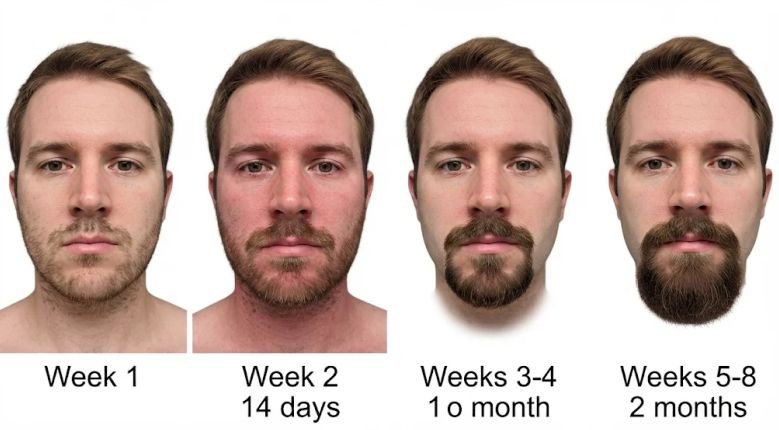
Week 1: Let Everything Grow
Leave the whole face alone, including cheeks and neck, so you can see exactly where hair grows thickest.
Wash and moisturize daily, and resist any trimming, because early edits hide the natural pattern you need to read.
Week 2: Get Through the Itch
Itching peaks around this point, because short, blunt hairs press against the skin as they lengthen.
A light beard oil or plain moisturizer calms it, and using beard oil correctly takes only a few drops.
Tidy the neck below the jawline only if your job demands it, and leave the rest untouched.
Weeks 3 to 4: Make the First Carve
By now the chin and mustache areas usually show their real density, so the goatee can be cut out.
Follow the carving steps in the next section, and leave the outline slightly wider than your final goal.
Weeks 5 to 8: Refine and Build Length
Narrow the outline gradually, a few millimeters at a time, until the proportions suit your jaw and mouth.
Stop trimming the chin length during this stage if you want a fuller look, and edge only the cheeks and neck.
Month 3 and Beyond: Long Goatee Territory
Men aiming for a long goatee keep growing from here, trimming only stray hairs and the mustache edge.
Carving a Goatee Out of Full Growth
- Comb all the hair downward after washing, so you can see the true length and density.
- Stand square to a well-lit mirror and decide if the mustache will connect to the chin.
- Picture two lines running from the outer corners of your nostrils straight down to the jaw.
- Run a trimmer with no guard along the cheek hair outside those lines, working from the ears inward.
- Clear the throat area under the jawline, leaving a soft curve under the chin rather than a hard edge.
- Shave the cleared cheek and neck areas with a sharp razor and plenty of shaving cream.
- Step back and check symmetry, then remove less than you think, since hair cannot go back.
For intricate outlines, a barber visit done right can set the first outline for you to copy.
Getting the Mustache and Chin to Meet
A connected goatee needs hair to grow down from the mouth corners and join the chin patch.
That connection is usually the last area to fill, so give it at least a month before deciding it will not join.
Brushing the mustache sides downward each morning helps the hair cover small gaps at the corners.
If the hairs never meet, a style with a clean gap may suit you better, and the next section covers it.
For upper lip styles and their care, see mustache looks worth growing.
How to Shave a Disconnected Goatee
A disconnected goatee keeps both the mustache and chin beard but shaves a clean gap between them.
- Grow the mustache and chin together for about four weeks, so both areas have real body.
- Cut the chin patch first, keeping its outer edges level with both mouth corners.
- Mark the gap by shaving a thin strip from each mouth corner down toward the jaw.
- Keep the strips the same width on both sides, usually a few millimeters, so the gap looks planned.
- Trim the mustache and chin to similar lengths, so neither part overpowers the other.
Clean those gaps twice a week or more, because even a few days of stubble blurs the separation.
How to Grow a Long Goatee
A long goatee takes three months or more, and the main skill is patience with the scissors.
Keep the cheek and throat areas clean-shaven throughout, because a sharp frame makes long chin hair look intentional.
Trim only split ends and stray hairs, removing tiny amounts, since one heavy cut can undo weeks of growth.
Wash the long section with a gentle beard cleanser and condition it, so the ends do not dry out and snap.
A small amount of balm helps control the length, and how beard balm holds hair explains the difference from oil.
Short Beard With a Long Goatee
Some men keep a short beard on the cheeks while letting the chin grow several inches longer.
Grow the full beard out, then keep the cheeks at a short guard length while the chin section grows freely.
Blend the transition along the jaw with a slightly longer guard, so the change in length looks smooth.
Dealing With Itch, Flakes and Ingrown Hairs
Itching usually fades by week three, once the hairs grow long enough to curve away from the skin.
Flakes under new growth mostly come from dry skin, so wash gently and moisturize the skin, not just the hair.
Men whose hair curls tightly face a higher risk of bumps along the shaved edges around the goatee.
Shave with the grain on those edges, and read keeping bumps away after shaving if they keep appearing.
What Helps Growth and What Does Not
Shaving more frequently does not make a goatee come in thicker, despite the old advice many men still repeat.
The Mayo Clinic explains that shaving does not change hair thickness, color or rate of growth, though regrowth can feel coarse.
Topical minoxidil has some trial evidence behind it, though its use on facial hair is not FDA-approved.
Drugs.com reports that one trial found more facial hair after sixteen weeks of twice-daily 3 percent minoxidil, compared with placebo.
Speak with a dermatologist before trying it, since side effects and ongoing use both need professional advice.
Rest, movement and sensible eating support general health, but none of them will override your genetics.
Oils, massages and supplements sold as growth boosters lack strong evidence, so treat their promises with caution.
Men chasing more density on the chin and cheeks can read about building fuller facial hair.
Mistakes That Slow a New Goatee
- Trimming in the first two weeks, which removes the growth you need for a well-placed outline.
- Carving the outline too narrow at the first attempt, leaving no room to correct uneven sides.
- Shaving the cheeks in a rush without proper light, which leads to crooked lines that take weeks to fix.
- Skipping skin care during the itchy stage, then shaving everything off out of frustration.
- Judging the result at week three, before the mustache corners and chin have had time to fill.
Your Goatee, One Week at a Time
Knowing how to grow a goatee comes down to patience in the early weeks and precision in the carving stage.
Let the whole face grow for about three weeks, then cut the outline out slowly and refine it gradually.
Long and disconnected versions need extra time and sharper edges, but the same steps apply.
Shaving harder will not speed the process, so put your effort into skin care and clean lines.
Start your two-week grow-out this weekend, and visit Gentsways again once it is time to settle on a final style.
Frequently Asked Questions
How many weeks before a goatee looks finished?
Most men can carve a short goatee after three to four weeks. A fuller version takes six to eight weeks, and a long goatee needs three months or more.
Can I grow a goatee if my beard is patchy?
Yes, because the chin and mustache tend to fill earlier than the cheeks. If the corners stay sparse, choose a chin-only or disconnected style that works with your natural pattern.
Should I shave my cheeks while growing a goatee?
Leave the cheeks unshaved for the first three weeks, which reveals your full growth pattern. Shave them only once you are ready to carve the final outline.
Does a goatee itch while growing?
Most men feel itching during the second week, as short, blunt hairs press against the skin. Gentle washing and a few drops of oil usually calm it within days.
Why does my goatee grow faster in summer?
Research has found that beard growth rises through spring and peaks in summer. Many men notice quicker progress during warmer months, so a summer start can feel faster.
Disclaimer: This article is for informational purposes only and does not constitute medical, fitness, or professional advice. The author is not a certified personal trainer, licensed therapist, nutritionist, or medical doctor. Where content is based on personal experience or observation, this is stated clearly in the article. Always consult a qualified professional before making significant changes to your health, fitness, or wellness routine.



Pyo Merez is a 45-yeard old husband, father, and a chemical engineer by profession and the founder of Gentsways, a men’s lifestyle site built in honour of his father, Dee Clement. He has been writing about men’s development, style, and character through his father’s lens since 2021, drawing on lived experience, his father’s example, and research from reputable publications. He is not a certified trainer or therapist; where fitness or health topics require it, articles are reviewed by qualified contributors.