
Last updated on July 27th, 2026 at 08:52 am
Ginger, garlic, ashwagandha, fenugreek, and Tongkat Ali all get marketed with identical confidence as testosterone boosters, when the actual research behind each one varies enormously.
Five herbs come up constantly in testosterone content aimed at men: ginger, garlic, ashwagandha, fenugreek, and Tongkat Ali. They don’t deserve equal confidence.
One has a real, replicated human trial behind it.
The others rely mostly on animal studies, a single small trial in a specific population, or evidence too inconsistent to draw a firm conclusion for men generally.
This guide sorts each by actual evidence quality rather than repeating the same confident marketing language for all five.
For the full picture on supplements generally, see our complete guide to testosterone boosters for men.
Disclaimer: This article is for informational purposes only and does not constitute medical advice. Always consult a qualified professional before starting any supplement, especially alongside existing medications or health conditions.
Ashwagandha: The Strongest Evidence of the Five
Ashwagandha has the most credible human research behind it.
A placebo-controlled trial using 300 mg of KSM-66 extract twice daily found a real reduction in cortisol after 60 days, with a smaller, positive trend toward higher testosterone in men specifically, according to research published in the Indian Journal of Psychological Medicine.
That’s a genuine finding, though the effect works mainly through stress reduction, not a direct hormonal push.
Table of Contents
Fenugreek and Tongkat Ali: Weak or Inconsistent Evidence
Both show up in nearly every testosterone product on the market, and the honest picture is that human research on both remains limited and inconsistent.
Some small trials show modest effects on libido or subjective energy.
Very few show a reliable, replicated effect on measured testosterone levels themselves.
The guide to testosterone boosters covers both in more detail, since the evidence picture is identical to what’s found in commercial supplement products containing them.
Ginger: Mostly Animal Evidence, With One Narrow Human Study
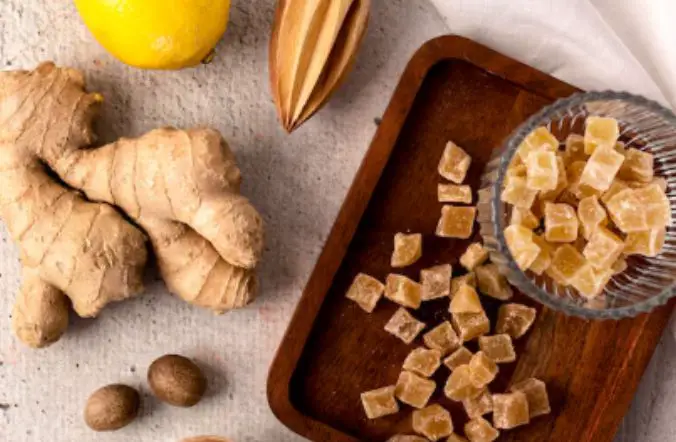
Ginger increases testosterone reliably in rodent studies, but a peer-reviewed review states plainly that its effect on testosterone “is not yet confirmed in humans,” according to research indexed on PubMed.
The one relevant human trial found a 17.7 percent testosterone increase after three months, but it was conducted specifically in infertile men, not a general population, and the dose used wasn’t documented.
That’s genuinely interesting preliminary evidence, not proof it works the same way for a healthy man drinking ginger tea.
Garlic: A Plausible Mechanism, Thin Human Evidence
Garlic’s proposed mechanism, lowering cortisol via allicin, is biologically plausible, since chronic high cortisol does work against healthy testosterone production.
The research behind this specific claim, however, is overwhelmingly conducted in animals rather than humans, and there isn’t a strong, replicated human trial establishing that culinary or supplemental garlic meaningfully raises testosterone in men.
A Real Problem With How These Herbs Get Marketed
A common framing pushes readers toward herbs by exaggerating the risks of medical treatment, implying prescription testosterone therapy is dangerous while herbs are risk-free by comparison.
That’s a false equivalence. Testosterone replacement therapy does carry real, documented risks, covered honestly in our guide to medical treatment for low testosterone, but that doesn’t make an unproven herb automatically safer or more effective.
Both categories deserve honest evaluation on their own evidence, not a comparison designed to steer you toward one option.
Practical Guidance for Using These Herbs
Culinary amounts- a clove of garlic in a meal, a slice of fresh ginger in tea- are unlikely to produce a measurable hormonal effect either way, based on the doses actually studied.
If you want to try any of these with real intention, concentrated extracts at studied doses are the only form with a documented effect to speak of, and even then, only ashwagandha has a solid trial behind it.
Consistency matters more than any single dose.
Talk to a doctor before starting any of these regularly, particularly if you have a hormone-sensitive condition like prostate cancer, or take blood thinners, since garlic specifically can interact with medications like warfarin.
Who Should Be Cautious
Men with hormone-sensitive conditions, prostate cancer, or certain cancers affected by hormone levels should talk to a doctor before using any of these herbs regularly, since even natural compounds can influence hormone-driven conditions.
Anyone on blood thinners should be specifically cautious with garlic given its documented interaction risk.
Start with small amounts if you have any history of plant-based allergies, and stop if you notice unusual symptoms.
Conclusion
These five herbs don’t deserve equal confidence, and treating them that way misleads readers looking for something that actually works.
Ashwagandha has real, if modest, human evidence behind it. Fenugreek and Tongkat Ali sit in inconsistent territory.
Ginger and garlic rely mostly on animal research, with only narrow or thin human evidence behind the specific testosterone claim.
Start with what the evidence actually supports, not what’s marketed with the most confidence.
Frequently Asked Questions
Which testosterone-boosting herb has the strongest evidence?
Ashwagandha, with a real placebo-controlled human trial showing reduced cortisol and a modest positive trend toward higher testosterone specifically in men.
Does ginger actually raise testosterone in humans?
The evidence is mostly from animal studies. One small human trial in infertile men showed an increase, but it hasn’t been confirmed in a general population.
Is garlic effective for boosting testosterone?
The proposed mechanism is plausible, but human evidence is thin. Most supporting research comes from animal studies rather than replicated human trials.
Are herbs safer than testosterone replacement therapy?
Not automatically. Both carry their own risk and evidence profile and deserve honest evaluation rather than assuming natural options are risk-free by default.

Pyo Merez is a 45-yeard old husband, father, and a chemical engineer by profession and the founder of Gentsways, a men’s lifestyle site built in honour of his father, Dee Clement. He has been writing about men’s development, style, and character through his father’s lens since 2021, drawing on lived experience, his father’s example, and research from reputable publications. He is not a certified trainer or therapist; where fitness or health topics require it, articles are reviewed by qualified contributors.