Last updated on November 26th, 2026 at 07:35 pm
A blazer can look perfect on the hanger yet feel completely wrong once you button it in front of a mirror. Knowing what to check before paying separates a jacket you wear for years from one that hangs unused.
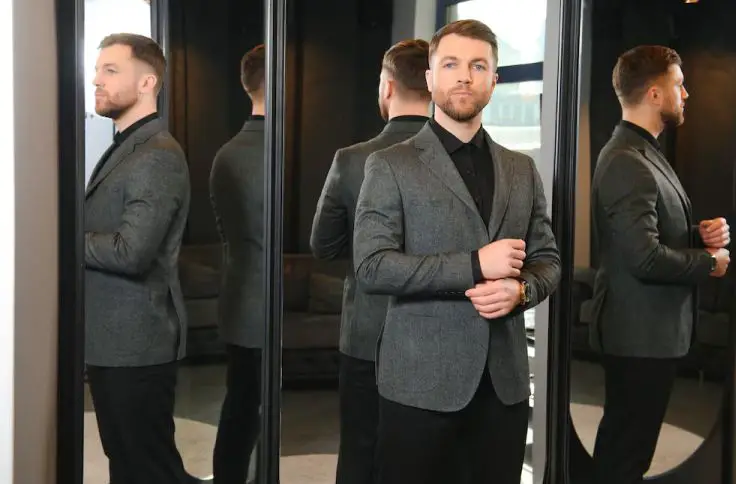
When I bought my checked blazer, I wore it in the shop and tested every part of it before deciding.
I tried on many jackets to find my true size, because the one that first catches your eye may not fit.
That is especially true when the attractive one runs small, since a bigger jacket is easier to adjust than a tight one.
Because I always try before buying, I have never ended up with the wrong size.
The steps below follow that habit, from occasion and budget to a try-on checklist, alterations, quality checks and online buying.
Table of Contents
Start With Where You Will Wear It
Decide first where the blazer will spend most of its time, because that answer narrows every later choice.
- Offices and smart functions call for smooth wool, a structured shoulder and a plain or subtle color.
- Church, dinners and relaxed workplaces suit soft wool, quiet checks or textured weaves.
- Weekends and warm weather suit cotton, linen and soft, unstructured cuts.
For help matching styles to settings, see styles of blazer to consider, and jacket terms clarified if shop labels confuse you.
Choose Fabric for Your Climate
Match the cloth to the weather you actually live in, not the weather in a catalog photo.
- Hot climates call for breezy weaves such as linen, cotton or lightweight wool, ideally half-lined or unlined.
- Mild and changeable seasons, such as the harmattan, suit mid-weight wool and wool blends.
- Cold climates call for brushed flannel, thick tweed or dense worsted with a full lining.
Pick a Color That Earns Wear
A first blazer should work with many trousers, so navy, gray and quiet checks are the safest starting points.
Navy sits happily beside chinos, gray flannels and denim, which is why a navy first blazer suits most men.
Bolder colors and patterns suit a second or third jacket, once the basics are already covered.
Skin tone matters too, and flattering shades for your complexion explains which tones work best.
Set a Budget and Understand Construction
Fused Blazers
Fused blazers bond the outer cloth to a stiffening layer with glue, which keeps prices low but can feel flat and stiff.
Half-Canvassed Blazers
Half-canvassed blazers place a floating canvas in the chest and lapels, giving better drape at a middle price.
Full-Canvassed Blazers
Full-canvassed blazers run that canvas through the whole front, so the jacket molds to your body and lasts longest.
The Pinch Test
Art of Manliness describes pinching the cloth below the bottom buttonhole and gently pulling the layers apart to feel for a third layer.
Put This On notes a limit, because a half-canvassed jacket is fused below the chest, so a low pinch cannot separate half canvas from fused.
If the test is unclear, ask the shop assistant directly how the jacket is built.
Measure Before You Shop
Know your chest, shoulder, sleeve and jacket length measurements before you start trying jackets on.
The numbers and size conversions for each brand sit in taking blazer measurements.
Tall men may need long sizes, as long sizes for tall men explains.
The Try-On Checklist
Wear the kind of shirt you plan to wear underneath, such as a crisp dress shirt, so the fit reflects real use.
- Shoulders: the seam should finish where your own shoulder bone does, with no dent or overhang.
- Collar: the jacket collar should hug the shirt collar, with nothing standing away behind your neck.
- Chest and buttoning: the front should close smoothly, with no creases pulling across the button.
- Length: the jacket should cover your seat and finish near your knuckles.
- Sleeves: a little shirt cuff should be visible when your arms hang naturally.
- Movement: reach forward, lift your arms and cross them, and the jacket should not bind.
- Sitting: sit down with the jacket open and check that it does not bunch badly.
- Back view: use a second mirror or ask someone to check for ripples across the back.
Try several sizes and brands, because I found my real size only after trying many jackets side by side.
General fit principles appear in general rules of good fit, and builds in your frame and proportions.
Why a Slightly Bigger Size Beats a Smaller One
The blazer that first attracts you may be a size too small, and that is the one to put back.
A jacket that is a little large in the body and sleeves can be taken in, while a tight one rarely has fabric to let out.
Gentleman’s Gazette calls sleeves the easiest part of a jacket to change, while it advises against altering shoulder width.
So size up only within reason, keeping the shoulders right, because oversized shoulders cannot be fixed cheaply.
What a Tailor Can and Cannot Fix
Usually Fixable
- Shortening or slightly lengthening sleeves, if the cuffs have no working buttons.
- Narrowing the waist and sides through the seams for a cleaner line.
- Moving the front button a little to adjust the closing point.
- Small adjustments to the center back seam where spare fabric allows it.
Men’s Wearhouse lists sleeves that are too long and a loose waist among the alterations a tailor can fix.
Rarely Worth Fixing
- Shoulders that overhang, pinch or slope away from your own frame.
- A chest that is far too tight or far too loose.
- A jacket that is too short, since Proper Cloth explains there is not enough hem to lengthen it.
- Sleeves with working cuff buttons that need a large amount of shortening.
Quality Checks Beyond Fit
- Stitching should be even and tight along the lapels, pockets and hem.
- Buttonholes should be neat and tightly stitched, with no loose threads.
- Patterns, such as checks, should line up across the seams and pockets.
- The lining should lie smooth and feel breathable rather than plasticky.
- Buttons should be firmly sewn and feel solid, not hollow and light.
- Lapels should roll gently rather than lie flat and look hard-pressed.
Off the Peg, Altered or Custom
Off-the-peg jackets suit most men once any small alterations are done, and my own checked blazer came straight off the rack.
Tailored blazers suit men who struggle with standard sizes or want a particular cloth, and the same logic applies to suits bought the same way.
Buying a Blazer Online
Online buying saves time but removes the try-on, which is where most mistakes are caught.
Coresight Research estimates that 24.4 percent of US online apparel orders are returned, with incorrect sizing the top reason.
- Compare the brand’s garment measurements with a blazer you already own.
- Read reviews for comments on sizing, sleeve length and shoulder width.
- Check the returns policy and keep tags on until the fit is confirmed.
- Try the jacket at home with the shirt and trousers you plan to wear.
Blazer Buying Mistakes
- Buying the jacket that catches your eye without testing its fit.
- Choosing a smaller size because it looks sharper on the hanger.
- Ignoring the shoulders and hoping a tailor will fix them later.
- Buying a bold pattern before owning a plain, easy-to-wear blazer first.
- Skipping the sitting and arm-raise tests inside the shop’s fitting room.
- Paying extra for full canvas without checking the basic fit first.
Buying With Confidence
Learning how to pick a men’s blazer comes down to occasion, cloth, color, construction and, above all, fit.
Try on several sizes, test every part and choose the shoulders first.
When unsure, go slightly bigger in the body, then let a tailor refine it.
Check stitching, lining and buttons before you pay, and keep receipts until the fit is confirmed.
Once your new jacket is home, see styling the new jacket for outfit ideas, then look through more menswear reading across the site.
Frequently Asked Questions
Which fit signs matter most in the shop?
The shoulders should end at your own, the front should button smoothly and the jacket should cover your seat. Expect a thin sliver of shirt cuff to show below each sleeve.
Should I size up or down when buying a blazer?
Size up slightly when you fall between sizes, since the body and sleeves can be reduced. Never size up in the shoulders, because they rarely alter well at all.
Is a canvassed blazer worth the extra money?
A canvassed blazer drapes better and lasts longer, so it suits jackets you will wear regularly. A well-fitting fused blazer is still better than a poorly fitting canvassed one.
Can a tailor fix blazer shoulders?
Rarely, because shoulder alterations are complex, costly and risky for any jacket. Choose a blazer whose shoulders already fit, then let the tailor handle sleeves, waist and smaller adjustments.
Is it safe to buy a blazer online?
It can be, if you compare garment measurements with a jacket you own and check the returns policy. Try it on at home with your usual shirt before removing any tags.

Pyo Merez is a 45-yeard old husband, father, and a chemical engineer by profession and the founder of Gentsways, a men’s lifestyle site built in honour of his father, Dee Clement. He has been writing about men’s development, style, and character through his father’s lens since 2021, drawing on lived experience, his father’s example, and research from reputable publications. He is not a certified trainer or therapist; where fitness or health topics require it, articles are reviewed by qualified contributors.