Last updated on September 21st, 2026 at 03:52 pm
Most men buy chinos in whatever size they have worn since college, then wonder why the fabric bags at the knee or pools at the ankle, when the real fix has nothing to do with buying a new size.
How chino fit comes down to three measurements most men never check: waist, rise, and break. Get those right and a $40 pair looks tailored.
Get them wrong, and a $200 pair still looks borrowed.
This guide walks through each cut, where chinos should sit on your waist, how they should fall at your ankle, and the specific mistakes that make chinos look off even when the size tag says they should fit.
It builds directly on our full chinos guide, so if you need color or styling advice after this, that page has it.
Table of Contents
Why Chino Fit Matters More Than the Size on the Tag
Size labels lie more often than most men realize. A McKinsey analysis found that 70 percent of online fashion returns trace back to sizing and fit problems, not to a change of heart about the item itself.
Chinos suffer from this more than most garments because “slim,” “regular,” and “relaxed” mean something different at every single brand.
That means the label on the waistband is a starting point, not a final answer.
What actually matters is how the fabric sits on your specific waist, hip, and thigh, which is why trying a pair on, or at minimum knowing your real measurements, beats trusting a size chart every time.
The Four Chino Fits, and Who They Actually Suit
- Slim fit tapers close to the leg from thigh to ankle. It suits leaner builds well but pulls tight and looks strained across a fuller thigh or seat.
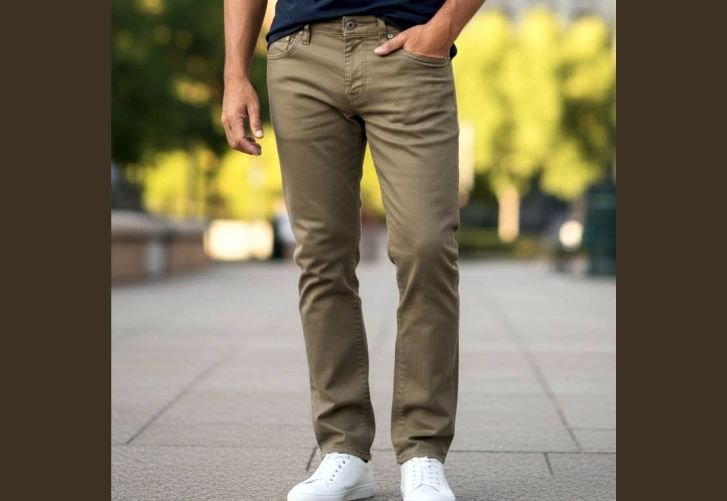
- Straight fit holds a consistent width the entire leg length. This is the safest starting point if you are unsure which cut suits your build.
- Regular fit adds extra room through the seat and thigh while keeping a tapered ankle. A strong daily-wear choice for men who sit at a desk most of the day.
- Relaxed fit offers the most room throughout without turning baggy. Best suited to comfort-first days, travel, or builds that slim and straight fits crowd.
If you already know your general build, our guides on men’s body types and shapes and men’s outfits by body type go further into matching cut to frame.
Rise: Where Chinos Should Actually Sit
Rise refers to the distance between the waistband and the crotch seam, and it decides where chinos sit relative to your natural waist.
Low rise sits below the navel and reads casual or trend-driven.
Mid rise sits at or near the natural waist and works for most builds and most occasions.
High rise sits above the natural waist and suits a longer torso or a more formal look.
Mid rise is the safest default for chinos specifically, since it balances comfort with a clean line under both a t-shirt and a tucked shirt.
Break: How Chinos Should Fall at the Ankle
Break describes the fold that forms where the pant leg meets the top of the shoe, and it is the single most common thing men get wrong.
According to Gentleman’s Gazette, a respected authority on classic menswear, the main break styles are:
- No break: the hem stops right at the top of the shoe with no fold at all. Modern, works best with slim or tapered cuts.
- Quarter break: a slight dent forms at the front of the leg. The most versatile option and the one we recommend as a default for chinos.
- Half break: a more visible fold forms without touching the ground. Suits straight and regular cuts well.
- Full break: fabric pools noticeably at the ankle. A traditional, formal look that reads dated on casual chinos.
For chinos specifically, quarter break keeps the look current without exposing too much ankle or sock in a business casual setting.
Common Chino Fit Mistakes to Watch For
- Bagging at the knee. Usually means the thigh is too loose for your build, even if the waist fits fine.
- Waistband gap at the back. A common issue for a smaller waist paired with a fuller seat, and it usually means sizing down or asking a tailor to take in the waistband.
- Ankle pooling. The most visible mistake from across a room, and one that a $10 hem fixes in most cases.
- Length that shows too much sock while standing. Fine as an intentional look with loafers, less fine as an accident with dress shoes.
How to Measure Yourself for Chinos at Home
Skip the size chart guesswork with three measurements:
- Waist: Measure around your natural waistline, not where your current pants sit if they run low or high.
- Inseam: Measure from the crotch seam to where you want the hem to land, factoring in your break preference.
- Thigh: Measure the fullest part of your thigh to check against a brand’s size chart before assuming your usual size carries over.
Off the Rack vs. Tailored: When Alterations Are Worth It
Most chinos fit reasonably well off the rack in the waist and length, and a local tailor can usually fix the rest for less than the price of a new pair.
Fabric behavior matters here too.
Cotton twill can shrink slightly with washing, which is one reason consumers report keeping garments an average of nearly five years before retiring them, according to Cotton Incorporated’s durability research.
Buying a very slight length allowance and hemming after a first wash avoids that shrinkage catching you off guard.
If the waist and thigh fit but the length or break is off, alterations are almost always worth the cost.
If the waist itself does not fit, start over with a different size or brand rather than asking a tailor to rebuild the whole garment.
Frequently Asked Questions
What is the correct break for chinos?
Quarter break works best for most chinos, showing a slight fold at the front without fabric pooling at the ankle. It suits both casual and business casual settings.
Should chinos be tight or loose?
Chinos should sit close enough to show your leg’s line without pulling at the thigh or seat. If you can pinch more than an inch of fabric, size down.
What rise is best for chinos?
Mid rise suits most builds and occasions, sitting at the natural waist. It works cleanly with both tucked shirts and untucked casual tops.
Do chinos shrink after washing?
Cotton twill can shrink slightly after the first few washes. Buying a small length allowance and hemming afterward avoids surprises once shrinkage settles.
Conclusion
Chino fit is not complicated once you know the three things to check: waist, rise, and break.
Most fit problems men blame on their build actually come down to guessing a size instead of measuring, or ignoring break until the fabric is already pooling at the ankle.
Take five minutes with a tape measure before your next purchase, and you will save yourself a return and a wasted pair.
Once the fit is locked in, head back to our full chinos guide for color, styling, and seasonal pairing advice.

Pyo Merez is a 45-yeard old husband, father, and a chemical engineer by profession and the founder of Gentsways, a men’s lifestyle site built in honour of his father, Dee Clement. He has been writing about men’s development, style, and character through his father’s lens since 2021, drawing on lived experience, his father’s example, and research from reputable publications. He is not a certified trainer or therapist; where fitness or health topics require it, articles are reviewed by qualified contributors.