
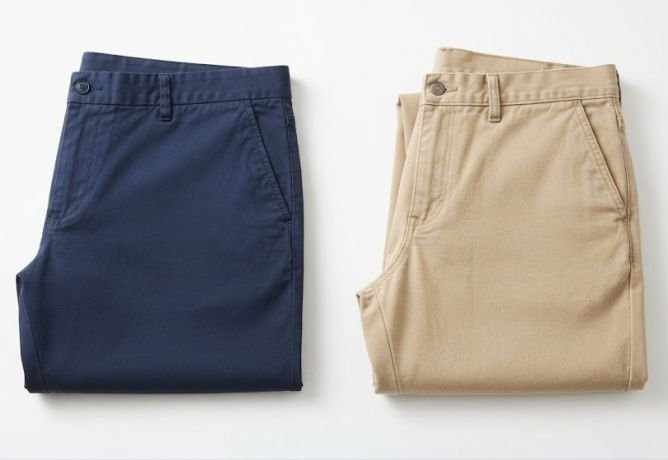
Chinos and khakis get lumped together so frequently that most men use the words interchangeably, without realizing the fabric, fit, and dress code sitting underneath each name are not always quite the same thing, once you look closely at both.
Walk into any menswear store, and you will see chinos and khakis hanging near each other, sometimes labeled as if they were the same pants.
This guide breaks down where the two styles actually differ, from fabric weight and construction to fit, color range, and how dressy each one reads in real settings.
You will also find guidance on which pair suits work, weekend outings, or a dressier evening out, along with styling ideas for both.
By the end, you will know exactly which pants to reach for depending on the occasion, instead of guessing based on the label alone.
My father owned exactly one pair of khaki trousers his whole working life, and he wore them for everything from weekend errands to church picnics.
He never once called them chinos, and looking back, he was probably right not to.
Table of Contents
Where Chinos and Khakis Came From
The Chino Origin Story
The word chino traces back to a cotton twill fabric first produced for military uniforms, later adopted by American soldiers during the Spanish-American War, according to UNIONBAY’s history of the style.
Returning soldiers brought the pants into civilian life after both World Wars, and college students later helped push chinos into everyday fashion, as noted by Oliver Wicks.
The Khaki Origin Story
Khaki has a separate military background, developed by British officers in colonial India who dyed white cotton uniforms to survive the heat and blend into the landscape, according to Airtasker’s breakdown of the style.
The word khaki itself comes from an Urdu term meaning dust colored, which is why the traditional shade carries that name today.
Why the Two Get Confused
Both styles grew out of military uniforms, both use cotton fabric, and both became casual wardrobe staples through the same postwar period.
That shared background is a big part of why the two names get used interchangeably today, even though the details underneath are not identical.
The Real Fabric Difference between Chinos and Khaki
Chinos traditionally use a lighter, smoother cotton twill, while khakis use a heavier, coarser cotton twill built for durability, according to Nimble Made’s comparison guide.
This weight difference is the biggest reason the two styles drape, move, and wear differently over a full day.
- Chino fabric feels lighter and smoother against the skin, which suits warmer weather and dressier settings.
- Khaki fabric feels heavier and more textured, which holds up better under repeated wear and rougher activity.
- Some brands now blend the two, so always check the fabric weight listed on the label rather than assuming based on the name alone.
Fit and Cut Differences
Chinos generally come in a slimmer, more tapered cut, while khakis traditionally offer a looser, straighter leg with more room through the thigh, according to Mountain Khakis.
Khakis have also historically included pleats and cuffed hems more commonly than chinos, which usually skip both for a cleaner front panel.
- A tapered chino leg gives a more tailored, modern silhouette suited to smart casual settings, especially paired with one of the dress shirts covered in our men’s shirt guide.
- A relaxed khaki leg gives more room to move, which works well for outdoor or physical activity.
- Pocket and seam details also tend to be more visible on khakis, adding to their rugged, utilitarian look.
Color Differences
Khaki refers to a specific dusty, tan shade, while chino refers to the pant style itself, not a color at all.
Chinos come in a wide color range, including navy, olive, gray, and burgundy, while khakis traditionally stay closer to earthy, neutral tones like tan, beige, and brown.
Which One Looks Dressier
Chinos generally read as the dressier option, thanks to their lighter fabric, slimmer cut, and cleaner front panel without heavy top stitching or cargo-style pockets.
Khakis lean more casual and rugged, better suited to weekend errands, outdoor tasks, or relaxed office environments than to a polished business casual look.
Quick Comparison Table: Chinos vs Khakis
| Feature | Chinos | Khakis |
|---|---|---|
| Fabric weight | Lighter cotton twill | Heavier cotton twill |
| Fit | Slimmer, tapered | Looser, straighter |
| Color range | Wide, including navy and olive | Mostly tan, beige, brown |
| Pleats and cuffs | Rare | More common historically |
| Formality | Dressier, business casual friendly | Casual, rugged, everyday wear |
| Best suited for | Office, dinners, smart casual outings | Errands, outdoor tasks, relaxed weekends |
When to Wear Chinos
- Business casual offices where a tailored, put-together look matters.
- Dinner dates or evening plans that call for something sharper than jeans.
- Warmer weather, since the lighter fabric breathes better through the day.
Pair chinos with a blazer or button-down for a smart casual look, drawing on the same styling ideas covered in our full guide to chinos men’s outfits.
When to Wear Khakis
- Weekend errands, yard work, or outdoor activities that call for tougher fabric.
- Casual offices that do not require a tailored, dressed-up appearance.
- Travel days, since the heavier fabric holds up well against repeated wear, especially paired with the right pair from our men’s footwear guide.
For a broader look at building out a complete casual rotation, our guide on stylish casual outfits for men over 50 covers pairing options that work well with either pant style.
Styling Chinos vs Styling Khakis
Chinos pair naturally with loafers, a blazer, or a crisp button-down for a clean, elevated look, drawing from the same men’s capsule wardrobe essentials that anchor a flexible closet.
Khakis lean better toward sneakers, a plain T-shirt, or a casual jacket, especially when the day calls for comfort over polish.
Both pants benefit from a properly fitted leather belt and a watch that matches the occasion, for a relaxed weekend look or for a smart casual outfit built around a blazer.
Common Misconceptions
Chinos and Khakis Are Always the Same Thing
Some brands do use both names for nearly identical pants, but the traditional distinction still holds around fabric weight, cut, and color range.
Khaki Means the Pants, Not Just the Color
Khaki actually describes a specific tan shade first, and only later became a casual shorthand for a type of trouser in everyday conversation.
One Style Is Always Better Than the Other
Neither style outranks the other. Chinos suit dressier, warmer settings, while khakis suit rugged, casual, or outdoor days better.
Final Verdict
- Best for the office or dressier plans: chinos.
- Best for outdoor tasks and rugged everyday wear: khakis.
- Best overall value for a flexible wardrobe: one pair of each, in a neutral color that pairs with what you already own.
Conclusion
Chinos and khakis share a common ancestry, but the details separate them once you look past the color.
Chinos lean lighter, slimmer, and dressier, while khakis lean heavier, looser, and more rugged, though modern pairs sometimes blur that line completely.
Choose chinos when you want a cleaner, more polished look for work or dressier weekend plans, and khakis when comfort and durability matter more than a tailored finish.
Keep one of each in your wardrobe, and you will have the right pair ready no matter what the day calls for.
Frequently Asked Questions
Are chinos and khakis made from the same fabric?
Not exactly. Chinos generally use lighter cotton twill with a slimmer, tapered cut, while khakis use heavier twill with a looser, more relaxed everyday fit and comfortable drape.
Is khaki just a color, not a type of pant?
No. Khaki refers to a specific tan or light brown color, while chino refers to a style of pant fabric. Chinos come in many colors beyond khaki tones.
Are chinos more appropriate for work than khakis?
Yes, in most business casual settings. Their lighter fabric and slimmer, tapered cut give chinos a cleaner, more polished look than a typical pair of loose khakis today.
Do khakis hold up better for outdoor activity?
Yes, khakis generally handle rougher wear better than chinos because of their heavier cotton twill, making them a solid choice for outdoor activity or heavy physical work outdoors.
Can chinos and khakis look nearly identical today?
Yes, many modern pairs blend the two styles together very closely today, so checking the fabric weight and cut matters more than trusting the label alone these days.

Pyo Merez is a 45-yeard old husband, father, and a chemical engineer by profession and the founder of Gentsways, a men’s lifestyle site built in honour of his father, Dee Clement. He has been writing about men’s development, style, and character through his father’s lens since 2021, drawing on lived experience, his father’s example, and research from reputable publications. He is not a certified trainer or therapist; where fitness or health topics require it, articles are reviewed by qualified contributors.