
Last updated on August 17th, 2026 at 05:54 pm
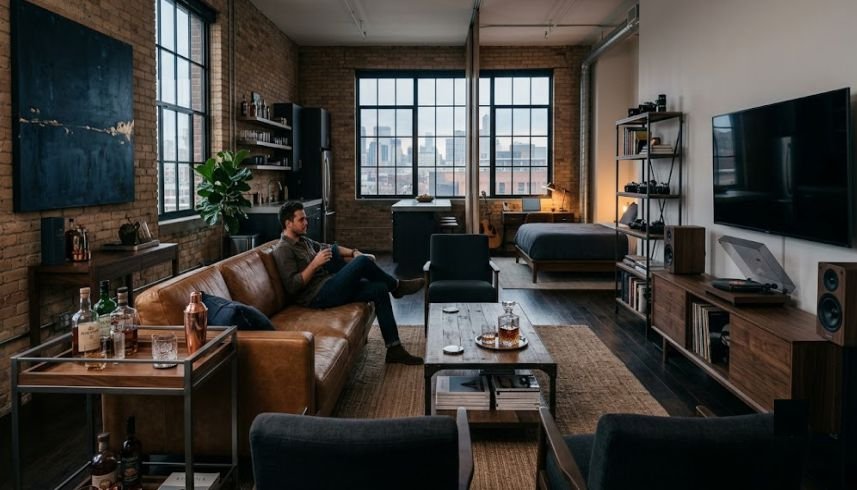
Most bachelor pads fail for the same reason a dorm room does: furniture that got acquired instead of chosen, and a space that grew by accident instead of design.
A bachelor pad and a dorm room can share the same square footage and the same budget, and still feel completely different.
The difference isn’t money, it’s intention.
A dorm room accumulates furniture as it becomes available. A real bachelor pad gets built in a deliberate order, with each piece chosen for a reason.
This post covers what actually separates the two: how to sequence your first purchases, why lighting does more work than almost anything else, and the specific mistakes that quietly keep a space reading as temporary rather than genuinely yours.
Table of Contents
What Actually Separates a Bachelor Pad From a Dorm Room
The difference isn’t the presence of a couch or a bed frame. It’s whether the space was built in a sequence or assembled by accident.
A dorm room says “this is temporary.”
A bachelor pad says “I live here, on purpose.”
This is the same buy-less-buy-better philosophy already covered on this site, fewer, better pieces chosen deliberately, applied to your first real space instead of your wardrobe.
Start With What You Sleep On
A real bed frame and a mattress suited to how you actually sleep matter more than any other single purchase.
This isn’t just about how the bedroom looks, it directly affects your rest, covered in more depth in this site’s full guide to sleep and recovery.
An air mattress or a bare box spring reads as temporary the moment anyone walks in, regardless of what else is in the room.
Measure Before You Buy Anything
This is the single most common furniture mistake, and it’s entirely avoidable.
Roughly 80 percent of furniture bought before actually seeing the space doesn’t fit well once it arrives, according to research reported by Moving Cost Planner.
Measure your space, measure the furniture, and measure doorways and stairwells too; a couch that won’t fit through the entrance is a mistake no amount of good taste fixes.
The Purchase Order That Actually Makes Sense
Buy in phases, not all at once. Start with your bed and one genuinely comfortable seating piece, the two things you’ll use daily regardless of anything else in the room.
A one-bedroom apartment typically runs $2,500 to $5,000 to furnish well, according to a furnishing guide published by Dream Decor, and spreading that cost over a few months beats financing everything at once or filling gaps with disposable furniture you’ll replace within a year.
Storage, rugs, and wall art can wait. Living in a space for a few weeks before finalizing these purchases tells you what you actually need, rather than what looked good on a showroom floor.
Lighting Is the Fastest Fix for a “Dorm Room” Feel
A single harsh overhead light is the fastest way to make any room feel temporary, regardless of what furniture sits underneath it.
Warmer light, generally below 3000K, reads as more comfortable and calming, while cooler light increases brightness and alertness, according to a study of male participants published in PMC.
Layer your lighting instead of relying on one source: an overhead fixture, a floor or table lamp, and one smaller accent light do more for a room’s feel than any single piece of furniture.
Common Dorm Room Mistakes Worth Avoiding
Unframed posters taped directly to the wall are the single fastest way to signal “temporary.”
A rug anchors a room the same way a belt anchors an outfit; skipping one leaves the space feeling unfinished.
Mismatched furniture picked up piece by piece without any shared color or material reads as accidental rather than intentional.
And relying on overhead lighting alone, covered above, undercuts even genuinely good furniture choices.
Decor That Signals Intentional, Not Accidental
A few well-chosen objects, tied to something you actually care about, do more than a room full of generic decor.
See this site’s guide to hobbies for men if you’re looking for genuine starting points; books, art, or gear tied to an actual interest reads as personal in a way mass-produced decor never does.
One Space That’s Genuinely Yours
Beyond the shared rooms, consider carving out one corner that’s entirely yours, a chair and a shelf, nothing elaborate.
This site’s home and living guide covers why this matters more than it might seem: a space with no function beyond being genuinely yours.
Budgeting Without Overspending or Underbuying
Prioritize what you use daily, then build outward from there. This connects directly to the budgeting principles covered on this site, buy less, buy better, and let quality on the pieces you touch every day take priority over everything else.
Frequently Asked Questions
How much does it cost to furnish a first apartment as a man?
A one-bedroom apartment typically costs $2,500 to $5,000 to furnish well, though buying in phases rather than all at once spreads that cost manageably.
What’s the biggest mistake men make furnishing their first apartment?
Buying furniture before measuring the space. Roughly 80 percent of pre-move furniture purchases don’t fit well once they actually arrive in the room.
What lighting works best for a bachelor pad?
Layered lighting, an overhead fixture, a lamp, and one accent light, works better than a single harsh overhead source, which reads as cold and temporary.
What should I buy first when furnishing a bachelor pad?
A real bed frame and one genuinely comfortable seating piece, the two items you’ll use daily regardless of what else fills out the room.
Conclusion
A bachelor pad isn’t defined by budget; it’s defined by sequence and intention.
Start with what you sleep and sit on, measure before you buy anything else, and layer your lighting before you worry about decor.
The rest fills in naturally once the foundation is right. For the full picture on building a space that works long-term, see this site’s complete guide to men’s home and living.

Pyo Merez is a 45-yeard old husband, father, and a chemical engineer by profession and the founder of Gentsways, a men’s lifestyle site built in honour of his father, Dee Clement. He has been writing about men’s development, style, and character through his father’s lens since 2021, drawing on lived experience, his father’s example, and research from reputable publications. He is not a certified trainer or therapist; where fitness or health topics require it, articles are reviewed by qualified contributors.