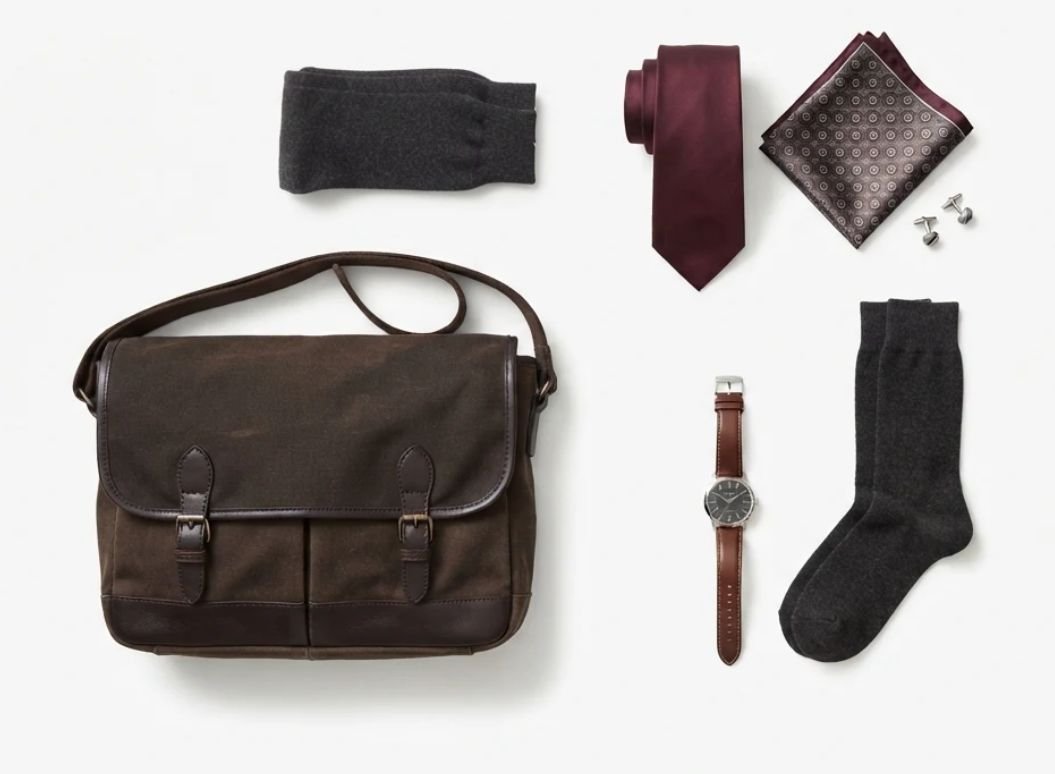
Accessories do the quiet work in an outfit, and after fifty they say more about a man than any trend he could follow. A good belt, wallet and bag carry you through ordinary days while showing that you still pay attention.
My father, Dee Clement, kept solid leather belts in brown, black and olive, and a larger bag he carried for business.
My own everyday wallet is a solid brown trifold, the kind of plain, sturdy piece that suits almost any outfit.
Men’s accessories over 50 should follow that same idea, with fewer pieces, better materials and colors that work together.
The sections below cover belts, wallets, bags, tailoring details, cold-weather pieces and the simple habits that keep each one looking good.
Table of Contents
Why Accessories Matter More After 50
A smaller wardrobe of quality clothes leans heavily on its finishing pieces, which carry much of the outfit’s polish.
Worn belts, bulging wallets and scuffed bags undo good tailoring faster than gray hair or a few extra pounds.
Habits around money have changed too, which affects what a man needs to carry in his pockets each day.
Pew Research reports that credit cards made up the largest share of US payments in 2025 at 34%, while cash covered a third back in 2015.
Cash has not vanished, though, since the Federal Reserve diary found cash still sits in 76% of consumer wallets, with about six cash payments a month.
That mix of cards and some cash explains why a slim but capable wallet suits most men past fifty.
Belts: The Foundation Accessory
A belt anchors the middle of every outfit, so its leather, color and buckle get noticed more than men expect.
Colors Worth Owning
My father’s three belt colors still make a sensible starting trio for any man’s wardrobe today.
- Dark brown leather: pairs with navy, charcoal, olive or tan trousers, as well as denim.
- Black leather: belongs with charcoal and black suits, formal events and black shoes.
- Olive or a third tone: adds variety for chinos, linen and relaxed weekend clothes.
Pair belts with shoes of a similar tone, and keep a slim, polished version for suits and a wider one for jeans.
Width, Buckle and Fit
Dress belts usually measure roughly 1.25 inches across, while casual belts for jeans run noticeably wider, near 1.5 inches.
Choose a plain frame buckle in brushed silver or brass, and avoid oversized logo buckles that pull the eye to your waist.
Buy a belt one or two sizes above your trouser waist, so it closes on the middle hole with a neat tail.
For more on sizing and leathers, see belt buckles, widths and sizing before replacing an old favorite.
Braided Belts and Braces
Braided leather or elastic belts adjust anywhere along their length, which suits men whose waist size varies through the day.
Braces, also called suspenders, hold trousers at the natural waist and pair well with higher-rise tailoring and waistcoats.
Wallets: Slim, Solid and Organized
A wallet should hold what you need and nothing more, so it lies flat in a pocket without spoiling your trouser line.
The Main Wallet Styles
- Bifold: the classic style, with room for cards and notes, best kept slim with regular clear-outs.
- Trifold: folds into three, holding more cards and cash in a compact, sturdy package.
- Cardholder: a flat sleeve for four to eight cards, ideal for front pockets and jacket pockets.
- Money clip: holds folded notes and a few cards, a tidy choice for men who carry little.
- Long wallet: fits inside a jacket’s breast pocket and suits suits, overcoats and formal evenings.
Trifolds suit men who still carry some cash alongside their cards, which is why mine stays in daily use.
Keeping a Wallet Lean
Clear out old receipts weekly, keep only the cards you use, and store the rest at home or on your phone.
A thick wallet stretches pockets and spoils the line of tailored trousers, so lighter is nearly always better.
Choose full-grain leather in brown, black or navy, since it ages gracefully and matches most belts and shoes.
Bags for Work, Travel and Errands
My father carried a larger bag for business, and a good work bag still earns its place today.
- Briefcase: a structured leather case for documents, a laptop and meetings, best in dark brown or black.
- Messenger bag: a flap-top shoulder bag that suits smart casual offices and commutes on foot.
- Leather tote: an open-top bag for books, a tablet and a sweater on relaxed days.
- Weekender: a roomy leather or canvas holdall for short trips and overnight stays.
- Crossbody or sling: a small bag for passports, keys and a phone while traveling or walking.
Pick one bag for work and one for travel, and keep them in colors that match your main belts and shoes.
Leather bags, belts and wallets share the same care needs, so treat them with the same leather conditioning at home you give your shoes.
Tailoring Details: Ties, Cufflinks and Pocket Squares
Formal occasions call for a few small extras, and older men tend to wear them with more ease than younger ones.
Ties and Tie Bars
A few silk and wool ties in navy, burgundy, green and subtle patterns cover weddings, church and business meetings.
Keep width in proportion to your lapels, and add a plain tie bar between the third and fourth shirt buttons.
For more guidance, read about knots and patterns for ties that suit different collars.
Cufflinks
Cufflinks first appeared in the 1600s, though they did not become common until late in the eighteenth century.
Simple silver, gold or knotted silk designs look best on older men, worn with shirts with double cuffs at formal events.
Pocket Squares
A handkerchief worn in a jacket’s breast pocket for decoration is called a pocket square, a small touch with real effect.
White linen in a straight fold suits every suit, while patterned silk adds color to a navy blazer.
Avoid matching the square exactly to your tie, which looks like a boxed gift set rather than a considered choice.
These details work best with a suit worth accessorizing that already sits properly on your frame.
Socks, Scarves, Gloves and Umbrellas
The smaller extras matter in daily life, especially when weather turns and a man spends more time outdoors.
- Socks: match them to your trousers rather than your shoes, and choose cotton or wool in navy, gray and brown.
- Scarves: cashmere or merino in navy, camel or gray adds warmth and color under a winter coat.
- Gloves: lined leather gloves in brown or black finish a formal coat and keep hands warm on cold mornings.
- Umbrella: a sturdy full-length umbrella with a wooden handle doubles as a smart walking companion.
Scarves and gloves come into their own with a wool coat for winter and dark tailoring.
Watches and Other Personal Pieces
A watch remains the most personal accessory a man wears, and my father wore one to every outing.
Read about every watch category before choosing a piece for your later decades.
Small practical items deserve thought too, since keys, pens and cards travel with you every day.
My nail clipper has doubled as my key holder since 2010, which proves that useful items can earn a permanent place.
For formal occasions with a waistcoat, chains for a pocket watch add a traditional, distinguished finish.
Matching Metals and Leathers
Coordinated details make an outfit look planned, even when each piece was bought years apart.
| Element | Keep it consistent with | Example |
|---|---|---|
| Belt leather | Shoe leather | Brown belt with brown brogues |
| Belt buckle | Watch case and cufflinks | Silver buckle with a steel watch |
| Wallet and bag | Belt and shoes | Dark brown wallet and briefcase |
| Tie bar | Buckle and cufflinks | Silver tie bar with silver links |
| Scarf and gloves | Coat color | Camel scarf with a navy overcoat |
Mixing one warm and one cool metal can work on casual days, but formal outfits look sharper with a single metal throughout.
How Many Accessories to Wear at Once
Restraint looks more confident than abundance, especially after fifty, when a quieter outfit reads as assured.
- For everyday wear, keep to a belt, a watch and perhaps a ring you always wear.
- For business, add a tie, a tie bar or a pocket square, but rarely all three at once.
- For formal events, combine cufflinks, a pocket square and a dress watch, and leave bulky items at home.
This restraint fits the low-key luxury dressing that many men grow into with age.
Caring for Leather and Metal Accessories
Good accessories last for decades with a little attention, and well-kept leather gains a richer color over the years.
- Wipe leather belts, wallets and bags with a soft cloth, then condition them every few months.
- Rotate belts so each one rests between wears, which helps the leather keep its form.
- Store bags stuffed with paper, upright and away from damp corners and strong sunlight.
- Polish silver and brass buckles, tie bars and cufflinks with a soft cloth before formal events.
- Replace cracked belts and fraying wallets rather than patching them for another year.
Accessory Mistakes Worth Avoiding
- Wearing a cracked, stretched belt with a new suit, which spoils an otherwise sharp outfit.
- Carrying a wallet so thick that it bulges through trousers and distorts the line.
- Mixing brown belts with black shoes, or gold buckles with silver watches at formal events.
- Piling on bracelets, rings, chains and pins at once, which looks busy rather than polished.
- Using a worn backpack for business when a leather briefcase or messenger bag would look smarter.
Conclusion
Men’s accessories over 50 should be few, well made and chosen to work with each other and your clothes.
Start with three good belts in brown, black and a third tone, as my father did, plus one slim wallet.
Add a work bag, a handful of ties, simple cufflinks and a white pocket square for formal occasions.
Keep leather conditioned and metals matched, and your accessories will look better each year rather than worse.
Choose one piece to replace this month, then find birthday gifts for mature men and more ideas on dressing well beyond your fifties.
Frequently Asked Questions
Which accessories does every man over 50 need?
Start with brown and black leather belts, a slim wallet, a quality watch and a leather bag. Add ties, cufflinks, a pocket square, a scarf and gloves as needed.
What wallet style suits older men best?
A slim bifold, trifold or cardholder in full-grain leather suits most older men. Choose one that holds your daily cards and some cash without bulging in your pocket.
Should a man’s belt match his shoes?
Yes, aim for belt and shoe leathers of a similar color and finish in most outfits. Brown belts go with brown shoes, black with black, especially with suits and formal wear.
How many accessories should an older man wear at once?
Keep it to three or four pieces for most occasions, such as a belt, watch and ring. Add a tie, pocket square or cufflinks only for business or formal events.
Pyo Merez is a 45-yeard old husband, father, and a chemical engineer by profession and the founder of Gentsways, a men’s lifestyle site built in honour of his father, Dee Clement. He has been writing about men’s development, style, and character through his father’s lens since 2021, drawing on lived experience, his father’s example, and research from reputable publications. He is not a certified trainer or therapist; where fitness or health topics require it, articles are reviewed by qualified contributors.