
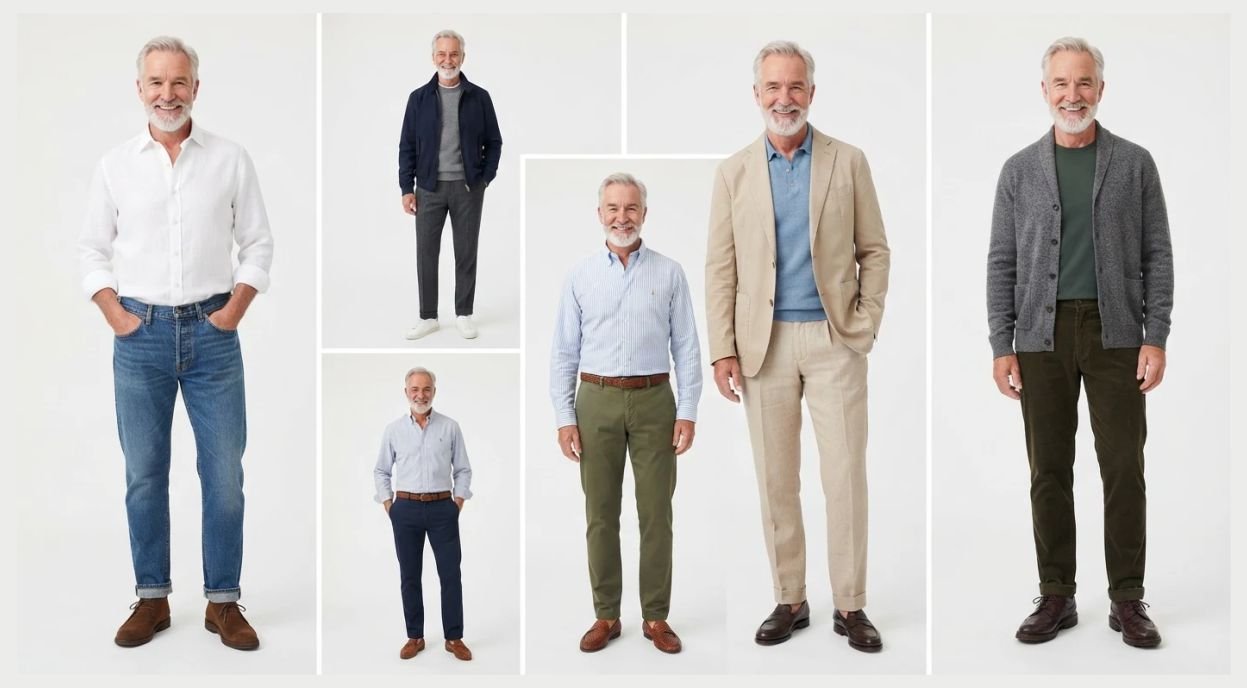
Retirement changes your days, and your closet should change with them instead of staying packed with office clothes you no longer need. A smaller, smarter set of clothes saves money, saves space and makes getting dressed each morning quick and pleasant.
A capsule wardrobe for retired men keeps a tight collection of comfortable, matching pieces that cover daily life, travel and the occasional formal event.
As he grew older, Dee Clement, my father, turned to native outfits for most events and kept his polos untucked for relaxed days at home.
His habits, such as owning a single watch and caring closely for his shoes, already followed the capsule idea.
What follows covers why a capsule suits retirement, how to edit your closet, a sample list, colors, care and the slips to avoid.
Table of Contents
Why a Capsule Wardrobe Suits Retirement
The term itself is decades old, and Wikipedia credits London boutique owner Susie Faux with coining it in the 1970s.
Leaving work removes daily dress codes, so many suits, ties and office shoes simply stop earning their space.
Gallup found that American retirees stopped working at 61 on average, which leaves decades of dressing for a very different routine.
Spending on clothes also tends to be modest at this stage of life.
Bureau of Labor Statistics data shows households headed by someone aged 65 to 74 spent about $263 on men’s apparel in 2024.
A small budget goes further when every piece mixes with the others, which is exactly what a capsule promises.
- Fewer, better clothes mean less dithering in front of the closet each morning.
- A smaller closet is easier to keep tidy, especially after downsizing to a smaller home.
- Matching colors make packing for trips and family visits far simpler.
- Buying less, but buying well, protects a fixed retirement income from waste.
What Changes in a Retired Man’s Wardrobe
Retirement shifts the balance of your clothes from formal office wear toward relaxed, comfortable pieces.
- Less tailoring: one or two suits are usually enough for weddings, funerals and special services.
- More smart casual: chinos, polos, knitwear and a blazer cover lunches, church and visits.
- More activity wear: walking shoes, light jackets and breathable layers suit hobbies and outdoor time.
- More comfort: softer fabrics, easier fastenings and relaxed fits become priorities.
My father showed this shift himself, since as he aged he set suits aside for events and chose native attire instead.
How to Edit Your Closet
Start by emptying your closet completely, then sort every item into keep, donate, repair or discard piles.
- Keep pieces that fit now, feel comfortable and match several other items.
- Donate good clothes you have not worn in a year, especially office suits and ties.
- Repair favorites with loose buttons, small tears or worn hems before deciding their fate.
- Discard stained, stretched or badly torn items that no tailor can save.
Textile waste is a real problem, and the EPA estimates that landfills took in 11.3 million tons of textiles in 2018.
Donating wearable clothes to charities, churches or family members gives them a second life instead.
For practical storage tips after the edit, see arranging a smaller closet by category and season.
A Sample Capsule Wardrobe for Retired Men
The list below covers most retired men in temperate or warm climates, and you can adjust it for your weather and habits.
Tops
- Four polo shirts in navy, white, gray and one soft color such as sky blue.
- Three button-up shirts, including one white oxford, one blue oxford and one checked shirt.
- Three quality crewneck tees in white, navy and gray for errands and home.
- Two knits, such as a merino crewneck and a cardigan, sleeveless or full-sleeved.
For tucking and collar advice, see polo styling past fifty, and for knits, see sweaters and cardigans compared.
Bottoms
- Three pairs of chinos in navy, khaki and olive, which pair with every top above.
- One pair of dark jeans with a straight or slightly narrowed leg.
- One pair of gray wool or wool-blend trousers for smarter occasions.
- A couple of tailored shorts for warm weather, if your climate calls for them.
For colors and fits, see chinos in three colors and the tops that suit each shade.
Tailoring and Outerwear
- One navy blazer or textured sport coat that works with chinos, jeans and gray trousers.
- One dark suit in navy or charcoal for weddings, funerals and solemn services.
- One light jacket, such as a Harrington or field jacket, for cool days.
- One warm coat, such as a wool overcoat or quilted jacket, if winters turn cold.
For blazer choices, read about a do-everything blazer, and for the suit, see the one dark suit worth owning.
Native or Traditional Wear
Men from West Africa and other traditions may add two or three native outfits, for example a senator set or a kaftan.
These suit church, family ceremonies and celebrations, just as native wear served my father as he grew older.
Shoes
- One pair of brown leather loafers for lunches, church and smart casual days.
- One pair of black oxfords or similar formal shoes for weddings and services.
- One pair of clean leather sneakers for errands, short walks and travel.
- One pair of supportive walking shoes or boots for outdoor hobbies.
Accessories
- Two leather belts, one brown and one black, with an olive or woven belt if you like variety.
- One reliable watch that sits comfortably with both casual and smart outfits.
- A hat for sun, a scarf for cold and a simple pair of sunglasses.
My father’s belts came in black, brown and olive, and a single watch served him at every outing.
For belt sizing and colors, see belts that match your shoes before replacing old ones.
Choosing a Color Palette
A capsule works only when every piece mixes with the others, so color matters more than any single item.
- Base colors: navy, gray and khaki form the foundation for trousers, blazers and coats.
- Shirt colors: white, pale blue and soft gray brighten the face and pair with every base.
- Accent colors: one or two shades, such as burgundy, olive or forest green, add life to knits and polos.
Gray and silver hair look particularly good beside charcoal, navy and pale blue.
For help with color, see building a matching color palette that flatters mature skin.
Buying Well on a Fixed Income
Retirement budgets reward careful buying, so spend on the pieces you wear most and save on the rest.
- Invest in shoes, a blazer and a warm coat, which last for years if well made.
- Buy everyday basics like polos and tees in good cotton, but at moderate prices.
- Shop sales at the end of each season for knitwear, coats and tailoring.
- Replace items one at a time as they wear out instead of buying a whole new wardrobe.
Caring for a Small Wardrobe
A capsule gets more wear per item, so care keeps each piece looking good for longer.
- Wash knits and shirts gently, and air-dry them where possible to protect the fibers.
- Hang blazers and coats on wide hangers so their shoulders keep their line, and brush wool after wearing.
- Polish shoes regularly, and rest leather pairs a day between wears.
- Store off-season clothes clean and dry, with cedar to deter moths.
Every pair my father owned got a clean and polish after each outing, a habit any capsule owner can copy.
For a polishing routine, see shoe care that lasts and the tools it needs.
Common Capsule Wardrobe Errors
- Keeping office suits and ties you will never wear again “just in case.”
- Choosing colors that clash, so tops and trousers cannot be mixed freely.
- Buying cheap basics that lose their fit after a few washes.
- Forgetting a smart outfit, then scrambling before a wedding or funeral.
- Ignoring comfort, which leaves stiff, tight clothes unworn in the closet.
- Letting the capsule grow back into a crowded closet through impulse buys.
For more relaxed outfit ideas built from these pieces, see weekend outfits for retirees.
Conclusion
A capsule wardrobe for retired men replaces a crowded closet with a small set of comfortable, matching clothes.
Edit honestly, donate what no longer fits your life and keep one smart outfit ready for important occasions.
Build around navy, gray and khaki, add a few accent colors, and spend most on shoes, a blazer and a coat.
My father’s single watch and well-kept shoes show that owning less can still mean dressing with care.
Empty your closet this weekend, sort it into four piles, and read later-life style advice as you rebuild.
Frequently Asked Questions
How large should a retirement capsule be?
Most retired men manage well with 30 to 40 pieces, including tops, trousers, one suit, a blazer, outerwear and shoes. Adjust that number up or down to suit your climate and hobbies.
Should retired men keep their suits?
Keep one or two dark suits in good condition for weddings, funerals and solemn services. Donate extra office suits you no longer wear so someone else can use them.
What colors work best in a retirement capsule wardrobe?
Navy, gray and khaki make a strong base, with white, sky blue or pale gray shirts above them. Add one or two accent colors, such as burgundy or olive, for variety.
Where should retired men donate old clothes?
Charity shops, churches, shelters and family members can all make good use of wearable clothing. Damaged textiles can go to local recycling points, where councils or charities collect them.
Pyo Merez is a 45-yeard old husband, father, and a chemical engineer by profession and the founder of Gentsways, a men’s lifestyle site built in honour of his father, Dee Clement. He has been writing about men’s development, style, and character through his father’s lens since 2021, drawing on lived experience, his father’s example, and research from reputable publications. He is not a certified trainer or therapist; where fitness or health topics require it, articles are reviewed by qualified contributors.