Last updated on October 5th, 2026 at 01:29 pm
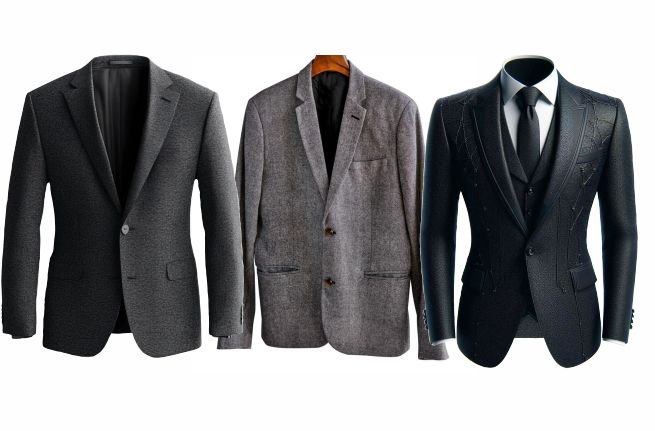
A rack labeled “jackets” can hold all four of these garments, and stores use the names loosely. The differences are practical: how the garment is built, what it is made of, what it pairs with, and where it belongs.
A patterned sport coat at a formal wedding, a suit jacket worn alone with jeans, and a blazer used as a winter coat all send the wrong signal.
This guide covers each garment, how to tell them apart, and how to wear them.
The Short Answer
- Blazer: Solid color, structured, worn with different trousers. Smart casual to business casual.
- Sport coat: Textured or patterned, softer construction, the most relaxed of the tailored jackets.
- Suit jacket: Cut from the same cloth as its trousers and worn with them. The most formal.
- Coat: Outerwear. Longer, heavier, and cut roomy enough to wear over the other three.
What Is a Blazer?
A blazer sits between a casual jacket and a suit. It has structure and clean lines, usually in a solid color, with navy as the classic choice and charcoal, black, and deep green as alternatives. Metal buttons are the traditional marker.
Key features of a blazer:
- Fabric: Wool, wool blends, and flannel for cooler months. Cotton and linen for summer.
- Fit: Structured, with more room to move than a suit jacket.
- Pairs with: Chinos, gray flannels, dark jeans, and dress trousers.
- Best for: Business casual offices, dinners, relaxed weddings, and travel.
A blazer works because it is solid and simple. Navy with a white shirt and gray trousers rarely goes wrong.
What Is a Sport Coat?
A sport coat began as country and outdoor wear, built for activities like shooting and riding, and it keeps that relaxed character. The construction is softer, the shoulders carry less padding, and the cut is roomier than a blazer.
Key features of a sport coat:
- Fabric: Tweed, herringbone, corduroy, flannel, and linen.
- Pattern: Checks, plaids, and houndstooth are common.
- Details: Patch pockets, elbow patches, and horn or leather buttons.
- Pairs with: Jeans, khakis, odd trousers, and knitwear such as a turtleneck.
- Best for: Weekend outings, casual gatherings, and smart casual settings, especially in autumn and winter.
A sport coat is the right place to add texture and personality. It is not meant for formal events.
What Is a Suit Jacket?
A suit jacket is half of a matched set. It is cut from the same fabric as its trousers and designed to be worn with them. The shoulders are padded, the tailoring is precise, and the cloth is usually a smooth, fine wool.
Key features of a suit jacket:
- Fabric: Fine wool or wool blends with a smooth finish.
- Fit: Sharp and tailored, with a clean silhouette.
- Pairs with: Its matching trousers, a dress shirt, a tie, and leather oxfords or derbies.
- Best for: Offices, weddings, funerals, and formal events.
Worn alone, a suit jacket looks like a separated suit. The sheen and cut clash with jeans or casual trousers, so skip that pairing. If the jacket goes on, the matching trousers go on too.
What Is a Coat?
A coat is outerwear. The word usually means an overcoat or topcoat, worn over a blazer, sport coat, or suit jacket and taken off indoors. It is longer than any of the three jackets, typically reaching the knee or just above it, and made from heavy fabrics like wool, cashmere blends, and tweed.
Key features of a coat:
- Fabric: Heavy wool, melton, cashmere blends, and tweed.
- Fit: Extra room through the chest and shoulders so it sits over tailoring without pulling.
- Types: Overcoat (heaviest, below the knee), topcoat (a lighter, slightly shorter version), chesterfield (formal, often with a velvet collar), and car coat (shorter and more casual).
- Best for: Cold weather, commuting, and dressing up or down depending on the style.
A simple test: if the garment has to fit over another jacket, it is a coat. A blazer cannot replace one. The sleeves are cut for a shirt, and the fabric gives little warmth.
Blazer vs Coat vs Sport Coat vs Suit Jacket at a Glance
| Feature | Blazer | Sport Coat | Suit Jacket | Coat |
|---|---|---|---|---|
| Role | Tailored jacket | Tailored jacket | Part of a suit | Outerwear |
| Fabric | Wool, blends, cotton, linen | Tweed, herringbone, corduroy | Fine, smooth wool | Heavy wool, cashmere blends |
| Fit | Structured, some ease | Relaxed, soft shoulders | Sharp, tailored | Roomy, built to go over jackets |
| Pairs with | Chinos, jeans, dress trousers | Jeans, khakis, odd trousers | Matching trousers only | Worn over any of the three |
| Formality | Smart casual | Casual to smart casual | Formal | Varies by style |
How to Tell Them Apart in a Store
- Check for matching trousers: If the tag lists a set, it is a suit jacket.
- Look at the surface: Visible checks, plaids, or a rough tweed texture point to a sport coat.
- Check the buttons: Metal buttons on a solid-color jacket usually mean a blazer.
- Check length and weight: A heavy garment that reaches the knee is a coat.
How to Choose the Right One
Start with the event. Formal events and business meetings call for a suit jacket, or a blazer in a relaxed office. Casual gatherings suit a sport coat. Cold travel to any of them needs a coat.
Match the season. Cooler weather suits wool, flannel, and tweed. Warm weather suits cotton and linen, which breathe better.
Check the fit. Fit matters more than any label. The shoulder seam should end at the edge of your shoulder, the hem should cover the seat, and about half an inch of shirt cuff should show at the wrist. For a coat, try it on over the jacket it will cover.
Coordinate colors. A navy blazer pairs well with gray trousers. A dark sport coat looks good with brown shoes. Avoid pairing a suit jacket with jeans or sneakers.
Keep accessories light. A pocket square, a tie, and a watch are enough. Pick one or two that suit the outfit.
How to Style Each One
Blazer: Navy with light chinos is the classic pairing. For a casual version, wear it over a white t-shirt with dark jeans. A fitted shirt sits best underneath, and a polo adds a casual edge.
Sport coat: Pair a patterned coat with a solid shirt. A solid coat can take a patterned shirt. Tweed, corduroy, and linen add texture, and a lightweight knit works as a layer in cold weather.
Suit jacket: Start with a well-fitted dress shirt in white or light blue. Match the tie width to the lapel width. Black shoes suit dark suits, and brown suits lighter ones.
Coat: A charcoal or navy overcoat suits a business suit. A camel topcoat or a tweed coat pairs well with a sport coat and knitwear.
Common Mistakes to Avoid
- Wearing a suit jacket with jeans: The cloth and cut belong with the matching trousers.
- Using a blazer as a coat: It adds little warmth and breaks the line of the outfit. Wear a coat on top.
- Wearing a sport coat to a formal event: Patterns and texture read as casual.
- Buying a coat that fits only over a shirt: It will pull across the shoulders over a jacket.
- Stacking patterns at the same scale: A plaid coat over a plaid shirt looks busy. Vary the scale or keep one item solid.
Frequently Asked Questions
What makes a blazer different from a suit jacket?
A blazer is built to be worn with different trousers, such as chinos or jeans. A suit jacket is part of a set and is worn with matching trousers.
Can I wear a sport coat with jeans?
Yes. A sport coat pairs well with jeans or khakis, and it suits casual and smart casual occasions.
Is a sport coat appropriate for formal events?
No. Its relaxed fit and textured patterns suit casual and smart casual settings.
Can a blazer replace a coat?
No. A blazer is an indoor layer. A coat is cut to go over it and provides the warmth.
Can I wear a suit jacket as a blazer?
Not well. A suit jacket looks like a separated suit when paired with casual trousers. A true blazer is built to stand alone.
Conclusion
Each of the four has a job. The blazer handles smart casual, the sport coat brings texture and comfort to relaxed settings, the suit jacket covers formal occasions, and the coat protects the outfit underneath in cold weather. Pick by occasion, check the fit, and match the fabric to the season.
Pyo Merez is a 45-yeard old husband, father, and a chemical engineer by profession and the founder of Gentsways, a men’s lifestyle site built in honour of his father, Dee Clement. He has been writing about men’s development, style, and character through his father’s lens since 2021, drawing on lived experience, his father’s example, and research from reputable publications. He is not a certified trainer or therapist; where fitness or health topics require it, articles are reviewed by qualified contributors.