
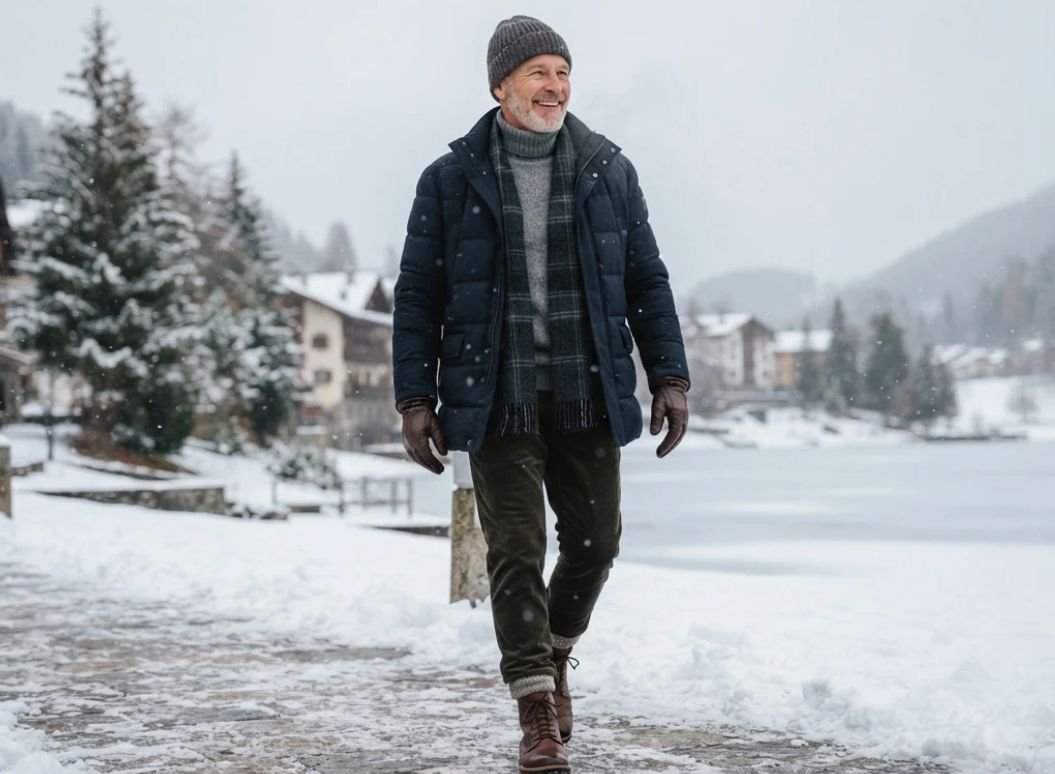
Cold weather asks more of an older man’s wardrobe, because staying warm now matters for comfort, health and steady footing. Happily, warm clothes and good style work together, and a well-layered outfit looks more refined than a single bulky coat.
Winter outfits for men over 60 work by trapping warmth in light layers, covering the head and hands and keeping you steady on slippery ground.
In cold spells, Dee Clement, my father, stayed warm in cardigans and sweaters, adding an Italian wool overcoat on harmattan mornings.
That overcoat still sits at home, while my own cool-season layer is a checked blazer.
What follows covers layering, fabrics, outfit ideas, accessories, footwear, indoor comfort and the missteps to sidestep.
Table of Contents
Why Winter Dressing Matters More After 60
Older bodies lose heat more easily, so cold-weather clothing becomes a safety matter, not only a question of looks.
The National Institutes of Health warns that Americans over 65 face hypothermia risk each winter, since aging and some medicines dull the response to cold.
The NIH’s aging institute adds that brief cold exposure can be enough, because less active bodies generate less heat.
Slippery ground brings a second risk, and CDC data shows that about one in four Americans over 65 report a fall each year.
Good winter clothing and sensible footwear help with both problems while still looking smart.
The Three-Layer System
Layers trap warm air between them, so several thin pieces keep you warmer than one thick garment.
- Base layer: a thin merino or cotton-blend undershirt and long underwear that sit close but not tight.
- Middle layer: a shirt plus a sweater, cardigan or fleece that holds warmth around the body.
- Outer layer: a coat or jacket that blocks wind and rain and covers the hips.
Loose layers matter, because tight clothing can restrict circulation and leave hands and feet colder.
Peel off a layer indoors and put it back before stepping outside, so you never overheat or chill.
For more on building layers that look neat, see layering without the bulk and the order that works best.
Fabrics That Keep Older Men Warm
The right fibers keep warmth in without weight, which matters when shoulders and knees tire easily.
- Merino wool: soft, warm and breathable, and it handles moisture well for base layers and sweaters.
- Lambswool and cashmere: cozy choices for sweaters and scarves that feel gentle on the skin.
- Flannel and brushed cotton: warm shirts and trousers that look relaxed but tidy.
- Wool and wool-blend coats: dense weaves that block wind and keep their line for years.
- Down and synthetic insulation: light, warm fillings for parkas and quilted jackets in deep cold.
Choose knits labeled machine-washable if hand-washing is a chore, since they keep the same warmth with less fuss.
Winter Looks for Every Occasion
The outfits below cover everyday errands, smart occasions and quiet days at home.
Everyday Errands
Wear flannel or thick chino trousers, a flannel shirt over a merino undershirt and a crewneck sweater.
Top it with a quilted jacket or car coat, a wool scarf, a knit hat and waterproof boots with good grip.
For shirts that suit this look, see flannel for cold mornings in solid colors or quiet checks.
Smart Casual Days
A wool blazer or tweed sport coat over a knit or collared shirt suits lunches, visits and casual offices.
Add warm wool trousers in gray flannel, a merino roll-neck or V-neck sweater and brown leather boots or brogues.
My checked blazer works this way in harmattan, over a shirt with chinos or lighter jeans.
Formal Occasions
A dark wool suit with a sleeveless knit vest under the jacket keeps you warm at winter weddings and services.
My father liked a sleeveless cardigan over his dress shirt for formal settings, and that layer adds real warmth on cold days.
Finish with a long wool overcoat, leather gloves and a cashmere or wool scarf in a calm color.
See a long wool coat explained for fabrics, lengths and the right fit over tailoring.
Weekend Walks
Choose a waterproof parka or waxed jacket from the wider outerwear range, a fleece or quilted gilet and thermal base layers.
Add sturdy trousers, wool socks and walking boots with deep treads for icy paths and wet grass.
Days at Home
Indoors, wear a cardigan or soft sweater over a cotton shirt, warm trousers and slippers with rubber soles.
Health agencies also recommend dressing warmly on cold days even when you stay indoors.
For knit options, see cardigans and crewnecks in merino, lambswool and cotton.
Accessories That Keep Heat In
The head, hands and neck lose heat quickly, so accessories do serious work in winter.
- Hats: a knit beanie, flat cap or felt hat keeps the head warm and suits most coats.
- Scarves: wool or cashmere scarves seal the gap between collar and neck.
- Gloves: lined leather gloves suit smart outfits, while knit or insulated gloves suit walks.
- Socks: wool socks keep feet warm and dry, and they cushion the soles inside boots.
The NIH advice above specifically names a hat, scarf and gloves or mittens as protection against losing body heat outdoors.
For scarves, gloves and other finishing pieces, read about winter scarves and gloves for smart and casual coats.
Winter Footwear for Steady Steps
Shoes matter more in winter than in any other season, because ice and wet leaves increase the chance of a fall.
- Choose boots with deep, rubber treads and a low, wide heel for stable footing.
- Pick waterproof leather or treated suede to keep feet dry in slush and rain.
- Look for ankle support and easy zip or pull-on openings if laces are hard to tie.
- Replace worn soles quickly, since smooth treads lose grip on wet pavements.
For styles that suit both smart and casual outfits, see boots with dependable grip for town and country.
Clean salt and mud off leather after each walk with simple leather care, so boots last many winters.
Winter in Warmer Climates
Not every winter brings snow, and West Africa’s cooler season arrives instead as hazy mornings with dusty winds.
Britannica describes the harmattan as a dry, dusty wind that blows across West Africa from the Sahara during the cooler months.
- A light wool or cotton blazer over a shirt handles cool mornings and warm afternoons.
- A cardigan or sweater can come off by midday and go back on in the evening.
- Long sleeves and trousers help protect skin from the dry, dusty air.
Colors and Fit for Cold Weather
Winter colors can be richer and deeper, which flatters gray hair and hides road spray on coats.
- Navy, charcoal and camel: classic coat colors that pair with almost every outfit.
- Burgundy, forest green and rust: warm knit colors that add life to dark winter days.
- Cream and oatmeal: soft knit shades that brighten the face under a dark coat.
Buy coats that close easily over a sweater, but avoid sleeves that cover your hands.
Choose trousers with enough room for long underwear, and have a tailor adjust the length for boots.
For more full outfits, see head-to-toe cold-weather looks beyond the ideas above.
Common Winter Outfit Errors
- Wearing one heavy coat over a thin shirt, then overheating indoors and chilling outside.
- Choosing tight layers that restrict movement and leave hands and feet colder.
- Leaving the house without a hat, scarf or gloves on very cold days.
- Wearing smooth-soled dress shoes on icy pavements, wet steps or leaf-covered paths.
- Letting coats and knits go untidy with pills, stains and missing buttons.
- Storing wool without care, which invites moths through the warmer months.
For storing knits and coats between seasons, see closet space for winter pieces.
Conclusion
Winter outfits for men over 60 succeed when they layer loosely, cover the head and hands and grip the ground.
Start with a thin base layer, add a shirt and knit, and finish with a coat that blocks wind and rain.
Wear a hat, scarf and gloves outside, and choose boots with deep treads.
My father’s cardigans and wool coat show that warmth and dignity belong together.
Check your coats, boots and knits this week, replace anything worn out, and read dressing ideas for later decades when spring returns.
Frequently Asked Questions
What keeps an older man warm and stylish in winter?
Wear thin base layers, a shirt and wool sweater, and a coat that blocks wind. Add a hat, scarf, gloves, wool socks and boots with deep, grippy soles.
How can older men layer without looking bulky?
Choose thin merino base layers and fine knits instead of chunky ones. Buy coats with enough room for a sweater, and keep each layer neat and well fitted.
What shoes are safest for older men in winter?
Boots with deep rubber treads, low wide heels and waterproof uppers grip best on wet or icy ground. Replace worn soles promptly, since smooth treads slip easily on wet stone.
Is a hat important for older men in cold weather?
Yes, health agencies advise older adults to wear a hat, scarf and gloves outdoors in cold weather. Choose a knit beanie, flat cap or felt hat to suit your coat.
Disclaimer: This article is for informational purposes only and does not constitute medical advice. The author is not a medical doctor, and the cold-weather and fall-safety points come from the cited health agencies. If you have a heart, circulation or balance condition, or take medicines that affect how you handle cold, ask your doctor about safe winter habits.

Pyo Merez is a 45-yeard old husband, father, and a chemical engineer by profession and the founder of Gentsways, a men’s lifestyle site built in honour of his father, Dee Clement. He has been writing about men’s development, style, and character through his father’s lens since 2021, drawing on lived experience, his father’s example, and research from reputable publications. He is not a certified trainer or therapist; where fitness or health topics require it, articles are reviewed by qualified contributors.