
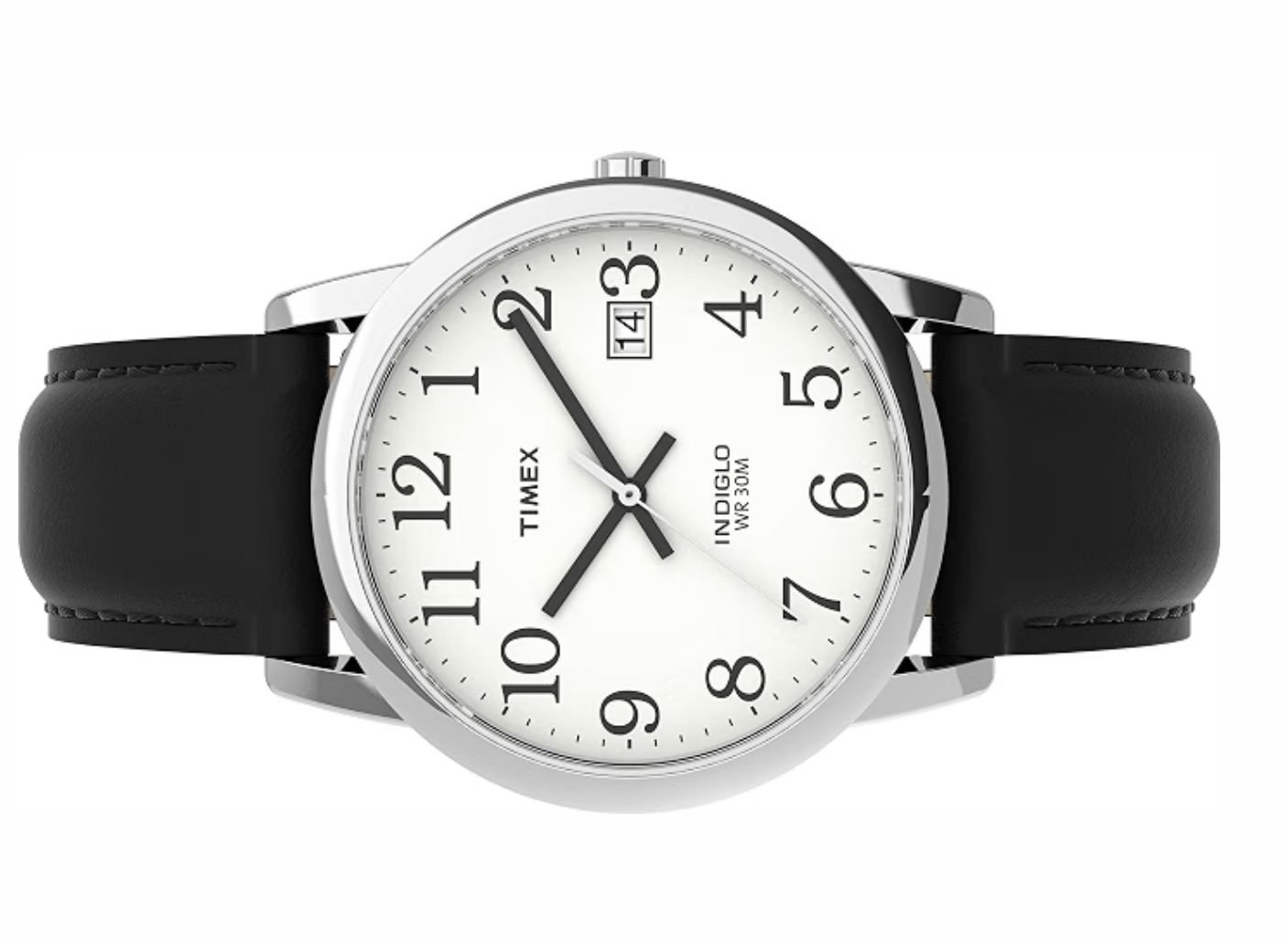
A good watch says something a phone never can, that you keep your own time and care how you present yourself. After fifty, the right piece is less about status and more about clarity, comfort and a quiet sense of character.
Watches came one at a time for my father, Dee Clement, and each went with him to shop visits, church and family events.
A sturdy field watch sat on my own wrist daily for roughly four years, though nowadays I read the time from my phone.
Watches for men over 50 need to be easy to read, comfortable for a full day and simple enough for most outfits.
What follows covers the styles that fit this season of life, the details worth checking and ways to wear each one.
Table of Contents
Why a Watch Still Matters After 50
Phones tell the time perfectly well, yet glancing at your wrist during a meeting or dinner looks far more courteous.
Smart devices have not taken over every wrist, since Pew Research found that about 21% of US adults wear one regularly.
Older adults use them less, with 17% of those aged 50 and over wearing one against 25% of adults under fifty.
Traditional watchmaking remains a serious trade, and Swiss exports came to 25.6 billion francs across 2025, according to the Federation of the Swiss Watch Industry.
That same report noted steady demand in the highest price segments, which shows how many men still value a lasting timepiece.
Types, movements and terms are covered in watch basics for every man on Gentsways.
What Changes When You Choose a Watch Later in Life
Your taste may stay the same, but a few practical needs move higher up the list once you pass fifty.
Legibility Comes First
Close-up vision weakens with age, and the National Eye Institute notes that almost everyone develops presbyopia, usually after age 45.
That makes a clean dial with bold hands, clear markers and good contrast far more useful than a busy, cluttered face.
- Choose white, cream or black dials with markers in a strongly contrasting color.
- Look for hands long enough to reach the markers, so reading the minutes takes no effort.
- Pick luminous hands and markers if you check the time in dim restaurants or at night.
- Skip tiny sub-dials and date windows that you cannot read without lifting your glasses.
Comfort for a Full Day
A watch you wear from morning to evening should sit lightly and never dig into the wrist bone.
Leather and fabric straps feel softer than steel, while a well-fitted bracelet with a fold-over clasp goes on in seconds.
My old field watch was weighty yet easy to wear on its brown leather strap, which shows that balance matters more than weight.
Simple Clasps and Easy Setting
Fiddly buckles, stiff crowns and complicated settings become irritating fast, especially on a rushed morning before you leave home.
Quartz watches need little attention beyond a battery change, which suits men who prefer to put a watch on and forget it.
Watch Styles Worth Considering After 50
Most men only need one or two of these styles, chosen around the way they actually spend their weeks.
The Dress Watch
Thin cases, plain faces and leather straps make the most elegant choice for suits, weddings and church.
Keep the case thin enough to tuck beneath a shirt cuff, and choose black or brown leather to match your shoes.
I stopped wearing my bulky field watch with suits because it looked out of place, which shows why thin dress watches for tailoring earn their place.
The Field Watch
Field watches have clear Arabic numerals, sturdy cases and simple straps, which makes them easy to read and hard to damage.
Mine had an oxblood face with only an hour and minute hand, and it went with me daily through years of travel and work.
People commented on it regularly, and wearing it lent me a quiet confidence that no phone has matched.
For history and buying tips, read about sturdy field watch designs and their military roots.
The Everyday Steel Watch
A stainless case on a bracelet, with a navy, black or white dial and modest water resistance, covers almost every daily situation.
It suits denim, chinos, polo shirts and a blazer, and it handles hand washing and light rain without any fuss.
The Dive-Style Watch
Dive-style watches offer bold markers, strong luminous paint and a rotating bezel that doubles as a handy timer for cooking or parking.
Choose a moderate case size and a slimmer profile, since oversized divers can swamp an older man’s wrist.
The Chronograph
Chronographs add stopwatch pushers and sub-dials, which look sporty and suit men who enjoy mechanical detail and motorsport heritage.
Busy dials can be harder to read, so pick one with large central hands and clean, well-spaced sub-dials.
The Smartwatch or Hybrid
Smartwatches suit men who like reminders, step counts and message alerts on the wrist rather than in a pocket.
Hybrids look like traditional watches while counting steps quietly, which appeals to men wanting data without a glowing screen.
Weigh smartwatch strengths and weaknesses before buying, especially battery life and how readable the screen is outdoors.
The Pocket Watch
Few men use one as a daily tool now, but a pocket watch makes a fine choice for a three-piece suit or a special occasion.
Many families pass one down, and an heirloom pocket watch carries stories that a new wristwatch cannot match.
Getting the Size and Fit Right
Case size should follow your wrist, not fashion, since a watch that overhangs the wrist looks borrowed rather than chosen.
- Slim wrists below roughly six and a half inches look best with a 36 mm to 39 mm case.
- Medium wrists up to about seven and a half inches carry a 38 mm to 42 mm case comfortably.
- Broad wrists handle a 42 mm to 44 mm case without the watch looking oversized.
- Keep the lugs within your wrist’s outline when you look straight down at it.
Fasten the strap so one finger slides underneath, which keeps the watch steady without leaving a mark on the skin.
Quartz or Mechanical: Which Suits You?
Quartz watches run on a battery, keep excellent time and need a new cell only every few years.
My father’s watch needed a battery change only a handful of times, which suited his habit of wearing it for outings.
Automatic watches wind themselves as you move, while manual watches need winding by hand, and both need servicing every several years.
Choose quartz for convenience and accuracy, or choose mechanical if you enjoy the craft and the ritual of winding.
When the choice feels unclear, start with watches matched to daily life before deciding.
A Single Watch or a Few?
My father’s single-watch habit still makes sense, because a single good piece becomes part of who you are.
A small rotation works well too, as long as each piece has a clear job and none sits forgotten in a drawer.
- One watch: a steel everyday piece on a leather strap that can dress up or down.
- Two watches: a thin formal piece for weddings and church plus a field or steel watch for everything else.
- Three watches: add a dive-style or smart piece for travel, gardening, swimming or exercise.
Matching Your Watch to Your Clothes
A few simple pairings keep your watch looking deliberate with everything from a suit to weekend denim.
- Match a leather strap roughly to your belt and footwear, so the outfit holds together from wrist to floor.
- Pair silver steel cases with cool colors like navy, gray and charcoal for a crisp, clean finish.
- Wear gold or warm-toned cases with brown, olive, cream and camel for a softer, richer effect.
- Keep sporty rubber or bright straps for weekends, holidays and exercise rather than church or the office.
With formal clothes, pick suit colors and cuts first, then choose leather straps and matching belts that complement them.
How Much to Spend
Price has little to do with how good a watch looks on an older man, provided the design is simple and well proportioned.
- Under 100 dollars: reliable quartz watches with mineral glass, ideal as a first piece or a spare.
- Between 100 and 1,000 dollars: sapphire crystals, better finishing, solar quartz and entry-level automatic movements.
- Above 1,000 dollars: fine finishing, in-house movements and pieces made to be handed down.
My field watch cost about 45,000 naira in 2010, roughly 300 dollars then, a fair price for something worn every single day.
Browse dependable quartz under 100 dollars, serious watches below 1,000 dollars or the luxury end of watchmaking by budget.
Buying Safely and Avoiding Fakes
I once owned a counterfeit automatic chronograph that looked convincing at first, until the plating peeled and the bracelet links fell apart.
Shop with authorized retailers or reputable secondhand sellers who offer papers, warranties and clear return policies.
Learn how fake watches slip through before buying anything that seems priced well below its usual market value.
Gifting and Passing Down a Watch
Watches have long marked milestones, and CNN Money reported that the gold watch remained a common company retirement gift.
A watch given at fifty, sixty or retirement can carry meaning for decades, especially with a short engraving on the caseback.
In the end my younger brother lost that field watch, and with it went the compliments from the many people who admired it.
For more ideas, see these presents for men past fifty that suit birthdays and retirements.
Caring for Your Watch
A little regular care keeps any watch reliable and looking smart well into its second or third decade.
- Wipe the case and crystal with a soft cloth after wear to remove skin oils and dust.
- Keep leather straps dry, and replace them once they crack, curl or start to smell.
- Swap dead quartz batteries quickly, since an old cell can leak acid onto the movement.
- Service mechanical watches every several years with a qualified watchmaker rather than a street repairer.
Read more about battery and strap upkeep to keep your watch in good order.
Watch Mistakes to Avoid After 50
- Wearing a huge, heavy case that overwhelms the wrist and catches on every shirt cuff.
- Choosing a cluttered dial you cannot read quickly without reaching for your glasses.
- Pairing a chunky sports piece with slim tailoring at weddings, funerals or formal dinners.
- Wearing a cracked strap or scratched crystal, which makes the whole outfit look neglected.
- Buying a fake to look successful, which damages credibility far more than a modest honest watch.
People read more from your wrist than you might think, as first impressions from your wrist explains in detail.
Conclusion
Watches for men over 50 earn their place by being legible, comfortable and suited to how you spend your days.
Start with one honest piece, such as a steel everyday watch or a slim dress watch on leather.
Choose a case that fits your wrist, a dial you can read at a glance and a strap in the same tone as your shoes.
Wear it to every outing, as my father did, and it will become part of how people remember you.
Choose your style today, then visit the older men’s style hub to plan everything else.
Frequently Asked Questions
How big should a watch be for a man over 50?
Cases from 38 to 42 millimeters fit the wrists of most men after fifty. Make sure the lugs sit inside your wrist edges, and go smaller for slim wrists.
What is the best watch style for older men?
A simple steel watch with a clean dial and leather strap suits most older men. Keep a slim leather dress watch too if weddings and formal dinners fill your calendar.
Do smartwatches suit men over 50?
They work for men wanting reminders, step counts and alerts on the wrist. Check battery life, screen brightness and strap comfort before buying one for daily use.
Should older men choose quartz or automatic watches?
Quartz fits men who value accuracy and want almost no upkeep beyond battery changes. Automatic watches reward men who love traditional craft and accept a service visit every few years.
Disclaimer: The vision information in this article comes from the National Eye Institute and is shared for general reference only. It is not medical advice, so see an eye care professional about any changes in your sight.

Pyo Merez is a 45-yeard old husband, father, and a chemical engineer by profession and the founder of Gentsways, a men’s lifestyle site built in honour of his father, Dee Clement. He has been writing about men’s development, style, and character through his father’s lens since 2021, drawing on lived experience, his father’s example, and research from reputable publications. He is not a certified trainer or therapist; where fitness or health topics require it, articles are reviewed by qualified contributors.