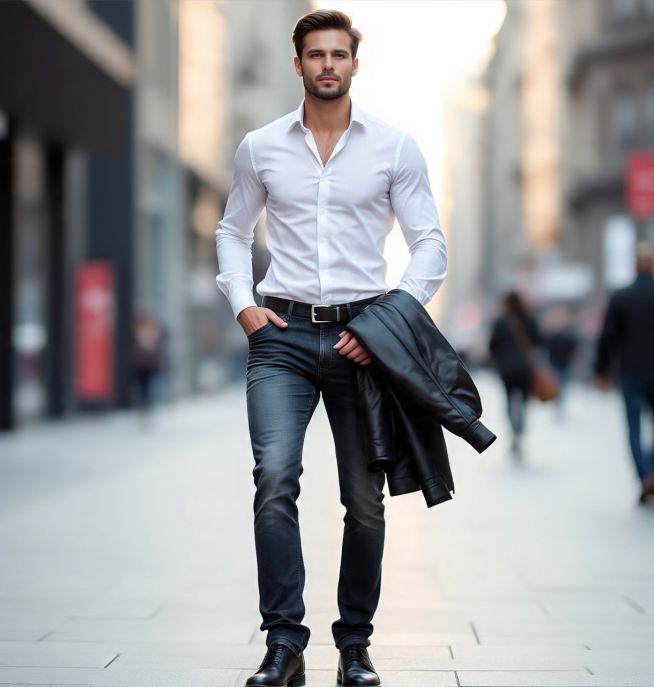
This tall men’s fashion guide shows how to turn height into an advantage, balancing proportions, fit, patterns, and accessories.
For tall men, standard clothing lengths and proportions can make dressing a challenge, with sleeves stopping short, trousers bunching at the ankles, and jackets failing to sit correctly on broad shoulders.
Choosing the right fit changes everything, improving how clothes drape, enhancing posture, and giving your overall look a clean, balanced appearance.
Tailoring, proper sizing, and selecting fabrics that flow with your frame turn everyday outfits into sharp, confident statements.
Long lines can be balanced with thoughtful layering, proportionate cuts, and attention to details like sleeve length and trouser break.
When fit is handled correctly, your height becomes an advantage, projecting confidence, style, and ease in every casual, work, or formal setting.
Table of Contents
Importance of Fit for Tall Men
For tall men, fit determines whether an outfit looks polished or sloppy, as proportions affect how jackets, trousers, and shirts flow with your frame.
Off-the-rack clothing may cover the basics, but sleeves that stop short, pants that bunch, or shoulders that extend beyond your natural line can throw off balance and make even expensive pieces appear sloppy.
Tailored or well-measured pieces allow jackets to sit correctly on shoulders, trousers to break at the right point, and sleeves to frame wrists cleanly, creating symmetry from head to toe.
Paying attention to length, shoulder alignment, and precise sleeve and pant measurements ensures long lines appear intentional rather than awkward.
Proper fit enhances posture, confidence, and presence, turning height into an advantage that commands attention without effort in any setting.
Jackets for Tall Men
Choosing jackets as a tall man requires careful attention to proportions, shoulder width, and torso length.
The right jacket balances your frame, avoids exaggerating height, and creates a sharp, confident silhouette.
Every detail, from sleeve length to lapel width, affects how structured or relaxed the jacket appears on your frame.
Blazers and suit jackets should follow your natural shoulder line and fit your torso without excess fabric.
Jackets that are too short break the body line, while overly long jackets can overwhelm your height.
Proper shoulder width, jacket length, and slight taper create a proportionate, refined silhouette for work, events, or formal settings.
Casual jackets like denim jackets, bomber jackets, or leather jackets should also respect shoulder and torso proportions.
Cuts that avoid bulk or excessive length keep jackets sitting cleanly, maintaining movement while making long lines appear intentional and polished.
Sleeves should reveal a small portion of your shirt cuff, and lapels should stay proportional to your torso width.
Slim but not tight cuts keep the jacket balanced, while avoiding boxy or oversized shapes ensures your height looks purposeful rather than awkward.
Shirts That Complement Height
Shirts can either enhance your frame or make your height look exaggerated.
Choosing the right sleeve and torso length, collar size, and proportions ensures your look stays balanced, polished, and comfortable throughout the day.
Dress shirts should reach the wrist without riding up and extend past the waist to stay tucked cleanly.
Proper sleeve and torso length maintain symmetry, avoiding bunching or pulling that disrupts lines.
Casual shirts benefit from patterns and proportions that flatter tall frames.
Vertical stripes, subtle prints, and slightly tapered cuts prevent long torsos from looking stretched, while avoiding oversized or overly boxy fits keeps outfits sharp.
Collar and cuff sizing should match your frame, with collars sitting comfortably around the neck and cuffs framing wrists correctly.
Oversized collars or tight cuffs create imbalance and draw attention to misaligned proportions.
Layering shirts under jackets or sweaters works best with fitted silhouettes that follow your shoulders and torso. More on men’s layering fashion.
Lightweight fabrics and slim cuts prevent bulk, maintain clean lines, and ensure tall frames appear intentional and well-proportioned.
Pants That Fit a Tall Frame
Finding pants that complement height is key to maintaining clean lines and balanced proportions. See the men’s pant guide.
Proper inseam, rise, and fit prevent awkward breaks, bunching, or stretched silhouettes that can make even quality outfits look sloppy.
Dress pants and jeans should have an inseam that reaches the shoe without excessive pooling.
The rise should sit comfortably on your hips to keep legs and torso in proportion, avoiding low-rise cuts that shorten your appearance or create imbalance.
Choosing between slim or straight fits depends on your build. Slim cuts accentuate lean legs, while straight fits add structure without appearing boxy.
Avoid baggy or overly tight pants, as both distort your frame and draw attention to mismatched proportions.
Styling for casual and formal settings differs. Light washes or relaxed fabrics work for casual looks, while darker colors and tailored cuts elevate formal outfits.
Pairing proper pant length with shoes ensures long lines appear intentional, polished, and proportionate.
Patterns, Colors, and Proportions
Patterns, colors, and proportions can make a tall frame look balanced or exaggerate height.
Choosing them carefully keeps outfits cohesive, polished, and flattering while drawing attention to your overall style.
Vertical patterns, like stripes, elongate your torso and legs, while horizontal patterns can break up height and add width where needed.
Mixing patterns strategically avoids overwhelming your frame and maintains harmony between pieces.
Color blocking and accessories help create visual balance, drawing the eye to key areas and breaking up long lines. See our dedicated post on the men’s color combination guide.
Belts, ties, and layered pieces can subtly adjust proportions while keeping the look intentional.
Matching tones between jackets, shirts, and pants ensures cohesion, while coordinating complementary shades prevents outfits from appearing disjointed.
Proper use of patterns, colors, and proportion keeps height in check and emphasizes a refined, confident presence.
Tailoring and Custom Options
Tailoring transforms clothing from average to polished, letting tall men achieve clean lines and balanced proportions without relying solely on tall-specific brands.
Knowing when to tailor or invest in custom pieces saves time, money, and frustration.
Key adjustments include sleeve length, hemline, and waist tapering.
Proper sleeve length ensures shirts and jackets frame wrists correctly, hems prevent trousers from pooling, and waist tapering keeps jackets and pants from appearing boxy or shapeless.
Each adjustment subtly improves silhouette and posture, making outfits appear intentional rather than improvised.
Cost-effective tailoring allows everyday wear to fit better without premium price tags.
Minor tweaks from a skilled tailor, combined with careful brand choices, ensure casual, work, and formal outfits flatter your frame while maintaining comfort and proportion.
Footwear and Accessories for Balance
Footwear and accessories play a subtle but powerful role in balancing a tall frame.
Choosing the right proportions ensures outfits feel intentional and polished, rather than exaggerated or overwhelming.
Shoes should match both your height and outfit style.
Chunky or oversized shoes can dominate long legs, while overly small footwear looks out of place.
Properly scaled dress shoes, sneakers, or boots anchor your silhouette and maintain harmony with trousers and jacket length.
Belts, watches, and men’s ties also require attention to scale.
Wider ties, larger watch faces, and proportionate belt widths prevent accessories from disappearing on a tall frame or drawing disproportionate attention.
Accessories should enhance your appearance without overpowering your height.
Thoughtful choices create visual balance, frame your outfit, and add personality while keeping your long lines sharp and refined.
Conclusion
Dressing well as a tall man comes down to balance, fit, and proportion.
Properly tailored jackets, shirts, and pants keep long lines intentional, avoiding awkward silhouettes or exaggerated height.
Patterns, colors, and accessories can reinforce harmony, while footwear anchors your look and maintains proportion.
Paying attention to sleeve length, pant breaks, shoulder alignment, and collar sizing turns everyday outfits into confident, polished statements.
Thoughtful tailoring and custom adjustments allow off-the-rack or tall-specific brands to perform at their best, creating symmetry and movement that flatter your frame.
When each element is balanced, height becomes an advantage, giving effortless style, presence, and confidence in casual, work, or formal settings.
Frequently Asked Questions
How should tall men approach jacket fit?
Jackets should align with natural shoulders, fit the torso without excess, and have proportional sleeves and lapels. Proper length avoids overwhelming height while maintaining balance.
Can off-the-rack shirts work for tall frames?
Yes, but pay attention to sleeve and torso length. Tailoring or selecting tall-specific brands ensures shirts tuck cleanly and sleeves frame wrists correctly.
What pant styles suit tall men best?
Slim or straight fits work depending on your legs. Avoid baggy or overly tight pants, and ensure the inseam and rise maintain proper proportion with torso length.
How can accessories balance a tall frame?
Scale belts, ties, and watches to match height. Accessories should enhance outfits without overpowering your frame, creating visual balance and polished, intentional lines.
References
- Style Tips For Tall Men: The Dos And The Donts
- Fashion for Tall Men – Style Guide To Looking Good
- Big and Tall Men’s Style Guide

Pyo Merez is a men’s lifestyle enthusiast and writer about the gentleman’s place and impact on society. Raised by a distinguished gentleman dad, he offers unique insights into how the mind of a gentleman works and how societal norms shape gentlemen’s identity and vice versa.
Through his insightful articles, Pyo taps into the depths of gentleman culture to provide perspectives on etiquette and manners in modern society.