Last updated on February 14th, 2026 at 08:18 pm
Men’s business casual fashion blends comfort and professionalism, helping you dress smartly for work, meetings, and everyday office life.
Business casual in today’s workplace balances professionalism with comfort, letting you move confidently from meetings to after-work events.
A professional yet relaxed look signals competence while keeping your style approachable, showing attention to office fashion for men without overdoing it.
Smart choices in shirts, trousers, blazers, and shoes give your wardrobe flexibility, making it easy to mix and match outfits that suit your day.
Understanding how to layer pieces, pair colors, and maintain your clothing ensures your business casual attire stays sharp and functional.
Practical tips on choosing fabrics, styling outfits, and caring for your clothes make dressing for work straightforward, letting you focus on your day without worrying about your look.
Table of Contents
What is Men’s Business Casual Fashion?
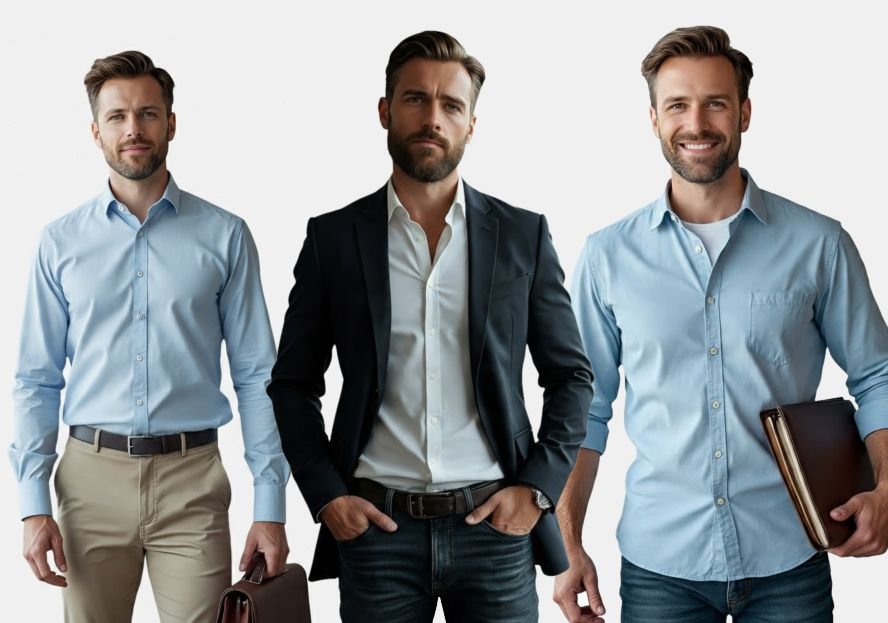
Men’s business-casual fashion blends professional and relaxed clothing for the office. It includes items like collared shirts, chinos or dress trousers, blazers, and clean shoes, creating a polished yet comfortable look.
It allows men to appear smart and approachable, suitable for meetings, daily work, and semi-formal office settings, without needing a full suit.
How the Style Has Evolved Over the Decades.
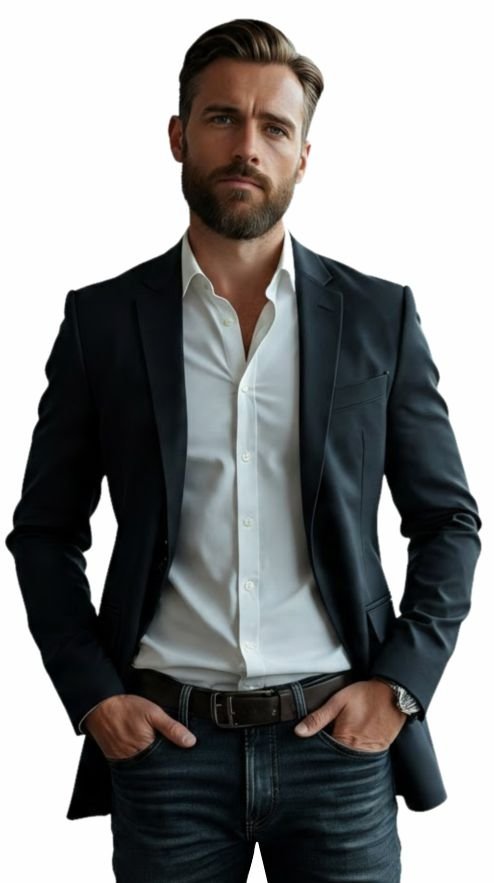
Men’s Business Casual style has quietly transformed over the decades, moving from rigid formality to smart, approachable comfort.
In the 1960s and 70s, the office meant suits, ties, and polished shoes, everything precise and uniform.
By the 1980s, relaxed attitudes crept in: patterned shirts, softer fabrics, and dressy slacks without ties became acceptable.
The 1990s and early 2000s embraced the tech boom’s influence, with chinos, polo shirts, and even loafers replacing traditional suits in many offices.
Today, business casual is about balance, structured blazers paired with soft knits, dress trousers with sleek sneakers, and colors and textures that allow personality without sacrificing professionalism.
Modern workplaces favor flexibility, letting men mix tailored pieces with comfortable fabrics, creating looks that flow from meetings to after-hours events.
The evolution shows a shift from strict uniformity to a style that respects both appearance and ease, reflecting changing office cultures and the demand for approachable professionalism.
Differences between Business Casual, Casual, and Formal
In my 20s, when I began paying attention to men’s styles and fashion.
It was difficult for me to distinguish and wrap my head around the fashion codes thrown around.
But being around gentlemen who respect the codes gave me all I needed to know.
Knowing the difference between business casual, casual, and formal helps your wardrobe stay smart and appropriate for every occasion, keeping your style polished with preplannedwears.
Here are the differences:
Business Casual
Business casual blends polished and relaxed pieces, creating a professional yet approachable look.
Shirts, blazers, chinos, and clean shoes form the base, letting you move confidently through meetings, office tasks, and semi-formal events without needing a full suit.
Casual
Casual style leans on comfort and everyday wear. T-shirts, jeans, sneakers, and hoodies dominate this category, perfect for weekends, coffee runs, or social gatherings. It prioritizes ease and personal expression over office-ready polish.
Formal
Formal dress requires traditional suits, ties, and dress shoes, signaling authority and sophistication.
It works for high-level meetings, weddings, or events with strict dress codes, emphasizing precision, fit, and a complete, polished appearance.
Core Principles of Men’s Business Casual
Mastering men’s business casual starts with principles that keep your outfits polished, office-ready, and workplace appropriate.
Focusing on fit, fabrics, color, and grooming ensures you look confident and professional every day.
Fit
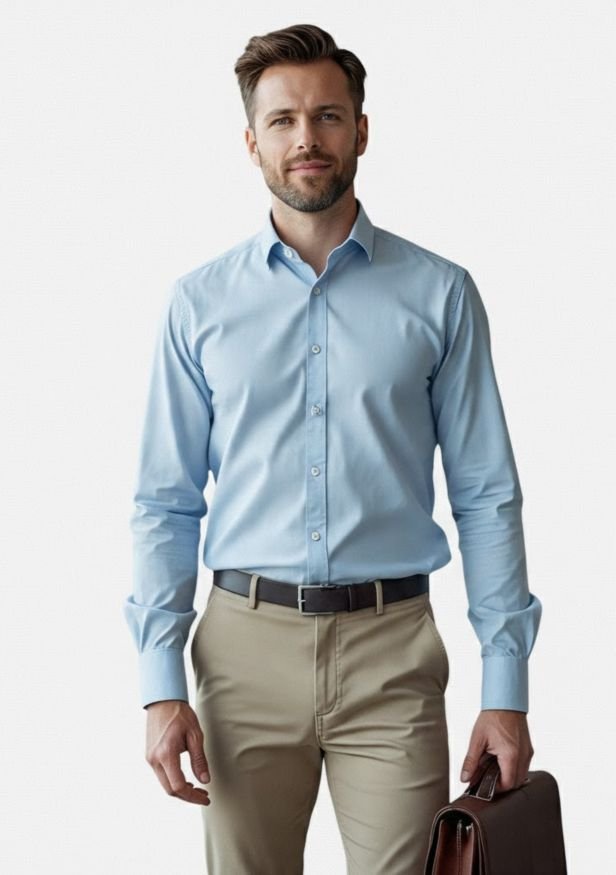
A sharp fit defines men’s business casual style. Shirts should follow your shoulders and chest without pulling.
Trousers should sit comfortably at the waist with a clean line, and blazers should hug your frame without restricting movement, letting you look polished while staying comfortable during your workday.
Fabric
Men’s fabrics balance comfort and professionalism. Cotton, wool, and linen provide breathability and structure, while blends resist wrinkles and maintain shape.
Choosing the right material keeps your shirts, trousers, and blazers looking crisp, letting your office-ready outfits stay neat all day.
Color Coordination
Colors set the tone for men’s office-ready outfits. Neutrals like navy, grey, and beige mix effortlessly, while subtle patterns add personality without clashing. See our comprehensive guide on colour combinations in men’s fashion.
Coordinating shirts, trousers, and shoes creates a cohesive, polished look that signals confidence and style.
Grooming
Well-kept grooming completes men’s business casual. Hair should be trimmed, facial hair neat, nails clean, and accessories minimal.
Attention to grooming complements your outfits, making you appear professional and ready for the office without extra effort.
Wardrobe Pieces for Men’s Business Casual
Building a strong men’s business casual wardrobe starts with key pieces that keep your outfits polished, office-ready, and professional yet approachable.
Every item works together to create a smart, flexible look that moves seamlessly through meetings, daily office tasks, and after-work plans.
Shirts
Shirts form the foundation of men’s business casual fashion.
Dress shirts, polo shirts, and button-downs provide flexibility, letting you layer under blazers or wear them alone on warmer days.
Patterns like stripes, checks, or subtle textures add personality without overpowering your office-ready look.

Colors should coordinate with pants and blazers, maintaining harmony across outfits.
Fabrics such as cotton, linen, or cotton blends ensure comfort and breathability.
Business casual shirts for men allow for smart shirt combinations that signal attention to detail, balancing style and professionalism while keeping your wardrobe practical and versatile for different office occasions.
Pants
Pants define the structure of men’s business casual style.
Chinos, dress trousers, and tailored pants create a polished base that pairs effortlessly with shirts and blazers.
Jeans are generally avoided unless workplace policy allows them, as tailored fabrics give a sharper, office-ready silhouette.
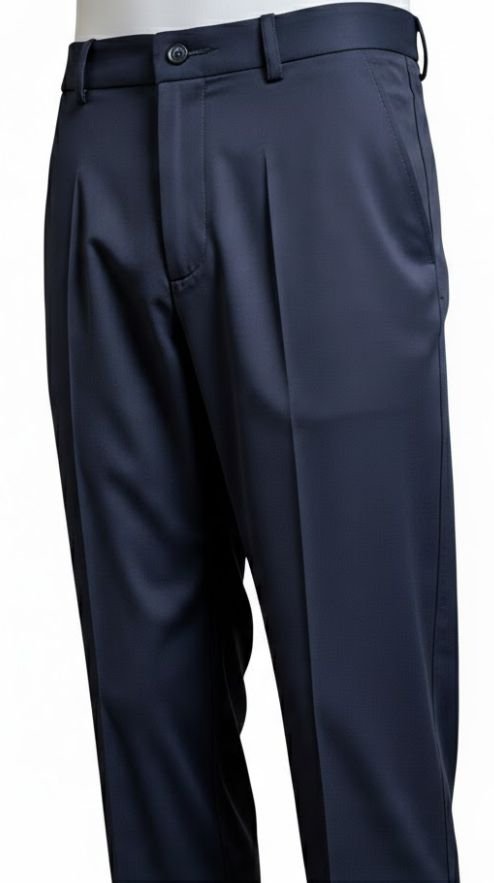
Colors like navy, grey, and khaki work well in multiple combinations.
Proper fit is key, with trousers sitting comfortably at the waist and following your leg line without excess fabric.
Business casual pants for men allow flexibility for layering and movement, giving you a clean, professional appearance while keeping your office outfits stylish and approachable.
Blazers and Jackets
Blazers and jackets bring structure to men’s business casual fashion, instantly upgrading your outfit.
Lightweight men’s blazers suit warmer months, while wool or cotton blends work for cooler seasons.
A blazer signals professionalism, whereas cardigans or sweaters offer a relaxed alternative for less formal days.
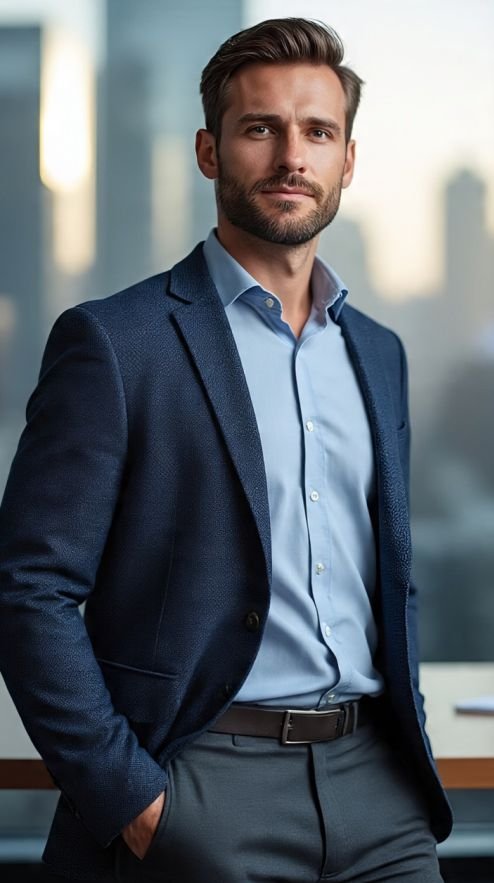
Colors like navy, grey, or muted earth tones coordinate with shirts and trousers.
The choice of when to wear a blazer versus a sweater depends on the occasion, but both keep your look polished.
Office blazers and men’s business casual jackets provide versatility, letting you layer confidently while maintaining a smart, workplace-appropriate appearance that balances style and comfort.
Footwear
Men’s shoes anchor men’s business casual outfits, completing the look with polish and cohesion.
Loafers, brogues, clean sneakers, or boots allow you to match your office footwear to pants and blazers while keeping comfort in mind.
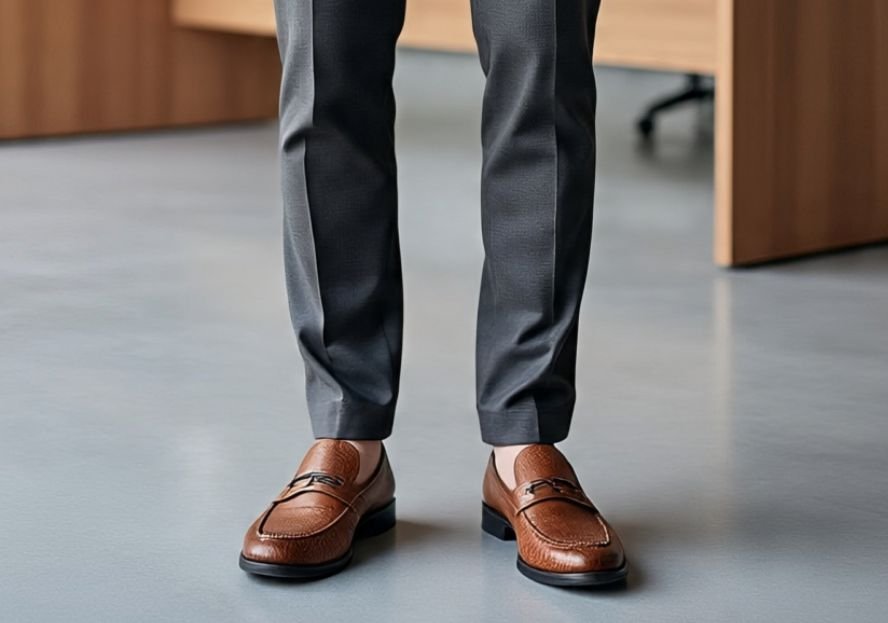
Colors should harmonize with your outfit; brown or black leather often pairs with neutral trousers, while minimalist sneakers can modernize a relaxed outfit.
Business casual shoes for men must balance style and practicality, giving you mobility without sacrificing professionalism.
Paying attention to shoe choice elevates your ensemble, making it appear intentional and polished, while clean, well-maintained footwear reinforces your office-ready image every day.
Accessories
Minimal accessories refine men’s business casual style, adding subtle detail without overwhelming the outfit.
Belts match shoes, watches add sophistication, and ties remain optional depending on formality.
Bags, from leather briefcases to structured messenger styles, provide functionality while complementing your attire.
Office belts for men and subtle watches elevate your look effortlessly.
Accessories should remain understated, maintaining harmony with shirts, trousers, and blazers.
Thoughtful choices in business casual accessories allow you to signal professionalism, attention to detail, and confidence, completing your men’s office-ready outfits while keeping your style approachable and refined.
Should You Tuck in or Not in Business Casual?
In men’s business casual, whether to tuck in a shirt depends on the style, fit, and occasion.
Tailored dress shirts paired with chinos or trousers usually look polished when tucked, creating a clean, professional silhouette.
Untucked shirts work for casual button-downs or polo shirts, especially when the hem is neat and hits mid-hip, giving a relaxed but intentional appearance.
Consider your workplace culture: more formal offices favor tucked shirts, while creative or tech environments may allow untucked styles.
Balance comfort and professionalism, ensuring your outfit looks deliberate, well-fitted, and office-appropriate regardless of your choice.
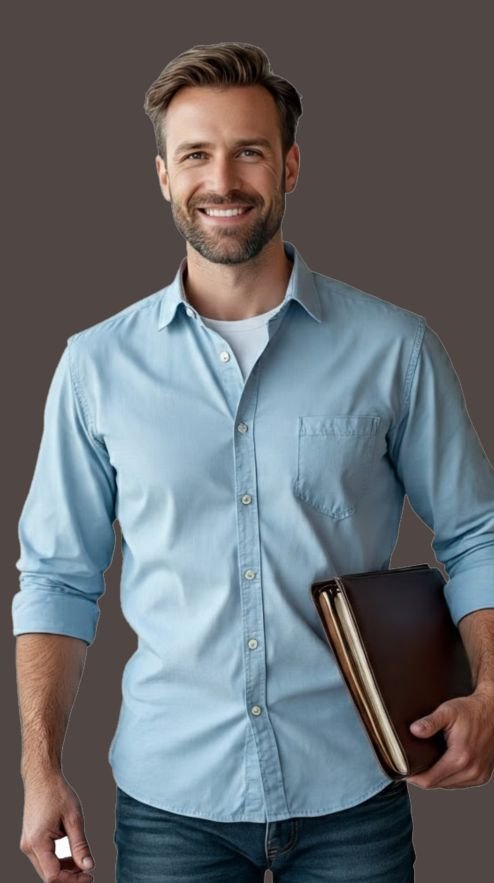
Business Casual Outfit Combinations
Building men’s business casual outfits becomes easier when you follow seasonal, occasion-based, and pattern/color guidelines.
Knowing how to mix fabrics, colors, and layers ensures your office-ready looks stay polished, stylish, and appropriate for every setting.
Seasonal Looks
Spring/Summer
Lightweight fabrics like cotton and linen keep men comfortable while maintaining a polished office-ready look.
Soft colors such as pastels, light blues, and khakis help create airy, professional outfits suitable for warmer months, while keeping layering minimal.
Fall/Winter
Layering becomes key in cooler months, pairing wool blazers, sweaters, and textured trousers.
Darker tones like navy, grey, and brown maintain a polished look, while scarves and boots add warmth without compromising your professional style for office or client settings.
Occasion-Based Outfits
Daily Office
For routine office days, chinos or tailored pants with a crisp shirt and optional blazer create a consistent, polished look.
Comfortable footwear and minimal accessories complete your outfit, keeping it professional yet approachable for everyday tasks.
Client Meetings
Meeting clients calls for slightly elevated outfits. A structured blazer over a well-fitted shirt, paired with dress trousers or chinos, signals professionalism.
Matching shoes and subtle accessories reinforce your workplace-appropriate style while making a confident impression.
Business Lunches
Lunch meetings allow slight flexibility. Pair patterned shirts with solid trousers or a lightweight blazer, keeping colors coordinated.
Clean shoes and minimal accessories ensure you look approachable yet polished, balancing casual and professional seamlessly.
Remote Meetings
Even on video calls, office-ready style matters. A crisp shirt or smart polo paired with a blazer keeps your upper half professional.
Neutral backgrounds and tidy grooming enhance your polished appearance in business casual settings.
Mixing Patterns and Colors
Pairing Stripes, Checks, and Solids
Combine patterns carefully, like pairing a subtle striped shirt with solid trousers.
Avoid clashing bold patterns, letting one statement piece stand out while maintaining a polished, office-appropriate ensemble for men of any age.
Color Palettes by Age
Men over 20, 30, 40, and 50 can choose tones that suit their complexion and style.
Neutral bases with complementary accents, navy, grey, olive, or burgundy, create cohesive outfits.
Matching patterns and colors ensures your business casual wardrobe stays timeless and professional.
Fit, Tailoring, and Personal Grooming
A sharp men’s business casual look begins with fit, tailoring, and grooming.
Paying attention to how clothes sit on your body and keeping personal style polished ensures your office-ready outfits feel comfortable, professional, and stylish every day.
The Importance of Fit
Fit is the foundation of men’s business casual fashion. Tailored shirts, trousers, and jackets create a polished look that off-the-rack pieces often miss.
Key measurements like shoulder width, chest, waist, and sleeve length determine how clothing drapes, while trousers should sit comfortably without excess fabric.
A proper fit makes outfits look intentional, enhances posture, and keeps business casual attire professional yet approachable.
Tailoring Tips
Simple tailoring can transform off-the-rack clothing into office-ready outfits.
Hemming trousers, tapering sleeves, or adjusting jacket shoulders improves the overall silhouette.
Affordable adjustments can be made at local tailors or using home hacks, letting you wear smart shirts, blazers, and pants confidently while maintaining a polished appearance.
Grooming and Personal Style
Grooming completes men’s business casual looks. Clean, styled hair, neat facial hair, and basic skincare create a polished appearance that complements clothing.
Professional haircuts, trimmed nails, and subtle attention to detail enhance confidence, making office-ready outfits look intentional and refined, while reinforcing workplace-appropriate style every day.
Common Business Casual Mistakes to Avoid
Avoiding errors in men’s business casual ensures your office-ready outfits stay polished, professional, and stylish.
Small missteps can undermine a well-thought-out wardrobe.
Overly Casual Pieces
Ripped jeans, hoodies, or worn-out sneakers can make men’s business casual outfits appear sloppy.
Stick to clean, structured clothing to maintain a polished, office-appropriate look.
Poor Color Combinations
Clashing or overly bright colors distract from a professional appearance.
Neutral tones with subtle accents help men coordinate trousers, shirts, and blazers seamlessly.
Ignoring Fit and Tailoring
Loose or tight clothing ruins the overall silhouette. Proper fit, along with minor tailoring adjustments, ensures men look confident, sharp, and office-ready every day.
Business Casual Fashion for Different Age Groups
Men’s business casual style evolves with age, reflecting personality, confidence, and professional growth.
Choosing age-appropriate outfits ensures you look polished, office-ready, and confident while keeping comfort, practicality, and style in balance.
20s–30s
In your 20s and early 30s, experimenting with colors, patterns, and textures helps establish your personal office style.
Pair patterned shirts with neutral trousers or add soft pastel shades to create approachable, modern combinations.
Lightweight blazers or casual jackets allow layering without feeling formal.
Minimal but stylish shoes, like loafers or clean sneakers, complete your look.
Accessories such as belts or subtle watches add finishing touches.
This is the perfect time to test combinations, discover what fits your personality, and build a versatile business casual wardrobe for professional environments.
30s–40s
Men in their 30s and 40s benefit from refined, classic combinations that signal confidence and professionalism.
Tailored shirts, structured trousers, and blazers in neutral shades like navy, grey, and beige form the foundation of office-ready outfits.
Subtle textures or patterns add interest without appearing flashy.
Layering pieces like lightweight sweaters under blazers creates polished looks while remaining comfortable.
Minimal accessories, like a leather belt or a watch, enhance sophistication.
These choices help you present a consistent, mature appearance that balances style and professionalism, making office tasks, client meetings, and social events look effortless and polished.
50+
For men over 50, timeless fabrics, muted tones, and clean silhouettes define business casual style.
Focus on quality shirts, wool trousers, soft blazers, and well-fitted layers.
Neutral palettes like charcoal, navy, beige, and olive provide cohesion, while subtle patterns add depth.
Proper fit ensures comfort and confidence, and footwear like leather loafers or dress shoes reinforces a polished look.
Minimal accessories, including belts, watches, or a leather briefcase, complete the outfit without drawing attention away from professionalism.
These choices create a sophisticated, approachable, and age-appropriate business casual wardrobe that keeps men looking office-ready and stylish every day. See our comprehensive guide on the 50-plus men’s business casual guide.
Business Casual Around the World
Men’s business casual differs across regions, shaped by culture, climate, and workplace expectations.
Recognizing global variations helps you stay polished, office-ready, and culturally aware when traveling or collaborating internationally.
United States
In the US, business casual often leans toward relaxed professionalism.
Polo shirts, button-downs, chinos, and loafers are common, with blazers optional depending on office formality.
Colors range from neutrals to subtle pastels, giving flexibility in daily office wear.
Startups and tech companies favor more casual options, while corporate environments maintain tailored shirts and dress shoes.
Men who pay attention to fit, layering, and coordinated accessories create a polished appearance that suits a wide range of office settings, balancing style with comfort and workplace expectations.
Europe
European offices tend to favor a more refined, tailored business casual style. Structured blazers, crisp shirts, slim trousers, and leather shoes signal professionalism.
Colors lean toward neutrals and muted tones, with subtle patterns for depth. Accessories like leather belts, watches, and scarves add sophistication.
Men are expected to maintain clean, sharp lines, with attention to fit and fabric quality.
Even casual offices often prioritize polished looks, meaning layering a lightweight blazer over a shirt or opting for a tailored sweater enhances office-ready style while respecting regional fashion norms and cultural expectations.
Asia
In Asia, business casual varies widely depending on country, climate, and industry.
Light fabrics and breathable shirts are favored in tropical regions, while more formal tailoring is expected in corporate centers.
Colors may be conservative, with blues, greys, and whites dominating, though some creative industries allow bolder patterns.
Men should pay attention to grooming, fit, and presentation, as subtle details influence perception in the workplace.
Adapting to local norms, such as wearing closed shoes or coordinating layers for air-conditioned offices, ensures a polished, culturally aware appearance while maintaining comfort and office-appropriate style.
Conclusion
Men’s business casual fashion balances professionalism, comfort, and personal style, letting you look polished in any office setting.
Paying attention to fit, fabrics, colors, and grooming ensures outfits remain approachable, stylish, and practical.
With shirts, trousers, blazers, shoes, and subtle accessories working together, you can mix and match pieces effortlessly.
Considering age, season, occasion, and regional norms allows your wardrobe to adapt while staying office-ready.
Avoiding common mistakes, like poor fit or clashing colors, keeps your style sharp.
Thoughtful tailoring, layering, and grooming make a business casual approachable and functional, letting men focus on confidence, presence, and productivity every day.
Frequently Asked Questions
What defines men’s business casual clothing?
Business casual includes tailored shirts, chinos or trousers, blazers, and polished shoes, creating a professional, approachable, and comfortable office-ready look for men.
Can jeans be worn in business casual?
Jeans may be acceptable only in relaxed workplaces. Opt for dark, clean, well-fitted jeans, avoiding rips or distressing to maintain professionalism.
How important is fit in business casual?
Proper fit is essential. Tailored shirts, trousers, and blazers create polished silhouettes, enhancing confidence and making office outfits appear intentional and professional.
Which shoes suit men’s business casual?
Loafers, brogues, clean sneakers, and boots pair with chinos or trousers, completing polished business casual outfits while balancing style, comfort, and workplace expectations.
How does grooming affect business casual style?
Well-kept hair, trimmed facial hair, clean nails, and minimal accessories complement outfits, enhancing a professional, polished look while keeping men office-ready daily.
References
- The Ultimate Guide to Business Casual Style for Men
- A Gentleman’s Guide to Business Casual
- Business Casual for Men: Style Guide and Examples of Outfits

Pyo Merez is a men’s lifestyle enthusiast and writer about the gentleman’s place and impact on society. Raised by a distinguished gentleman dad, he offers unique insights into how the mind of a gentleman works and how societal norms shape gentlemen’s identity and vice versa.
Through his insightful articles, Pyo taps into the depths of gentleman culture to provide perspectives on etiquette and manners in modern society.