
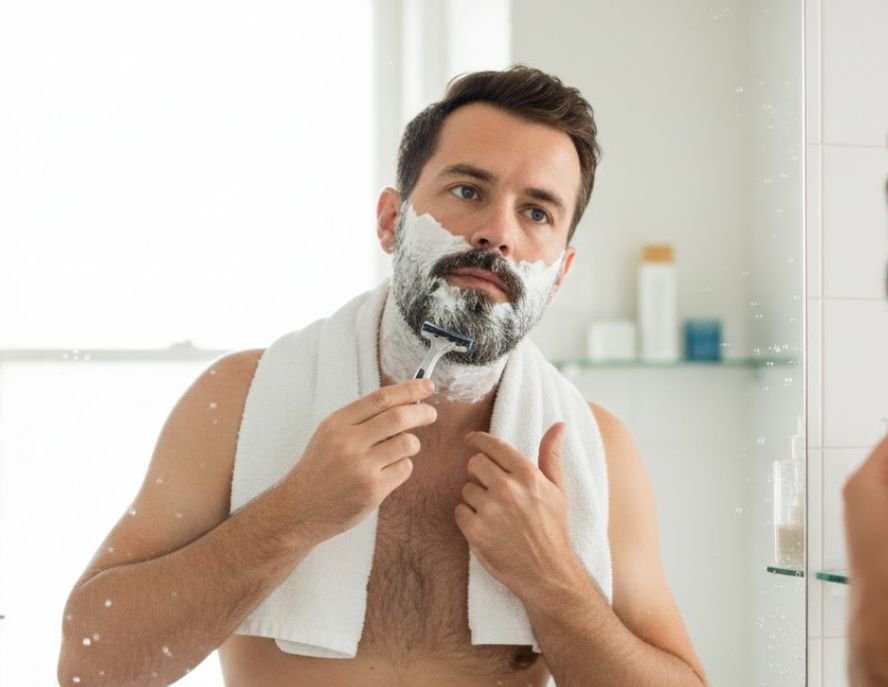
Tired of razor bumps and irritation? find out men’s shaving mistakes to avoid and learn simple fixes for a smoother, healthier, and more comfortable shave.
Shaving can be more damaging than you realize if done incorrectly.
Razor bumps, irritation, and ingrown hairs are common problems that result from small, overlooked mistakes in men’s grooming.
With minor adjustments to your technique, products, and routine, you can prevent skin damage, reduce discomfort, and achieve a smoother, healthier shave.
This guide will show practical tips to correct common errors, protect your skin, and make shaving faster, easier, and more effective.
By understanding where most men go wrong and applying simple strategies, you can avoid irritation, maintain your skin’s health, and get a comfortable shave every time.
Table of Contents
Skipping Proper Skin Preparation
Shaving without preparing your skin can lead to irritation, cuts, and ingrown hairs.
Taking a few extra steps before the razor touches your skin makes a noticeable difference.
Not Washing the Face First
Dirt, oil, and sweat create a barrier that can clog blades and increase friction.
Washing your face with a gentle cleanser removes buildup, reduces bacteria, and allows for a smoother shave.
Warm water also helps open pores and softens facial hair, making it easier to cut.
Shaving Without Softening the Beard
Dry, coarse hair tugs at the skin, causing discomfort and irritation.
Softening your beard in the shower or with a warm towel makes hair easier to cut and reduces pressure on the skin.
Quick sink shaves can work, but using water or a pre-shave oil improves comfort and lowers the risk of nicks.
Using the Wrong Razor
Choosing the right razor affects shave quality and skin health.
Using outdated or unsuitable tools can increase irritation, ingrown hairs, and discomfort.
Dull Blades
Old or dull blades tug at hair instead of cutting cleanly, causing nicks, razor burn, and skin irritation.
Replace cartridges regularly, usually every 5–10 shaves depending on hair thickness, to maintain a smooth, safe shave.
Too Many Blades
Multi-blade razors may provide a close shave, but they can trap hairs and increase the risk of ingrown hairs, especially on sensitive skin.
For delicate or reactive skin, a single or double-blade razor often reduces irritation while still delivering a clean shave.
Poor Quality Electric Shavers
Electric shavers can be convenient, but low-quality models may pull hair or irritate the skin.
Choose an electric shaver when you need speed, less mess, or travel convenience, but stick with manual razors for precision and sensitive areas.
Related Posts
Beard Conditioner: Softening and Strengthening Facial Hair
Facial Hair Balm for Hair Strength and Styling
Beard Oil for Facial Hair Grooming
Beard Care Tips for Patchy Growth
Applying Too Much Pressure
Pressing too hard with a razor can turn a simple shave into irritation, cuts, and razor burn.
Learning how to handle your razor properly makes a big difference in comfort and skin health.
Letting the Razor Glide
Allow the razor to do the work rather than forcing it through your beard.
A gentle, gliding motion reduces friction and prevents micro-cuts while still delivering a close shave.
Why Pressing Down Causes Razor Burn
Applying too much pressure drags the blade across the skin, leading to redness, bumps, and irritation.
Over time, it can also worsen sensitivity and increase the chance of ingrown hairs.
Proper Grip Technique
Hold your razor lightly, almost like a pencil, with a relaxed wrist.
This gives you control, maintains even pressure, and helps the blade follow the contours of your face without harming your skin.
Shaving Against the Grain Too Soon
Shaving against the grain before properly preparing the skin can lead to razor burn, irritation, and ingrown hairs.
Timing and technique are key for a smooth, comfortable shave.
How to Identify Hair Growth Direction
Run your fingers over your beard to feel the natural direction of hair growth.
Observing closely in different areas of your face helps you plan your shave and avoid pulling or tugging on hairs.
First Pass With the Grain
Start by shaving in the same direction as your hair grows.
This removes bulk gently, reduces friction, and prevents irritation, especially on sensitive areas like the neck and jawline.
When (and If) to Go Against the Grain
Only consider shaving against the grain after your first pass, once hair is softened and skin is properly prepared.
Doing so can achieve a closer shave but should be done carefully to avoid cuts and ingrown hairs.
Skipping Shaving Cream or Using Bar Soap
Using the wrong product, or none at all, can make shaving harsh on your skin.
Choosing the right lather protects against irritation and ensures a smoother shave.
Why Bar Soap Dries Skin
Bar soaps strip natural oils from the skin, leaving it dry and tight.
This increases friction during shaving, causing razor burn, nicks, and micro-cuts, especially for sensitive or mature skin.
Benefits of Shaving Cream or Gel
Shaving creams and gels create a protective layer that softens hair and cushions the skin.
They reduce tugging, prevent razor burn, and improve glide, making the shave more comfortable and precise.
Ingredients to Look For
Opt for products containing hydrating and soothing ingredients like aloe, glycerin, or shea butter.
These nourish the skin, lock in moisture, and calm irritation while allowing the razor to glide smoothly.
Not Reapplying Lather Between Passes
Skipping reapplication of shaving cream between passes can increase friction, irritation, and the risk of cuts.
Proper lubrication is key for a smooth, comfortable shave.
Why Dry Second Passes Damage Skin
Shaving over dry skin or dried lather pulls at hair and drags the razor across the surface, causing razor burn, redness, and micro-cuts.
Dry passes also make it harder to achieve a close shave without irritation.
How to Reduce Friction
Always reapply a thin layer of shaving cream or gel before each pass.
This cushions the skin, softens remaining hair, and allows the razor to glide smoothly, reducing discomfort and protecting your skin from damage.
Over-Shaving Sensitive Areas
Some parts of the face, like the neck and jawline, are more prone to irritation.
Extra care in these areas prevents razor burn, redness, and ingrown hairs.
Neck Irritation
The skin on the neck is thinner and more delicate, making it susceptible to razor burn and bumps.
Avoid multiple passes and shave gently along the grain to reduce friction and discomfort.
Jawline Trouble Spots
Corners of the jaw and under the chin can catch the blade, causing nicks and irritation.
Use short, controlled strokes and maintain light pressure to navigate these tricky areas safely.
How to Minimize Repeat Strokes
Only go over areas once or twice.
Reapplying shaving cream before any extra passes protects the skin, softens remaining hair, and prevents unnecessary friction that leads to irritation.
Ignoring Post-Shave Care
Shaving doesn’t end when the razor is put down.
Proper aftercare soothes the skin, prevents irritation, and helps maintain a smooth, healthy complexion.
Using Alcohol-Based Aftershave
Alcohol-based aftershaves sting, dry out the skin, and strip natural oils.
They may mask irritation temporarily, but over time they worsen redness and make the skin more sensitive.
Opt for gentle, alcohol-free alternatives.
Skipping Moisturizer
Applying a moisturizer after shaving restores hydration and strengthens the skin barrier.
Ingredients like glycerin, aloe, or shea butter lock in moisture, calm irritation, and keep skin soft and resilient against daily wear and tear.
Not Using Cold Water to Rinse
Rinsing with cold water after shaving helps close pores and reduces inflammation.
It calms redness, tightens skin, and minimizes the risk of razor burn while leaving the skin feeling refreshed.
Poor Blade Hygiene
Keeping your razor clean is just as important as technique.
Poor hygiene increases the risk of irritation, infection, and razor bumps.
Not Rinsing Thoroughly
Hair, shaving cream, and skin debris can accumulate between blades.
Failing to rinse properly leaves buildup that dulls the razor and promotes bacteria growth, increasing the chance of nicks and irritation.
Storing Razors in Damp Areas
Razors stored in wet or humid environments encourage rust and bacterial growth.
Keep blades dry in a well-ventilated space or use a protective cover to extend life and maintain cleanliness.
How Bacteria Causes Razor Bumps
Bacteria trapped in blades or on irritated skin can inflame hair follicles, leading to painful razor bumps and ingrown hairs.
Clean, dry blades and proper aftercare reduce this risk.
Shaving Too Frequently
Shaving every day might seem like the cleanest option, but your skin needs time to recover.
Constant blade contact weakens the skin barrier, increases sensitivity, and raises the risk of razor burn and ingrown hairs.
Giving Skin Time to Recover
Each shave removes a thin layer of skin along with facial hair.
Without recovery time, irritation builds up and small cuts struggle to heal.
If possible, shave every other day or adjust based on how quickly your beard grows and how your skin reacts.
Alternatives: Trimming and Stubble Maintenance
Electric trimmers offer a close, neat look without direct blade contact on the skin.
Maintaining short stubble reduces friction, prevents bumps, and still keeps your appearance sharp and professional.
A Simple Irritation-Free Shaving Routine
A smooth shave does not require complicated steps or expensive products.
With the right order and gentle technique, you can reduce razor burn, prevent ingrown hairs, and protect your skin every time you shave.
Step-by-Step Beginner Routine
Start by washing your face with warm water and a gentle cleanser.
Apply shaving cream and let it sit for one to two minutes to soften hair.
Shave with the grain using light pressure and short strokes.
Rinse with cool water, pat dry, then apply an alcohol-free aftershave balm and moisturizer.
Best Routine for Sensitive Skin
Use a single or double-blade razor to reduce irritation.
Prep with warm water and a hydrating shaving gel containing aloe or glycerin.
Shave slowly with minimal passes, avoiding against-the-grain strokes at first.
Finish with a soothing balm and fragrance-free moisturizer to calm redness.
Quick Routine for Busy Mornings
Shave right after a warm shower to save time on prep.
Use a quality shaving gel, make one careful pass with the grain, and rinse with cool water.
Apply a lightweight moisturizer with SPF to protect and hydrate in one step.
Conclusion
Shaving should not leave your skin irritated, dry, or covered in razor bumps.
Most common shaving problems come from small mistakes like poor preparation, dull blades, too much pressure, or skipping post-shave care.
Simple adjustments, such as washing your face first, shaving with the grain, using proper lather, and moisturizing afterward, can dramatically improve results.
Paying attention to blade hygiene and giving your skin time to recover also prevents long-term damage.
A consistent, irritation-free routine protects your skin barrier and keeps your face smooth and healthy.
With better technique and smarter product choices, shaving becomes easier, more comfortable, and far less damaging.
Frequently Asked Questions
How can I prevent razor bumps after shaving?
Shave with the grain, use a sharp clean blade, avoid pressing hard, and apply a soothing alcohol-free aftershave balm afterward.
Is it better to shave in the shower or at the sink?
Shaving after a warm shower is better because heat softens facial hair and opens pores, reducing tugging and irritation.
How often should I replace my razor blade?
Replace your blade every five to ten shaves, or sooner if you notice tugging, dullness, or increased irritation.
Can sensitive skin shave every day?
Daily shaving may irritate sensitive skin. Shaving every other day or using a trimmer can reduce redness and razor burn.
Reference
- 7 Common Leg-Shaving Mistakes and How to Avoid Them
- Common Shaving Mistakes You Must Avoid
- Common Mistakes Men Make While Shaving
