
Last updated on February 14th, 2026 at 12:38 pm
Men’s fashion colour guide breaks down colour psychology, smart combinations, and timeless palettes to help you build a confident, cohesive wardrobe.
Colors shape how people see you before you speak. The shades in your wardrobe influence first impressions, confidence, and professionalism in quiet but powerful ways.
Strong color coordination for men helps you look polished instead of mismatched.
Certain tones project authority, trust, or approachability through the psychological effect of colors.
Age also plays a role, since the right hues can sharpen your appearance and flatter mature skin, especially for men over 50.
In this men’s fashion color guide, you will learn smart men’s style color tips, you can choose fashion colors for men that work across business wear, casual outfits, and formal looks while building a flexible, well-balanced wardrobe.
Table of Contents
The Basics of Color in Men’s Fashion
Color is one of the simplest ways to communicate style without saying a word.
Knowing how to work with shades, tones, and contrasts lets your wardrobe look intentional, balanced, and polished.
Men’s fashion color choices influence perception, first impressions, and confidence, making even casual outfits appear refined and professional.
Color Theory for Men
Primary, secondary, and neutral colors form the foundation for outfits that work together naturally.
Warm and cool tones affect how colors interact with your skin and other pieces.
Choosing combinations that harmonize helps your clothing convey balance, while understanding how color evokes mood ensures your outfits match the impression you want to leave.
Color Psychology
Colors communicate messages beyond style. Blues can signal trust, reds show energy and confidence, while earthy tones suggest approachability.
Using color thoughtfully allows you to express personality, support professionalism, and guide how others respond to your wardrobe, turning clothing into a subtle tool for influence.
Color Families Every Man Should Know
Knowing color families helps you build a wardrobe that works across occasions.
Neutrals, bold shades, and seasonal tones each play a role in how your outfits look and feel.
Learning how to mix and match them gives you confidence in your choices and creates a polished appearance without guesswork.
Neutral Colors for Men
Navy, grey, beige, white, and black form the backbone of your wardrobe.
These neutrals make professional and casual outfits easier to put together, giving you a strong foundation for everyday looks.
Pairing them with other shades allows you to layer, mix, or add subtle pops of color while keeping your style balanced and intentional.
Bold and Statement Colors
Burgundy, olive, teal, and forest green give your outfits life and personality.
Introducing a pop of color in a shirt, jacket, or accessory draws attention and signals confidence.
Keep bold shades balanced with neutrals and focus on one statement color at a time to avoid clashing or overwhelming your overall look.
Earth Tones and Seasonal Colors
Brown, camel, rust, and muted green connect your wardrobe to seasonal moods and natural palettes.
Lighter shades feel fresh in spring and summer, while warmer tones suit fall and winter.
Mixing earth tones with neutrals creates harmony, letting your outfits feel effortless and intentional across different seasons.
How to Match Colors in Men’s Outfits
Strong color coordination starts with simple, repeatable formulas. Pair light with dark for contrast, mix warm with warm, cool with cool, and let one color lead while others support it.
When you know exactly which shades work together, getting dressed feels easier and your outfits look sharp in both business and casual settings.
Pairing Shirts and Trousers
Start with reliable combinations that rarely fail.
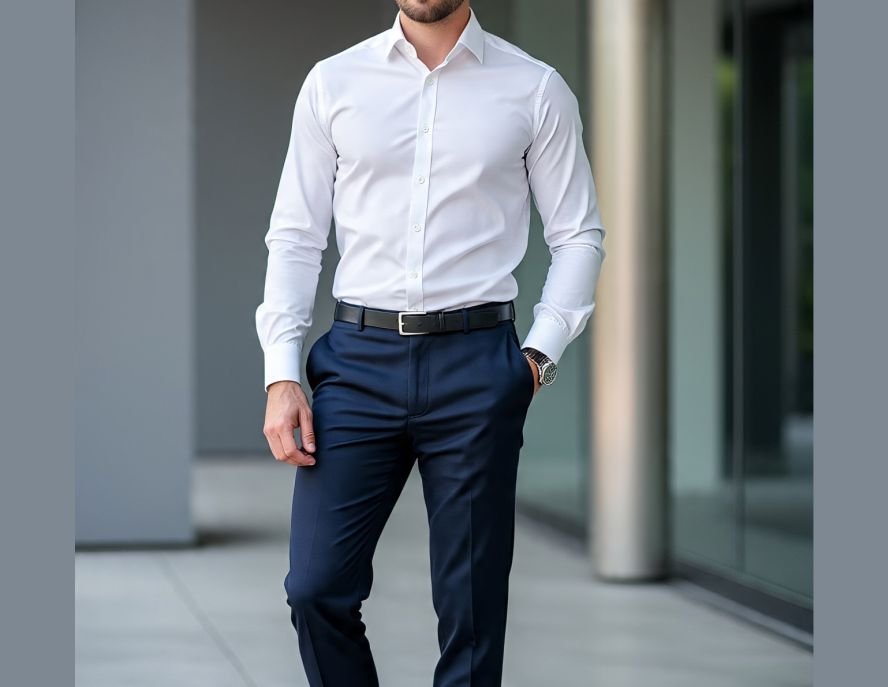
White shirt + navy trousers
Clean, professional, and perfect for office settings. Add brown or black shoes.
Light blue shirt + charcoal trousers
Great for business meetings. Finish with black shoes and a black belt.
Pale pink shirt + navy trousers
Adds personality without looking loud. Brown shoes work best here.
Light grey shirt + black trousers
Sharp contrast for formal or evening business wear.
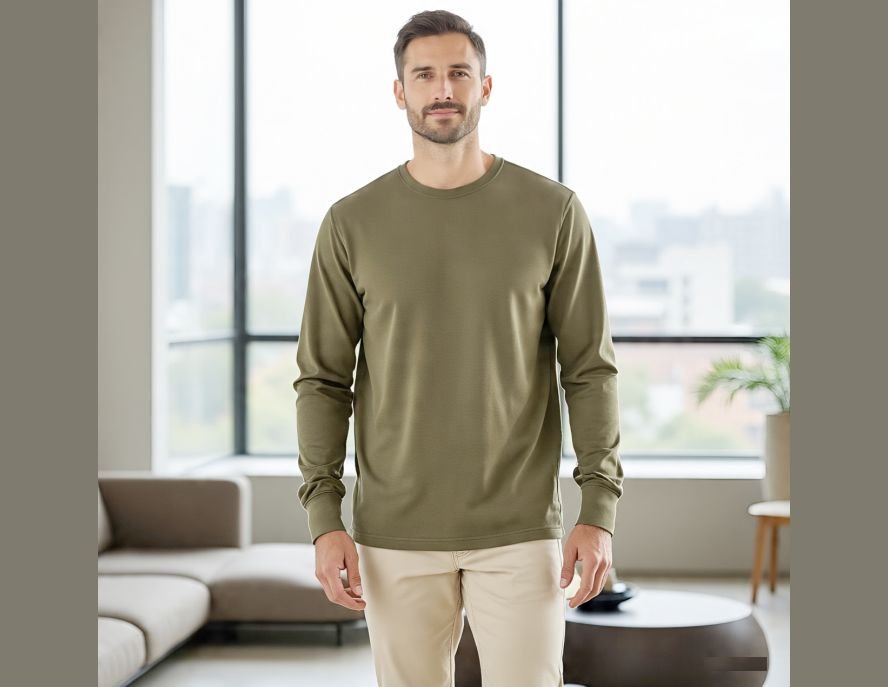
Olive shirt + beige chinos
Strong smart-casual look. Pair with brown loafers or suede shoes.
Burgundy shirt + dark grey trousers
Works well for dinners or creative workplaces. Stick to dark brown shoes.
Rule to follow:
Light shirts pair best with darker trousers. Dark shirts work better with lighter trousers like grey, beige, or light blue denim.
Layering Jackets and Sweaters
Your outer layer should complement, not compete.
Navy blazer + white or light blue shirt + grey trousers
Classic business casual formula.

Charcoal blazer + pale pink or light blue shirt + black or navy trousers
Clean and structured.
Camel blazer + white shirt + navy trousers
Warm and balanced. Brown shoes complete the look.
Olive jacket + cream sweater + dark blue jeans
Perfect for casual weekends.
Burgundy sweater + light grey trousers
Good for cooler months. Add brown boots.
Denim jacket + white tee + black or dark blue jeans
Simple and grounded.
Quick layering tip:
If your jacket is bold, like burgundy or olive, keep the shirt neutral. If your shirt has a pattern, choose a solid jacket.
Accessories and Color Coordination
Accessories should connect your outfit, not distract from it.
Brown shoes = brown belt
Black shoes = black belt
Keep leather tones consistent.
Navy suit + brown shoes + brown belt
Modern business looks.
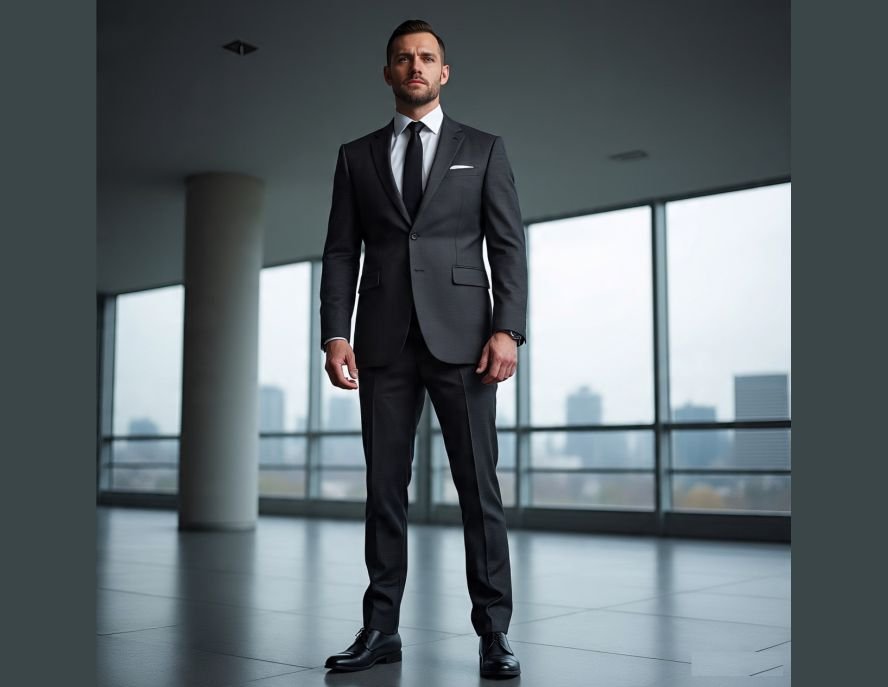
Charcoal suit + black shoes + black belt
Formal and structured.
Blue suit + burgundy tie
Adds depth without clashing.
Grey suit + navy tie
Safe and professional.
Beige outfit + dark brown shoes
Creates a grounding contrast.
Metal matching matters too.
Silver watch pairs well with black or grey outfits.
A gold watch works better with brown, navy, or earth tones.
Pocket square rule:
It should complement your tie, not match it exactly. If wearing a navy tie, choose a pocket square with navy accents, not identical fabric.
Determining Your Skin Undertone
Stand in natural light and check your veins.
Green veins = warm undertone
Blue or purple veins = cool undertone
Hard to tell or mix of both = neutral undertone
Now match colors accordingly.
If you have a warm undertone:
Best colors: olive, mustard, camel, rust, cream, warm navy
Suits: brown, warm grey, tan
Avoid icy blue, bright white, and very cool greys
Example outfits:
Camel blazer + cream shirt + navy trousers
Olive shirt + beige chinos
Rust sweater + dark blue jeans
If you have a cool undertone:
Best colors: navy, charcoal, cool grey, emerald, burgundy, crisp white
Suits: charcoal, deep navy
Avoid mustard, orange, and overly yellow tones
Example outfits:
Navy suit + white shirt
Charcoal blazer + light blue shirt + black trousers
Emerald sweater + grey trousers
If you have a neutral undertone:
You can wear most colors, but balance matters.
Best colors: navy, grey, teal, soft pink, forest green, medium blue
Avoid extremely warm oranges or very icy pastels
Example outfits:
Teal shirt + navy trousers
Forest green sweater + grey chinos
Soft pink shirt + charcoal trousers
Colors That Flatter Almost Every Man
Some shades work on nearly all skin tones.
Navy
Charcoal grey
Medium blue
Burgundy
Forest green
Crisp white
Safe combinations:
Navy blazer + white shirt + grey trousers
Burgundy sweater + navy chinos
Forest green shirt + dark denim
These colors provide contrast without overpowering your features. They also transition easily from office to weekend.
Color in Different Clothing Categories
Each clothing category plays a different role in your outfit. Suits anchor the look.
Shirts add contrast. Trousers balance the top. Accessories connect everything.
When each piece has a clear color purpose, your wardrobe feels sharp and consistent.
Suits and Blazers
Start with strong foundation colors.
Navy suit
Pair with: white, light blue, pale pink, or light grey shirts
Shoes: brown or oxblood
Tie options: burgundy, navy, dark green
Charcoal suit
Pair with: white or light blue shirts
Shoes: black
Tie options: navy, burgundy, silver-grey
Light grey suit
Pair with: white, pale blue, soft pink
Shoes: brown or tan
Tie options: navy, dark green
Camel or tan blazer
Pair with: white or cream shirt
Trousers: navy or dark brown
Shoes: brown
Olive blazer
Pair with: white, light blue, or cream shirt
Trousers: navy or beige
Shoes: brown
Keep suits neutral. Add personality through shirts and ties, not loud jacket colors for business settings.
Shirts and T-Shirts
Shirts create contrast against suits or trousers.
White shirt
Works with: navy, charcoal, black, grey, olive, beige
Light blue shirt
Works with: navy, charcoal, grey, brown
Pale pink shirt
Works with: navy, charcoal, light grey
Black shirt
Works with: grey, charcoal, light grey
Avoid pairing with navy for formal wear
Olive shirt
Works with: beige, navy, dark denim
Burgundy shirt
Works with: grey, navy, black
For T-shirts:
White tee + dark blue jeans
Grey tee + black jeans
Navy tee + beige chinos
Olive tee + light wash denim
Keep T-shirts neutral if layering under bold jackets.
Pants and Jeans
Trousers balance the upper half.
Navy trousers
Pair with: white, light blue, pink, grey, burgundy
Grey trousers
Pair with: white, navy, black, burgundy, forest green
Beige chinos
Pair with: navy, olive, white, light blue
Black trousers
Pair with: white, grey, burgundy
Avoid dark navy tops to prevent a heavy look
Dark blue jeans
Pair with: white, grey, burgundy, olive, camel
Light blue jeans
Pair with: navy, white, olive, burgundy
If your top is bold like burgundy or forest green, choose neutral trousers. If trousers are bold like olive or rust, keep the shirt simple.
Accessories
Accessories should connect to the colors already in your outfit.
Brown shoes
Best with: navy, beige, light grey, olive
Black shoes
Best with: charcoal, black, dark grey
Oxblood shoes
Best with: navy, charcoal, grey
Belt rule
Match belt color to shoe color. Always.
Tie coordination
Navy suit + burgundy tie
Grey suit + navy tie
Blue suit + dark green tie
Charcoal suit + silver or navy tie
Pocket square
Should echo one color in your outfit, not copy the tie exactly.
Watch metals
Silver works best with black, grey, and navy
Gold works well with brown, camel, and earth tones
Socks
Match to trousers, not shoes.
Grey trousers = grey socks
Navy trousers = navy socks
Keep this formula in mind:
One base color, one supporting color, one accent.
When suits stay neutral, shirts provide contrast, trousers balance, and accessories connect everything, your outfits look structured and confident without looking forced.
Seasonal Color Guides
Each season has a natural color weight. Warm months call for lighter, softer shades. Cold months support deeper, richer tones.
When your colors match the season, your outfits look balanced and appropriate in both office and casual settings.
Spring and Summer
Think light contrast and breathable fabrics.
Best spring-summer colors
White, cream, light blue, sage green, soft pink, beige, light grey, sky blue
Business examples
Light grey suit + white shirt + brown shoes
Navy blazer + light blue shirt + beige chinos
Cream blazer + pale pink shirt + navy trousers
Smart casual examples
Sage green polo + beige chinos
White linen shirt + light blue trousers
Light blue shirt + white jeans
Casual examples
White tee + light wash denim
Soft pink shirt + navy chinos
Beige overshirt + white tee + blue jeans
Keep shoes lighter too.
Brown, tan, and suede loafers work better than heavy black leather in heat.
Rule for warm months
Limit dark, heavy colors like charcoal or deep burgundy during the day. Use lighter shades to reflect heat and soften your overall look.
Autumn and Winter
Cold weather supports depth and warmth.
Best autumn-winter colors
Burgundy, forest green, camel, rust, charcoal, deep navy, dark brown, olive
Business examples
Charcoal suit + white shirt + black shoes
Navy suit + light blue shirt + burgundy tie
Camel blazer + cream sweater + navy trousers
Smart casual examples
Forest green sweater + grey trousers
Burgundy knit + dark blue jeans
Olive jacket + cream shirt + black jeans
Casual examples
Rust sweater + dark denim
Camel coat + navy sweater + charcoal trousers
Olive hoodie + black jeans
Darker shoes work better here.
Black, dark brown, and oxblood balance winter tones.
Rule for cold months
Avoid very light pastels like baby pink or sky blue unless layered under darker jackets. They can look out of place against heavy fabrics.
Simple seasonal formula
Spring-summer
Light shirt + medium trousers + brown or tan shoes
Autumn-winter
Deep top + dark trousers + black or dark brown shoes
Match fabric weight to color weight.
Linen and cotton suit lighter tones.
Wool and tweed suit deeper shades.
When your color intensity matches the season, your outfits look natural and put together without effort.
Building a Color-Ready Wardrobe
A wardrobe that works starts with color you can rely on. Knowing how to mix neutrals, bold shades, and seasonal tones gives your outfits balance, clarity, and confidence.
Using versatile wardrobe colors lets you move effortlessly from office meetings to weekend plans, while a professional and casual color guide for men keeps your choices intentional and sharp.
Essentials for Every Color Palette
Start with neutral base pieces like trousers, blazers, shirts, and shoes.
These anchors make pairing simple and reduce daily guesswork.
Introduce accent colors gradually, like a deep burgundy tie or a muted olive jacket, to bring personality without overwhelming.
Choosing quality fabrics ensures pieces last and maintain their appearance, letting your wardrobe remain strong season after season.
Creating Mix-and-Match Outfits
Pair neutrals with statement colors to create clean, confident combinations.
For business casual, a navy blazer with grey trousers works seamlessly, while a crisp white shirt and olive chinos bring casual looks to life.
Keep contrast balanced, and avoid dull or clashing outfits by sticking to two or three main colors per outfit.
Avoiding Common Color Mistakes
Too many bold pieces at once can make even strong combinations feel chaotic.
Layering mismatched tones dilutes impact, and over-relying on black or dark shades can make outfits feel flat.
Focus on harmony and pacing, letting neutral bases anchor the look while accents provide visual interest.
Advanced Tips for Color Confidence
Mastering color in your wardrobe goes beyond basics. Learning to mix patterns, textures, and bold shades makes every outfit feel intentional.
Using men’s style color tips for subtle contrasts and strategic pops helps your wardrobe look fresh, polished, and versatile.
Experimenting With Patterns and Textures
Stripes, checks, herringbone, and subtle prints give outfits personality while interacting with your colors.
Patterns can emphasize contrast or soften a bold tone, while textures add depth without overpowering.
Combining the right fabrics and prints lets your clothes feel dynamic and layered, creating a visually interesting wardrobe that still looks put-together.
Using Color in Accessories Strategically
Pocket squares, socks, belts, and watches offer low-risk ways to introduce personality.
Subtle hints of color can lift a professional outfit or add flair to casual wear.
Matching metals, leathers, and fabrics with your main wardrobe colors keeps everything cohesive, letting accessories enhance your style without clashing or drawing too much attention.
Updating Your Color Palette Over Time
Shades that once worked may start to feel outdated. Phasing out harsh or overly bright tones allows your wardrobe to stay current.
Adapting colors to your changing style, environment, or body shape keeps outfits flattering, while refreshing classics with subtle new shades adds interest and modernity to your overall look.
Fashion Mistakes to Avoid with Colors
Choosing the wrong colors can throw off your whole outfit, making even expensive clothes look off.
Small adjustments can make your wardrobe feel polished, fresh, and intentional.
Overdoing Bold Colors
Wearing too many bright shades together can overwhelm your look and draw attention away from your overall style.
Pair bold colors with neutral tones like beige, navy, or gray to create balance, letting one color stand out while the rest support it.
Mismatched Tones
Combining colors that clash or feel off-tone can make an outfit appear unplanned.
Stick to tones that complement each other, like warm with warm and cool with cool, and mix textures to give depth without creating chaos.
Ignoring Skin Undertones
Selecting colors that clash with your skin tone can wash out your appearance or make you look harsh.
Warm undertones pair well with earthy shades, while cooler undertones suit blues, purples, and jewel tones.
Paying attention to undertones ensures your outfits feel natural and flattering.
Seasonal Missteps
Wearing summer-bright shades in winter or dark winter tones in summer can feel out of place.
Adjust colors according to the season by choosing lighter, softer shades for warm months and deeper, richer hues for colder months to keep outfits appropriate and visually pleasing.
Conclusion
A well-thought-out color strategy transforms your wardrobe and your presence.
Choosing shades that suit your skin, match the season, and coordinate across outfits makes styling effortless.
Neutrals anchor your looks, while bold or seasonal colors add personality without overwhelming.
Paying attention to tone, contrast, and accessories ensures every outfit feels polished and intentional.
As your style evolves, refreshing your palette keeps your wardrobe modern and flattering.
Strong color choices help you feel confident, professional, and approachable, making fashion a subtle tool to express personality while projecting authority and sophistication across casual, business, and formal settings.
Frequently Asked Questions
Which colors suit men over 50 best?
Earth tones, muted blues, and soft neutrals flatter mature skin, balancing contrast and highlighting features without overpowering your overall appearance.
Can men wear multiple bold colors together?
Limit bold shades to one piece at a time, pairing them with neutrals to avoid clashing and maintain a clean, polished look.
How do I find my skin undertone?
Check veins in natural light, green suggests warm, blue/purple is cool, and a mix indicates neutral. Match clothing colors to complement your undertone.
Are seasonal color changes necessary in wardrobes?
Yes. Light and fresh shades fit spring-summer, while deep, warm tones suit fall-winter, keeping outfits visually appropriate and stylish year-round.
References
- A Man’s Introduction To Color
- Expert Tips for Matching Clothing Colors
- A Guide to Mastering Neutral Colors in Men’s Fashion

Pyo Merez is a men’s lifestyle enthusiast and writer about the gentleman’s place and impact on society. Raised by a distinguished gentleman dad, he offers unique insights into how the mind of a gentleman works and how societal norms shape gentlemen’s identity and vice versa.
Through his insightful articles, Pyo taps into the depths of gentleman culture to provide perspectives on etiquette and manners in modern society.